
Toothaches can strike without warning, sharp pain while eating, throbbing discomfort that disrupts sleep, or sudden sensitivity that makes you wince. Most dental pain does not require immediate emergency room care, but some situations demand urgent action to prevent serious complications. This guide walks you through exactly what to do in the first minutes of tooth pain, which symptoms require same-day attention, and which can wait for a scheduled appointment.
The decisions you make in the first hour matter. We explain how to recognize true emergencies, provide effective at-home relief that doesn’t worsen the problem, and clarify when antibiotics help versus when they create false security. This information helps you protect your dental health while avoiding unnecessary emergency visits.
Home Care vs Same-Day Dentist vs Emergency Room

Dental pain varies widely in urgency, some situations require immediate medical attention, others need same-day dental care, and many respond well to home management for 24 to 48 hours. The key is recognizing which category your pain falls into before you act.
Emergency Room Now: Trouble Breathing/Swallowing, Eye/Neck Swelling, Rapidly Spreading Swelling
Go to the emergency room immediately if you experience trouble breathing or swallowing, swelling that extends to the eye area or neck, or any swelling that spreads noticeably over hours. These symptoms indicate a dental infection has spread beyond the tooth into surrounding tissues and spaces. An abscess near the airway can block breathing, and infections near the eye risk vision complications or spread to the brain.
Rapidly spreading swelling, where you notice visible growth from morning to afternoon, signals aggressive infection that requires intravenous antibiotics and possibly surgical drainage. The emergency room provides imaging (CT scans) and immediate intervention that dental clinics cannot offer. Time matters: infections in the head and neck can become life-threatening within hours.
Other true medical emergencies include high fever (above 101°F or 38.3°C) with facial swelling, confusion or altered mental state alongside dental pain, and uncontrolled bleeding from the mouth after trauma. These conditions require hospital-level care, not a dental office.
Same-Day Dentist: Severe Pain, Swelling/Pus, Pain Getting Worse, Trauma, Fever Symptoms
Contact a dentist for a same-day appointment if you have severe pain that over-the-counter medications barely touch, visible swelling on the gum or face (even without breathing issues), pus drainage from the gum, pain that worsens hour by hour, dental trauma such as a knocked-out or broken tooth, or fever (even low-grade) combined with toothache. These situations require professional evaluation and treatment within hours to days.
Severe pain that keeps you awake or interferes with eating signals inflammation or infection near the tooth’s nerve. Swelling with pus indicates an active abscess, a pocket of infection that needs drainage and antibiotics. The infection will not resolve on its own, and delaying care allows bacteria to spread or the abscess to expand.
Pain that escalates rapidly (mild in the morning, intense by evening) suggests progressing inflammation or a crack extending deeper into the tooth. Dental trauma, a tooth knocked partially loose, a visible chip exposing pink tissue, or a completely avulsed tooth, requires immediate care to save the tooth or prevent infection. Fever combined with dental pain often means infection has spread beyond the local site.
Most dental clinics in Kathmandu, including BrightSmile Dental Clinic at Putalisadak, accommodate same-day emergencies during business hours. Call early in the day (+977-9748343015) to secure a slot. Many practices reserve morning openings for urgent cases. After-hours emergencies may require visiting a hospital emergency department or a 24-hour dental service if available.
Can Wait 24 to 48 Hours: Mild Pain With No Swelling or Fever (What to Watch For)
You can manage at home for a day or two if pain is mild (annoying but tolerable), there is no visible swelling or fever, the pain is not getting worse, and the area looks normal (no redness, pus, or lumps). Examples include dull ache after eating something hard, brief sensitivity to cold that fades quickly, or soreness around a recently filled tooth.
Mild pain often results from temporary irritation, food trapped between teeth, minor gum inflammation, or a tooth adjusting after dental work. These situations usually improve with gentle care and time. However, watch for warning signs that escalate the urgency: pain that intensifies or spreads, new swelling or redness, foul taste or odor near the tooth, difficulty opening your mouth or chewing, or pain that disrupts sleep or daily activities.
Schedule a routine appointment within the week if mild pain persists beyond 48 hours. Persistent low-level pain can indicate a crack, early decay, or gum disease, problems that worsen without treatment. Early intervention prevents emergency situations and preserves more of the natural tooth structure.
60-Second Decision Tree: “Where Should I Go Today?” (Simple Yes/No Flow)
Use this quick flow to decide your next step:
Step 1: Can you breathe and swallow normally?
- No → Go to ER now.
- Yes → Continue to Step 2.
Step 2: Is there swelling on your face, neck, or near the eye?
- Yes → Go to ER now.
- No → Continue to Step 3.
Step 3: Do you have severe pain, pus, trauma, or fever?
- Yes → Call dentist for same-day care.
- No → Continue to Step 4.
Step 4: Is the pain mild with no swelling and not worsening?
- Yes → Use home care; monitor for 24 to 48 hours.
- No → Call dentist for advice.
This flow prioritizes life-threatening signs first, then urgent dental issues, and finally manageable situations. It removes guesswork and prevents both dangerous delays and unnecessary emergency visits.
What Your Tooth Pain Pattern Can Mean (Symptom → Likely Cause)
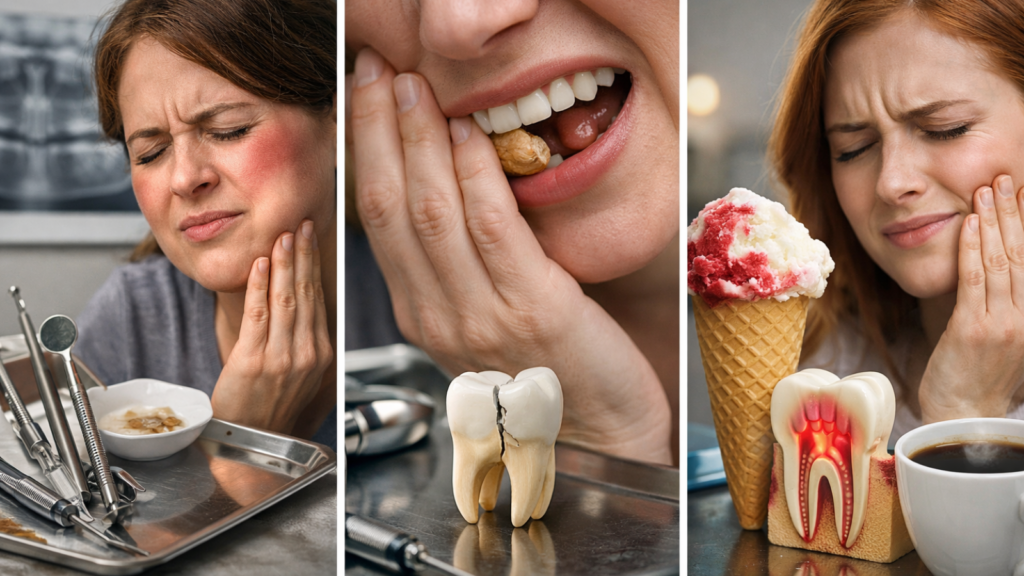
Different types of dental pain point to different underlying problems, recognizing the pattern helps you understand urgency and communicate clearly with your dentist. Pain quality, timing, and associated symptoms reveal whether you are dealing with infection, structural damage, nerve inflammation, or something unrelated to teeth.
Throbbing Pain, Swelling, Bad Taste: Infection/Abscess Warning Signs
Throbbing pain that pulses with your heartbeat, swelling on the gum or face, bad taste or odor in your mouth, and pain that worsens when lying down all suggest a dental abscess. An abscess forms when bacteria invade the tooth’s pulp (nerve chamber) or the gum pocket around the root. The body walls off the infection with pus, creating pressure that causes throbbing pain.
The bad taste results from pus draining into your mouth, either through a gum opening or internally. Swelling may start small, a pimple-like bump on the gum, or appear as visible facial puffiness. Pain intensifies when lying flat because blood pooling in the head increases pressure inside the abscess.
Abscesses require professional drainage and antibiotics. They do not resolve on their own, and the infection can spread to the jaw bone, surrounding tissues, or bloodstream. Spontaneous drainage, where the abscess ruptures and pus flows out, may temporarily relieve pain but does not eliminate the infection. To understand the full scope of danger and treatment options, read our detailed guide on tooth abscess symptoms, danger signs, and urgent treatment. The dentist must remove the source (infected pulp or diseased gum tissue) and clean the area thoroughly.
Sharp Pain When Biting: Cracked Tooth or Bite-Related Pain Patterns
Sharp, sudden pain when biting down on food, especially hard items, indicates a cracked tooth, a loose filling, or a high spot on a recent filling. Cracked tooth pain is distinctive, it occurs only when pressure releases, not while chewing. The crack opens slightly under pressure, irritating the nerve, then snaps back when you stop biting, causing the sharp jolt.
Cracks often start small and invisible, appearing only on the internal surface or running vertically through the tooth. They may cause intermittent pain for weeks before becoming constant. Temperature sensitivity may or may not accompany the pain. Large cracks that reach the pulp chamber can lead to infection and require root canal treatment or extraction. For a detailed breakdown of severity levels and treatment paths, see our guide on chipped vs cracked vs broken teeth.
A loose filling creates similar pain, the gap allows pressure to reach sensitive dentin or the nerve. A high filling (one that sticks up too much after placement) causes pain when the opposing tooth hits it first during chewing. The dentist can adjust a high filling in minutes, while cracks and loose fillings require more extensive repair.
Avoid chewing on the painful side until you see a dentist. Continuing to bite on a cracked tooth can extend the fracture deeper, turning a repairable problem into an extraction case. Many patients wait weeks because the pain is intermittent, but cracks worsen with time and chewing force.
Hot/Cold Sensitivity: Enamel Sensitivity vs Nerve Inflammation (When It Is Urgent)
Brief, sharp pain triggered by cold drinks or hot soup that fades within seconds points to enamel sensitivity or exposed root surfaces. This type of sensitivity results from worn enamel, gum recession, or acidic erosion that exposes microscopic tubules leading to the nerve. It responds well to desensitizing toothpaste and fluoride treatments. If sensitivity is a recurring concern for you, our dedicated article on sensitive teeth causes and best treatments covers both diagnostic and treatment approaches in depth.
Prolonged sensitivity that lingers for minutes after the temperature stimulus ends suggests nerve inflammation (pulpitis). Early pulpitis may still be reversible with a filling or other conservative treatment. Advanced pulpitis, where pain continues after the trigger is removed and eventually becomes spontaneous, indicates irreversible nerve damage requiring root canal treatment.
Urgent scenarios include sensitivity that escalates to constant pain, sensitivity accompanied by swelling or pus, and sudden extreme sensitivity after dental work (which may indicate a crack or exposed nerve). Non-urgent sensitivity includes mild, brief discomfort without spontaneous pain, sensitivity that improves with desensitizing products, and isolated sensitivity to one tooth without other symptoms.
The key distinction: reversible sensitivity responds to triggers but resolves quickly; irreversible inflammation produces lingering pain and eventually throbs without any stimulus. Early treatment for reversible pulpitis can save the nerve; waiting turns it into a root canal or extraction case.
Toothache That Is Not a Tooth: Sinus Pressure vs TMJ vs Referred Jaw Pain
Not all “toothaches” originate from teeth. Upper back tooth pain that affects multiple teeth simultaneously, worsens when bending forward or lying down, and coincides with nasal congestion or facial pressure often results from sinus inflammation. The roots of upper molars sit just below the maxillary sinuses, and inflamed sinus membranes press on the tooth roots, creating aching pain.
Sinus-related tooth pain typically feels dull and diffuse rather than sharp and localized. It improves with decongestants or after sinus infections clear. Tapping on individual teeth produces little response, unlike true dental infections where one tooth is acutely tender. The dentist can distinguish sinus pain from dental pain through percussion tests and X-rays.
TMJ disorders cause jaw pain that radiates to the teeth. Symptoms include pain near the ear, clicking or popping when opening the mouth, jaw muscle tenderness, and pain that worsens with chewing or clenching. TMJ pain affects the jaw and surrounding muscles, not specific teeth, though patients often misidentify it as toothache.
Cardiac referred pain occasionally presents as lower jaw or tooth pain, especially in women. If unexplained jaw pain accompanies chest discomfort, shortness of breath, or nausea, seek emergency medical evaluation. Trigeminal neuralgia produces electric-shock-like facial pain that can involve the jaw and teeth but has distinct trigger patterns (light touch, brushing teeth). Cluster headaches may cause upper tooth and jaw pain alongside eye redness and nasal congestion.
The dentist evaluates for dental causes first (percussion tests, X-rays, bite analysis). If no dental pathology exists and symptoms fit sinus, TMJ, or neurological patterns, they may refer to an ear-nose-throat specialist, physical therapist, or neurologist.
Safe At-Home Toothache Relief (First 30 to 60 Minutes)

Effective at-home care reduces pain and inflammation while protecting the tooth and surrounding tissues until you can see a dentist. The first hour sets the tone, proper steps calm the situation, while common mistakes worsen damage or mask symptoms you need to monitor.
Step-by-Step “First Aid” Routine (Clean → Rinse → Cold Compress → Pain Relief)
Start with gentle cleaning. Brush the painful tooth and surrounding area with a soft-bristled toothbrush and regular toothpaste, using light pressure. Rinse your mouth thoroughly with plain water to remove debris. This step addresses pain caused by trapped food particles pressing on inflamed tissue.
Next, prepare a warm salt-water rinse (1 teaspoon of salt dissolved in 8 ounces of warm water). Swish for 30 seconds, focusing on the painful area, then spit out. Repeat 3 to 4 times. The salt water draws out fluid from swollen tissues, reduces bacterial load, and soothes irritated gums.
Apply a cold compress to the outside of your cheek over the painful area. Use a cloth-wrapped ice pack or a bag of frozen vegetables. Hold for 15 minutes, then remove for 15 minutes. Repeat this cycle 3 to 4 times in the first hour. Cold constricts blood vessels, reducing swelling and numbing nerve endings.
Take over-the-counter pain medication according to package directions (see Section 4.1 for specific guidance). Ibuprofen works well for dental pain because it reduces inflammation and pain. Acetaminophen offers an alternative if you cannot take ibuprofen. Avoid aspirin applied directly to gums (see Section 3.4).
This routine addresses the most common causes of acute dental pain: trapped debris, bacterial irritation, swelling, and inflammation. It provides measurable relief in 30 to 60 minutes for many toothaches. The sequence matters, cleaning first prevents you from sealing bacteria against the tooth with subsequent rinses or compresses.
Warm Salt-Water Rinse and Gentle Flossing (How to Do It Without Making It Worse)
Warm salt-water rinses reduce bacterial counts, cleanse inflamed tissues, and promote healing without chemical irritants or prescription requirements. Mix 1 level teaspoon of table salt into 8 ounces (approximately 240 milliliters) of water heated to a comfortable warm temperature, slightly warmer than body temperature but not hot enough to burn.
Swish the solution gently around the painful tooth for 30 seconds, moving it slowly back and forth. Do not swish vigorously; aggressive movement can dislodge forming blood clots if you have an extraction site or traumatized tissue. Spit out the rinse completely, do not swallow it, as the salt concentration is too high for internal consumption. Repeat every 2 to 3 hours during the day.
Gentle flossing removes food trapped between teeth, which often causes or worsens pain. Use unwaxed or waxed dental floss, whichever you prefer. Slide the floss gently between the teeth near the painful area, curve it against one tooth surface, and move it up and down slowly. Do not snap the floss or force it aggressively, this can cut into already inflamed gum tissue.
If flossing causes sharp pain or you notice pus or blood, stop and note this information for your dentist. Bleeding may indicate gum infection or a crack. Pus signals an abscess. Continue to floss other areas of your mouth gently to maintain overall oral hygiene.
Avoid using toothpicks, pins, or sharp objects to probe the painful tooth. These can push bacteria deeper, break off inside the gum, or damage the tooth structure. A water flosser set to low pressure offers a gentle alternative if traditional floss causes discomfort, but do not aim high-pressure water at swollen or damaged tissue.
Cold Compress for Swelling and Throbbing (Timing and Frequency)
Cold application reduces inflammation by constricting blood vessels and slowing cellular metabolism in the affected area, which decreases swelling and numbs pain receptors. Use a cold compress only on the outside of your face, never directly inside the mouth on the tooth or gum.
Wrap ice cubes, an ice pack, or a bag of frozen vegetables in a thin towel or cloth. Apply it to the cheek or jaw over the painful tooth area. Hold for 15 minutes, then remove for 15 minutes. This 15-minutes-on, 15-minutes-off cycle prevents tissue damage from prolonged cold exposure while maintaining anti-inflammatory effects.
Repeat the cycle every hour during the first 6 to 12 hours after pain onset, especially if you notice visible swelling. Cold works best in the early stages of inflammation. After 48 hours, inflammation typically transitions from acute to subacute, and some practitioners suggest switching to warm compresses, though this varies by case. For dental abscesses or infections, continue cold compresses and avoid heat (see Section 3.4).
You may notice a tingling or slight numbness in the cheek area during cold application, this is normal and part of the pain-relief mechanism. If the skin becomes very pale, mottled, or painful, remove the compress immediately; you are applying too much cold for too long. Never fall asleep with a cold compress in place.
Cold compresses work particularly well for post-extraction pain, traumatic injuries (knocked or chipped teeth), and pain with visible facial swelling. They provide less benefit for isolated nerve pain without swelling (such as sensitivity to temperature), where the problem lies deep inside the tooth rather than in surrounding tissues.
What NOT to Do (Aspirin on Gums, Heat on Swelling, Aggressive Poking/Scraping)
Common home remedies can worsen dental problems or mask symptoms you need to monitor for treatment decisions. Avoid these mistakes:
- Never place aspirin or other pain tablets directly on the gum or tooth. Aspirin contains acetylsalicylic acid, which burns soft tissue on contact, causing white, painful chemical burns on the gum. These burns increase pain and create open wounds vulnerable to infection. Swallow aspirin with water as directed, or choose a different pain reliever. The same rule applies to crushing tablets and packing them around a tooth.
- Do not apply heat to swelling caused by dental infection or abscess. Heat increases blood flow, which can spread bacteria and worsen swelling. Warmth may feel comforting initially but accelerates infection progression. Use cold compresses only for dental swelling. Reserve heat for muscle soreness or TMJ pain without infection, and only after a professional confirms no infection is present.
- Avoid aggressive poking, scraping, or probing of a painful tooth with metal tools, toothpicks, or pins. You can break off the tool tip inside the gum, push bacteria deeper into tissues, or fracture weakened tooth structure. If you see a visible cavity or hole, do not attempt to clean it out; leave this to the dentist with proper instruments and lighting.
- Do not use clove oil or other essential oils undiluted. Eugenol, the active compound in clove oil, has mild anesthetic properties but causes severe tissue burns when applied in concentrated form. If you choose to use clove oil, dilute 1 to 2 drops in a teaspoon of carrier oil (coconut oil or olive oil), apply sparingly to the gum, not the tooth, and rinse after a few minutes. Many dentists consider even diluted clove oil unnecessary given safer alternatives.
- Avoid chewing gum, sticky foods, or hard items on the painful side. Chewing creates pressure that worsens cracks, loosens fillings, and aggravates inflamed tissues. Stick to soft foods and chew on the opposite side until you receive dental care.
- Do not assume pain relief means the problem is gone. Pain that disappears after an abscess drains or after taking antibiotics often signals temporary bacterial suppression, not cure. The infection remains inside the tooth or bone and will return, often worse than before. Always complete the planned dental treatment even if you feel better.
Medicines & Temporary Fixes (What Works, What Is Risky)
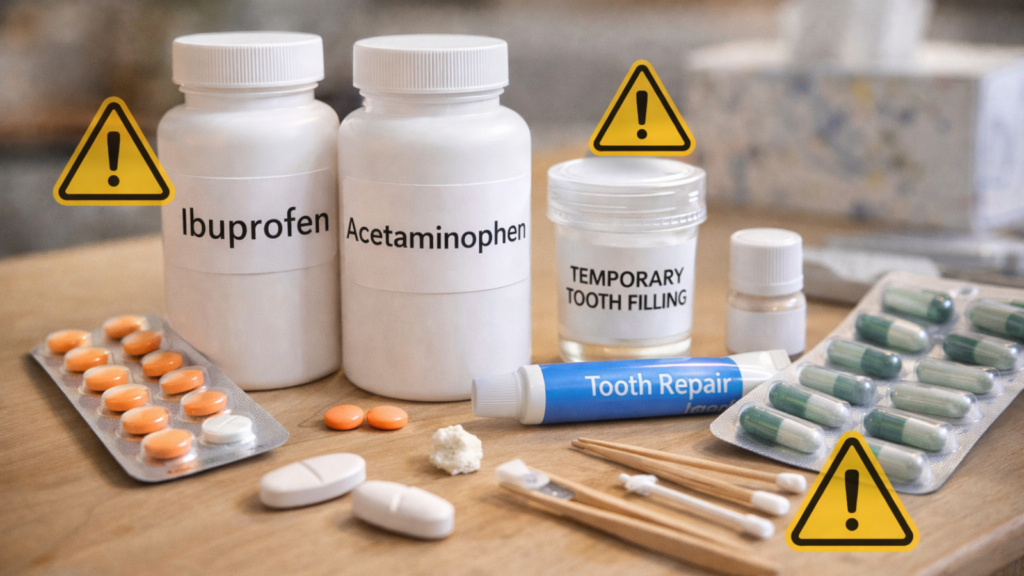
Over-the-counter medications and temporary repair materials can manage pain and protect damaged teeth, but only when used correctly and with awareness of their limitations. Misuse creates new problems or delays necessary treatment.
OTC Pain Relief Options: Ibuprofen vs Acetaminophen (Practical Dosing Guidance and Cautions)
Ibuprofen (brands include Brufen, Advil, Motrin) and acetaminophen (Paracetamol, Tylenol) are the primary over-the-counter pain relievers for toothache, each with distinct mechanisms and safety profiles. Ibuprofen belongs to the NSAID (nonsteroidal anti-inflammatory drug) class and works by blocking enzymes that produce inflammatory chemicals. Acetaminophen reduces pain through central nervous system pathways but has minimal anti-inflammatory effect.
For most dental pain, ibuprofen provides superior relief because dental pain usually involves inflammation (swelling, nerve irritation, tissue damage). Standard adult dosing is 400 milligrams every 4 to 6 hours, not exceeding 1,200 milligrams in 24 hours for self-care (higher doses require medical supervision). Take ibuprofen with food or milk to reduce stomach irritation. Effects appear within 30 to 60 minutes and last 4 to 6 hours.
Acetaminophen offers an alternative when ibuprofen is contraindicated. Standard adult dosing is 500 to 1,000 milligrams every 4 to 6 hours, with a maximum of 3,000 to 4,000 milligrams per 24 hours (lower limits recommended for long-term use or individuals with liver concerns). Acetaminophen produces fewer gastrointestinal side effects than ibuprofen but carries liver toxicity risk at high doses or with alcohol use.
Some patients use alternating ibuprofen and acetaminophen to extend pain coverage, for example, ibuprofen at 8 AM and 4 PM, acetaminophen at 12 PM and 8 PM. This approach requires careful tracking to avoid accidental overdose. Do not combine ibuprofen with other NSAIDs (aspirin, naproxen) as this increases bleeding and ulcer risk without improving pain relief.
Neither medication eliminates the underlying cause of dental pain. They provide temporary relief while you arrange professional care. If pain persists beyond 48 hours or intensifies despite medication, you need dental evaluation, the problem is too severe for self-care alone.
When to Avoid Certain Painkillers (Ulcers, Kidney Disease, Blood Thinners, Pregnancy)
Avoid ibuprofen and other NSAIDs if you have active stomach ulcers, a history of gastrointestinal bleeding, severe kidney disease, heart failure, or bleeding disorders. NSAIDs inhibit platelet function and can worsen bleeding. They also reduce kidney blood flow and can precipitate kidney failure in vulnerable individuals. Anyone taking blood thinners (warfarin, clopidogrel, newer anticoagulants) should consult a doctor before using NSAIDs; the combination increases bleeding risk.
Pregnant women should avoid ibuprofen, especially in the third trimester, as it can affect fetal heart development and prolong labor. Acetaminophen is generally considered safer during pregnancy, but consult your obstetrician regarding appropriate doses and duration. Breastfeeding mothers can use both ibuprofen and acetaminophen in standard doses; minimal amounts pass into breast milk.
Individuals with liver disease, chronic alcohol use, or who take medications metabolized by the liver should limit acetaminophen and consult a physician regarding safe dosing. Acetaminophen overdose causes liver failure, and the margin between therapeutic and toxic doses narrows in liver-compromised individuals.
Asthmatics may experience bronchospasm with NSAIDs (aspirin and ibuprofen), a condition called aspirin-exacerbated respiratory disease. If you have asthma and NSAID sensitivity, use acetaminophen instead. Similarly, individuals with NSAID allergies (hives, swelling, difficulty breathing after taking ibuprofen or aspirin) must avoid all NSAIDs.
Check all medications you currently take for acetaminophen or NSAID content, many cold remedies, sinus medications, and combination pain products contain these ingredients. Adding additional doses can result in accidental overdose. When in doubt, show your pharmacist all the medications you are taking and ask which pain reliever is safest for you.
Temporary Fixes for a Lost Filling/Broken Edge (Safe “Cover” Ideas Until the Dentist)
A lost filling or broken tooth edge exposes sensitive dentin or pulp tissue, causing pain and creating a rough surface that cuts the tongue or cheek. Temporary dental materials available at pharmacies can cover the exposed area and reduce discomfort until you see a dentist, typically within 24 to 72 hours. These materials are strictly temporary, they do not replace professional treatment.
Dental cement or temporary filling material (brands include Dentemp, DenTek, or local pharmacy equivalents) comes as a powder-liquid mix or pre-mixed paste. Dry the tooth carefully with a clean cotton swab or gauze. Roll a small amount of material into a ball, press it into the cavity or over the broken edge, and bite gently to shape it to your bite. Avoid chewing directly on it. The material sets in minutes but remains softer than a permanent filling.
Dental wax (orthodontic wax or temporary wax) works well for broken edges that cut the tongue or cheek. Dry the sharp area, pinch off a small piece of wax, warm it between your fingers, and press it over the sharp edge. Reapply as needed. Wax provides no structural support but prevents soft tissue injury.
Sugar-free gum can serve as an emergency spacer if you are far from a pharmacy, dry the tooth, chew the gum briefly to soften it, then press a small piece into the cavity. This provides minimal protection but is better than leaving a deep cavity exposed. Replace it with proper temporary material as soon as possible.
Do not use super glue, household adhesives, or permanent cements. These materials are toxic, do not bond to wet tooth surfaces, and complicate professional repair. Never attempt to cement a crown or bridge back in place with non-dental adhesive; you may cement it in the wrong position or trap bacteria underneath.
Clean temporary material from the tooth before your dental appointment so the dentist can properly assess and treat the area. Mention when you placed the material and any pain changes since then, this information helps guide treatment planning.
Antibiotics for Toothache: When They Help vs When They Do Not (Myths vs Reality)
Antibiotics kill bacteria but do not remove the source of dental infection, they are an adjunct to definitive dental treatment, not a standalone cure. Dentists prescribe antibiotics for spreading infections, abscesses with systemic symptoms (fever, swelling, malaise), or before certain procedures in high-risk patients. They do not prescribe antibiotics for routine cavities, mild gum inflammation, or isolated tooth pain without infection signs.
Effective scenarios for antibiotics include dental abscess with facial swelling or fever, cellulitis (spreading skin infection) from dental origin, infection in immunocompromised patients, or post-surgical infection prevention. The antibiotic suppresses bacterial growth while the dentist drains the abscess, removes infected tissue, or extracts the tooth, the procedures that actually eliminate the infection.
Ineffective scenarios include toothache from a cavity without abscess, gum pain from food debris or mild gingivitis, sensitivity or nerve pain without infection, and cracked tooth pain. Antibiotics do not reduce inflammation from non-infectious causes, do not repair teeth, and do not prevent future cavities. Taking antibiotics for these situations wastes medication, promotes bacterial resistance, and delays appropriate treatment.
Common antibiotics for dental infections include amoxicillin, metronidazole, azithromycin (for penicillin-allergic patients), and clindamycin. Typical courses run 5 to 7 days, taken at specified intervals. Finish the entire prescription even if pain improves, stopping early allows resistant bacteria to survive and multiply.
Side effects include digestive upset (diarrhea, nausea), allergic reactions (rash, swelling, difficulty breathing), and yeast infections. Severe or persistent diarrhea may indicate Clostridioides difficile infection, a serious complication requiring medical attention. Report any severe or worsening symptoms to your dentist or doctor immediately.
Antibiotics are not available over-the-counter in Nepal, you must obtain them through a prescription from a dentist or physician. Avoid using leftover antibiotics from previous illnesses or borrowing medications from others. The wrong antibiotic or incorrect dosing can worsen outcomes and promote resistance. Self-prescribing antibiotics without addressing the dental source creates a cycle where infections recur, often worse each time.
True Dental Emergencies: Abscess and Trauma Action Guides
Dental abscesses and traumatic injuries require immediate, specific actions to prevent complications and save teeth. These situations separate into two categories: infections that threaten health, and injuries that threaten tooth viability. Each has a time-sensitive action plan.
Dental Abscess: Signs, Why It Can Turn Serious, and Why Drainage/Definitive Care Matters
A dental abscess is a localized collection of pus caused by bacterial infection, it forms either at the tooth’s root tip (periapical abscess) or in the gum pocket beside the tooth (periodontal abscess). Signs include persistent, throbbing pain; swelling visible on the gum or face; bad taste or drainage in the mouth; sensitivity to pressure or chewing; tooth discoloration; and sometimes fever or swollen lymph nodes in the neck.
The danger lies in infection spread. Dental abscesses can extend into the jaw bone (osteomyelitis), under the tongue (Ludwig’s angina, which can obstruct breathing), behind the eye (orbital cellulitis, risking vision), or into the bloodstream (sepsis). These complications occur most often in people with diabetes, weakened immune systems, or delayed treatment, but they can affect anyone.
Spontaneous drainage, where the abscess ruptures and pus flows into the mouth, provides temporary pain relief but does not resolve the infection. The source (infected pulp or deep gum pocket) remains, and the abscess refills. Only professional drainage combined with source removal (root canal, extraction, or deep cleaning) eliminates the infection.
Drainage procedures include incision and drainage (cutting into the swelling to release pus), root canal therapy (cleaning out infected pulp and sealing the tooth), extraction (removing the tooth entirely), or periodontal debridement (deep cleaning infected gum pockets). The dentist chooses based on the abscess location, tooth condition, and patient factors. If you are looking for qualified, experienced care in Nepal, dental in Kathmandu provides a full range of emergency and restorative services under one roof.
After drainage, the dentist typically prescribes antibiotics to address residual bacteria in the bloodstream and surrounding tissues. Antibiotics alone, without drainage and source removal, rarely cure dental abscesses because pus pockets have poor blood flow, limiting antibiotic penetration. Pain medication and warm salt-water rinses support healing.
If You Cannot Reach a Dentist Today: Safe Interim Plan and Escalation Checklist
You need a dentist for an abscess, but if same-day care is impossible (holiday, remote location, waiting for an opening), use this interim plan to control symptoms and prevent deterioration until you receive treatment:
Firstly, take antibiotics if prescribed earlier for this infection and continue the full course. Secondly, use over-the-counter pain relief (ibuprofen 400 milligrams every 6 hours with food, or acetaminophen 500 to 1,000 milligrams every 6 hours). Thirdly, rinse with warm salt water every 2 to 3 hours to reduce bacterial load and soothe tissues.
Avoid chewing on the affected side, and stick to soft, cool or room-temperature foods that do not irritate the area. Apply a cold compress to the outside of your face for 15 minutes on, 15 minutes off, to reduce swelling and numb pain. Sleep with your head elevated on extra pillows, lying flat increases blood flow to the head and worsens throbbing pain.
Monitor for escalation signs that require emergency room evaluation: rapidly spreading swelling (visible growth over hours), difficulty breathing or swallowing, eye swelling or vision changes, severe headache or confusion, high fever (above 101°F or 38.3°C), or inability to control pain with medication. Any of these symptoms indicate the infection is spreading beyond the local area and requires immediate hospital care, not waiting for a dental appointment.
Contact the dentist’s office again in the morning if symptoms worsen overnight or if the earliest available appointment is more than 48 hours away. Many clinics adjust schedules for true emergencies. Explain the situation clearly: “I have facial swelling and throbbing pain from a dental abscess.” This language conveys urgency better than “My tooth hurts.”
Knocked-Out Adult Tooth: What to Do in the First 5 to 30 Minutes (Save the Tooth Steps)
A knocked-out permanent tooth can often be saved if you act within minutes and transport it correctly, time is the single most critical factor, with success rates dropping sharply after 30 minutes outside the socket. The tooth’s root surface has delicate cells that die when exposed to air and contamination. Your immediate actions determine whether the tooth can be replanted.
The instant the tooth comes out, find it and pick it up by the crown (the white part you see in the mouth), never by the root. Do not touch, scrub, or scrape the root surface. If the tooth is dirty, rinse it very gently under cold running water for 10 seconds maximum, do not rub it.
Immediately try to replant the tooth in its socket. Position the tooth correctly (smooth side faces outward, check against adjacent teeth if unsure), push it gently into place until it sits level with neighboring teeth, and hold it there by biting gently on a clean cloth or gauze. Maintain light pressure while traveling to the dentist.
If you cannot replant the tooth (severe bleeding, child unable to hold it safely, socket too damaged), store it properly during transport. The best storage medium is cold milk, whole milk works better than skim. Submerge the entire tooth in a small container of milk. Alternatives in descending order of preference include the patient’s saliva (have the patient spit in a cup and place the tooth in it), saline solution, or as a last resort, holding the tooth between the cheek and gum (if the patient is old enough to do this safely without swallowing it). Never use tap water; it damages root cells.
Call the dentist immediately, explain the situation, and go directly to the clinic. Knocked-out teeth are true dental emergencies requiring treatment within 30 to 60 minutes for the best chance of successful reattachment. The dentist will clean the socket, replant or stabilize the tooth, and may splint it to adjacent teeth for 1 to 2 weeks. Root canal treatment often follows weeks to months later because the tooth’s nerve rarely survives.
For baby (primary) teeth, do not replant them. Baby teeth pushed back into the socket can damage the developing permanent tooth underneath. Control bleeding with gauze, apply a cold compress, and see the dentist to assess damage to surrounding structures and the permanent tooth bud.
Broken Tooth and Bleeding: What to Do Now, What to Bring, and What Counts Urgent
Broken teeth range from minor chips to severe fractures, the extent of the break, pain level, and bleeding determine urgency. Broken tooth situations that require same-day care include fractures with exposed pink or red tissue (likely exposed pulp), bleeding that does not stop with 10 minutes of pressure, severe pain, teeth broken at or below the gum line, or facial or lip swelling from the trauma.
For immediate care, rinse your mouth gently with warm water to clean the area. If bleeding is present, fold a clean gauze pad or cloth, place it over the bleeding site, and bite down firmly for 10 minutes. Most dental bleeding stops with direct pressure. Apply a cold compress to the outside of the face to reduce swelling and pain.
Collect any tooth fragments you can find, rinse them gently, and bring them to the dentist, even if the pieces seem small. In some cases, fragments can be bonded back onto the tooth. Avoid chewing on the broken tooth, and eat only soft foods until you receive treatment.
What to bring to the appointment: any tooth fragments collected, a list of medications you currently take (especially blood thinners or antibiotics), details about how the break occurred (fall, hard food, previous dental work that failed), and any medical conditions that affect healing (diabetes, immune disorders).
Non-urgent broken teeth include minor chips that are not sensitive and have no sharp edges, cracks visible only on close inspection without pain, and small fractures of old fillings with no discomfort. Schedule a routine appointment within a week for these situations. The dentist can smooth sharp edges, apply bonding material, or replace fillings to restore function and appearance.
Large fractures often require crowns to protect the remaining tooth structure. Fractures extending into the pulp need root canal treatment before crown placement. Teeth broken at the gum line may require surgical crown lengthening (reshaping gum and bone to expose more tooth) or extraction if insufficient structure remains.
What a Dentist in Kathmandu May Do and How to Prevent the Next Toothache
Understanding what happens during an urgent dental visit reduces anxiety and helps you participate in treatment decisions, most emergency visits follow a standard examination and diagnosis protocol before treatment begins. Prevention strategies implemented after the crisis save you from repeating the experience.
What to Expect at an Urgent Visit (Exam, X-Ray, Percussion Tests, Bite Checks)
The dentist starts with a verbal history: when the pain started, what triggers it, what relieves it, any swelling or trauma, relevant medical conditions, and current medications. This information narrows the diagnosis before examination begins.
The clinical examination includes visual inspection of the tooth and gums (looking for cracks, decay, swelling, discoloration, and pus), percussion testing (tapping each tooth with a metal instrument to identify which one is tender), palpation (pressing on the gum and face to locate swelling or painful areas), and thermal testing (applying cold or occasionally heat to test nerve response). You will be asked to bite on a specific tool to detect cracks or high spots.
X-rays reveal problems invisible to the eye, decay between teeth, abscesses at root tips, bone loss, cracks extending into the root, and previous dental work integrity. The dentist may take one targeted X-ray of the painful area or a panoramic image showing all teeth. Digital X-rays used in most Kathmandu clinics, including BrightSmile Dental Clinic, provide immediate results with less radiation than traditional film.
Based on the examination and imaging, the dentist explains the diagnosis, treatment options, expected outcomes, timeline, and costs. For dental abscesses, treatment typically involves drainage, antibiotics, and either root canal therapy or extraction. For cracked teeth, options include bonding, crown placement, or extraction if the crack is too severe. For infected pulp, root canal treatment preserves the tooth while extraction removes it.
Emergency visits may include immediate treatment (drainage, temporary filling, pain injection, extraction if necessary) or stabilization followed by a return appointment for definitive care (root canal, crown preparation). The dentist prioritizes pain relief and infection control first, then comprehensive restoration.
Treatment Paths: Filling vs Root Canal vs Extraction (How the Decision Is Made)
The dentist selects treatment based on infection extent, structural tooth integrity, restorability, and patient factors such as cost, time availability, and medical history. The decision tree follows this general pattern:
A filling suffices when decay or damage is limited to the tooth’s enamel and dentin layers without pulp involvement. The dentist removes decayed tissue, cleans the cavity, and fills it with composite resin, amalgam, or glass ionomer. This treatment preserves the natural tooth and nerve, maintains normal sensation, and costs less than more extensive procedures. In Kathmandu, simple fillings typically range from NPR 1,500 to 4,000 depending on material and tooth location.
Root canal treatment becomes necessary when infection or inflammation reaches the pulp (nerve chamber). Symptoms indicating pulp involvement include severe, spontaneous pain; prolonged sensitivity to hot or cold; pain that wakes you at night; and visible abscess or pus. The dentist removes infected pulp tissue, cleans and shapes the root canals, fills them with gutta-percha (a rubber-like material), and seals the access opening. Root canal therapy saves the tooth structure while eliminating infection and pain. Most root-canal-treated teeth require crowns afterward to protect the weakened structure. In Kathmandu, root canal costs typically range from NPR 9,800 to 16,000 depending on tooth complexity, with crowns adding NPR 8,000 to 25,000.
Extraction removes the tooth entirely when restoration is not possible or practical. Indications include severe decay destroying most of the tooth, cracks extending below the gum line, advanced gum disease with bone loss, teeth broken at the root, and patient preference when cost or time constraints make restoration impractical. After extraction, options for replacing the tooth include dental implants (NPR 60,000 to 130,000), bridges (NPR 20,000 to 50,000 for a 3-unit bridge), or removable partial dentures (NPR 15,000 to 40,000).
The dentist discusses the pros and cons of each option. Root canal treatment is more expensive and time-intensive than extraction but preserves your natural tooth, maintains jaw bone, and avoids the need for replacement. Extraction is faster and less expensive initially but requires replacement to prevent adjacent teeth from shifting and maintain chewing function.
Aftercare: What Is Normal After Treatment vs “Come Back Urgently” Symptoms
Post-treatment symptoms vary by procedure. After a filling, you may experience mild sensitivity to cold or pressure for a few days, this is normal as the tooth adjusts. Sensitivity that worsens or persists beyond a week, severe pain when biting, or new swelling warrants a return visit; these symptoms may indicate a high spot on the filling or developing infection.
After root canal treatment, expect mild to moderate discomfort for 3 to 7 days as inflammation resolves. The tooth may feel tender when chewing. Take prescribed or over-the-counter pain medication as directed, avoid chewing hard foods on that side for a few days, and continue normal brushing and flossing. Symptoms requiring urgent re-evaluation include severe pain uncontrolled by medication, visible swelling or pus, the temporary filling falling out (which exposes the canal to bacteria), or fever. Complete any prescribed antibiotic course even if you feel better.
After extraction, mild bleeding, swelling, and discomfort are normal for 24 to 72 hours. Bite on gauze for 30 to 60 minutes after the procedure to control bleeding. Apply ice packs for the first 24 hours to minimize swelling. Eat soft foods, avoid smoking and drinking through straws (suction can dislodge the blood clot), and keep the area clean by gently rinsing with salt water starting 24 hours after extraction. Concerning symptoms include bleeding that soaks through gauze every 10 to 15 minutes for more than 2 hours, severe pain starting 3 to 4 days post-extraction (possible dry socket, a condition where the blood clot is lost prematurely), swelling that increases after day 3, fever, or difficulty breathing or swallowing.
For any dental work, complete all scheduled follow-up appointments. Many treatments require multiple visits, root canals need permanent filling or crown placement, extractions may need bone grafting or implant planning. Skipping follow-up appointments leaves treatment incomplete and risks complications.
Prevention Plan: Brushing/Flossing Routine, Sensitivity Control, Checkup Timing, Mouthguards
Most dental emergencies result from progressive problems that develop over months or years, consistent preventive care interrupts this progression. The core prevention plan includes 4 components: daily oral hygiene, professional cleanings, protective devices, and early intervention.
Brush twice daily with fluoride toothpaste for 2 minutes using a soft-bristled brush. Hold the brush at a 45-degree angle to the gums and use gentle circular motions. Replace your toothbrush every 3 months or sooner if bristles fray. Electric toothbrushes with pressure sensors and timers help ensure thorough cleaning. Floss once daily before bedtime to remove plaque and food from between teeth where brushes cannot reach. Use approximately 45 centimeters of floss, wind it around your fingers, and curve it against each tooth surface.
For sensitivity control, use desensitizing toothpaste (brands containing potassium nitrate or stannous fluoride) daily for 2 to 4 weeks. If sensitivity persists, the dentist can apply professional fluoride varnish or recommend prescription-strength toothpaste. Avoid aggressive brushing and acidic foods that erode enamel.
Schedule professional cleanings and check-ups every 6 months or as recommended by your dentist. These visits remove hardened plaque (calculus) that brushing cannot eliminate, detect cavities when they are small and easily treated, identify gum disease early when it is reversible, and screen for oral cancer. Early detection of problems reduces treatment complexity and cost.
Mouthguards protect teeth during sports and nighttime grinding. Custom-fitted guards from a dentist offer the best protection and comfort but cost more (NPR 8,000 to 20,000). Over-the-counter boil-and-bite guards (NPR 1,000 to 3,000) provide moderate protection. Wear the guard consistently during high-risk activities or every night if you grind teeth.
Additional prevention measures include limiting sugary and acidic foods and drinks (soda, sports drinks, candy, dried fruit), drinking water after meals to rinse away food particles and acids, avoiding tobacco in all forms (smoking and chewing tobacco increase gum disease and oral cancer risk), and controlling systemic conditions that affect oral health (diabetes, dry mouth from medications).
Take Control of Your Dental Health Today
Toothaches rarely resolve on their own, they signal underlying problems that worsen without treatment. You now have the knowledge to assess urgency, provide effective first aid, and make informed decisions about when to seek care. Act quickly for true emergencies, manage mild pain appropriately at home, and understand that antibiotics and pain medications are temporary bridges to definitive dental treatment.
BrightSmile Dental Clinic in Putalisadak offers same-day emergency appointments for urgent dental pain, abscesses, and trauma. We provide transparent pricing, gentle care protocols, and comprehensive treatment planning to address both your immediate discomfort and long-term dental health. Call +977-9748343015 or message us on WhatsApp to schedule your evaluation. For routine check-ups and preventive care, visit dentalinkathmandu.com to learn more about our services and book your appointment.
Your dental health influences your overall quality of life, pain-free eating, confident smiling, and freedom from infection-related health risks. The steps you take today prevent tomorrow’s emergencies.
What’s the fastest way to relieve toothache pain at home?
Relieve toothache pain quickly by flossing and rinsing with warm salt water to remove debris, then applying a cold compress to reduce swelling. Take ibuprofen or acetaminophen if safe. These steps are temporary, see a dentist if pain is severe or returns within 24–48 hours.
How do I know if my toothache is an emergency?
A toothache is an emergency if you have facial swelling, fever, pus, or pain that worsens quickly. Seek urgent care if swelling affects breathing, swallowing, or the eye/neck. These signs suggest a spreading infection that needs same-day dental or medical evaluation.
How long can I wait before seeing a dentist for tooth pain?
See a dentist if tooth pain lasts more than 24–48 hours or keeps returning. Waiting allows decay or infection to worsen. If pain is mild and improving with home care, monitor it briefly. Swelling, fever, or worsening symptoms require same-day dental care.
What home remedies should I avoid for toothache?
Avoid putting aspirin directly on gums, applying heat to swelling, or using sharp objects or strong chemicals like bleach or peroxide. High doses of clove oil can burn tissues. These remedies can worsen the problem or cause further irritation.
Is a toothache always caused by a cavity?
Toothaches are not always caused by cavities. Other causes include gum infections, cracked teeth, exposed roots, grinding, sinus pressure, or TMJ issues. Sharp pain when biting suggests cracks, and lingering heat sensitivity may indicate nerve problems. A dental exam confirms the cause.
Do antibiotics cure tooth infection or toothache?
Antibiotics may reduce symptoms of infection but do not cure most toothaches. Dental treatments like fillings or root canals are needed to fix the cause. A dentist prescribes antibiotics only if there’s swelling, fever, or signs of spreading infection.
Why is toothache worse at night?
Toothaches feel worse at night due to increased blood flow to the head when lying down and fewer distractions. Pressure changes and nerve inflammation make the pain throb more. Persistent night pain is a sign to see a dentist promptly.
What should I do if my filling falls out or my tooth chips?
If a filling falls out or tooth chips, rinse gently and avoid chewing on that side. Cover sharp edges with dental wax. Use pain relief if needed and schedule a dentist visit promptly. Delaying treatment increases the risk of infection.
What should I do if an adult tooth is knocked out?
If an adult tooth is knocked out, pick it up by the crown, rinse briefly, and place it back in the socket if possible. Otherwise, store it in milk or inside your cheek. Get emergency dental care immediately for the best chance of saving it.
When should I choose an emergency room instead of a dental clinic?
Go to the emergency room if you have trouble breathing or swallowing, facial swelling near the eye or neck, or high fever. These signs suggest a serious infection. For isolated tooth pain without swelling, an emergency dentist is usually the best choice.