
A tooth abscess is a pocket of pus caused by a bacterial infection in the tooth or gums, and it can become serious if ignored. Many people first notice a throbbing toothache, swelling, or a bad taste in the mouth, but the infection may already be spreading under the surface. Getting the right treatment quickly helps relieve pain and prevents complications.
In this guide, you’ll learn the most common symptoms of a tooth abscess, the danger signs that need urgent care, and what dentists do to treat it safely. We’ll also cover what you can do at home for short-term relief while arranging a dental visit. If you’re in Kathmandu and symptoms are worsening, it’s best to contact a dental clinic as soon as possible rather than waiting.
Tooth Abscess Basics (What It Is and Why It Happens)
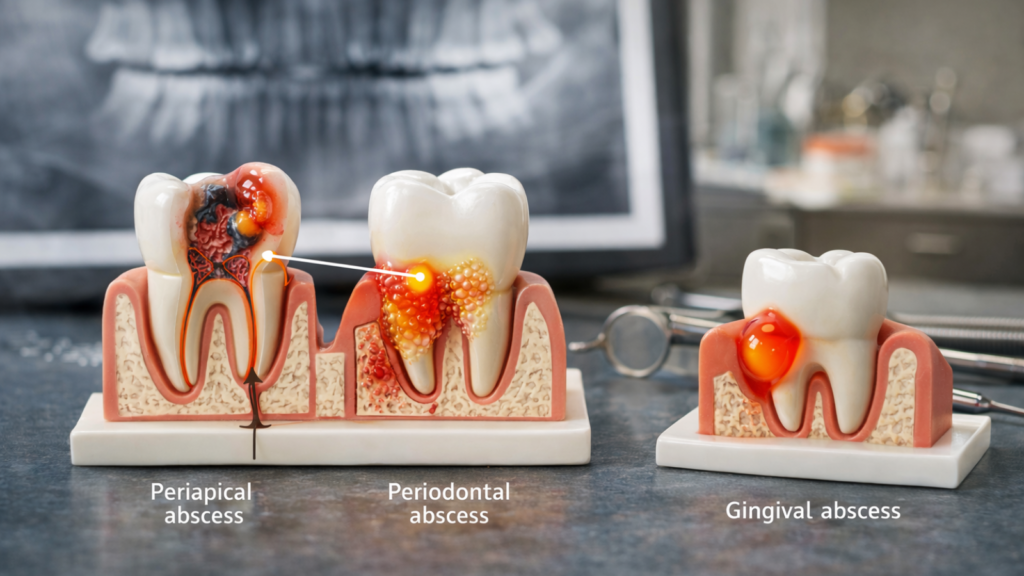
A tooth abscess is a bacterial infection that forms a pocket of pus in the tooth or gums, usually after decay, a crack, or gum disease lets germs enter deeper tissues. It often starts small but can worsen quickly because pressure builds and infection can spread into the jaw and face. Understanding the cause and type of abscess helps you know why home remedies are only temporary and why proper dental treatment matters.
What a tooth abscess is (pocket of pus) and why it’s serious
A tooth abscess is a collection of pus that forms in or around a tooth due to bacterial infection. The infection creates a pocket filled with dead white blood cells, bacteria, and tissue debris. Your body walls off the infection to prevent it from spreading, but this containment creates pressure that causes severe pain.
Abscesses are serious because the infection can spread beyond the tooth into surrounding tissues, the jawbone, and, in rare cases, into the bloodstream or brain. The bacteria responsible (typically Streptococcus, Staphylococcus, or anaerobic species) multiply rapidly in the enclosed space, producing toxins that damage healthy tissue. You cannot resolve a dental abscess with home remedies alone; professional drainage and treatment of the source are essential to eliminate the infection completely.
Types: periapical vs periodontal (and where each starts)
There are 3 main types of tooth abscess, and knowing which type you have helps guide treatment.
- Firstly, a periapical abscess starts at the tip of the tooth root. It develops when bacteria invade the dental pulp (the inner chamber containing nerves and blood vessels) through a cavity, crack, or failed filling, then travel down to the root apex. This is the most common type.
- Secondly, a periodontal abscess forms in the gum tissue alongside the tooth root. It typically results from gum disease (periodontitis) when bacteria accumulate in deep pockets between the gum and tooth, or from food particles trapped in these spaces. Unlike periapical abscesses, the tooth itself may remain alive and healthy.
- Thirdly, a gingival abscess (less common) occurs only in the gum tissue without involving the tooth root or deeper structures, often from a foreign object like a popcorn husk lodged in the gum.
X-rays and clinical examination determine which type you have, as treatment pathways differ significantly.
Common causes: deep cavity, crack, failed dental work, gum disease
Tooth abscesses do not appear randomly. They develop when bacteria gain access to normally sterile areas.
- Deep untreated cavities are the leading cause. Understanding how cavities form helps explain why decay gradually penetrates the hard enamel and dentin layers until bacteria reach the pulp chamber, triggering inflammation and infection that spreads to the root tip.
- Cracks or fractures in teeth create pathways for bacteria, even if the crack is not visible to you. Chewing hard foods, grinding teeth at night, or trauma from accidents can cause these fractures.
- Failed dental work (old fillings, crowns, or root canals) sometimes allows bacteria to re-enter the tooth. Restorations can deteriorate over years, developing gaps or recurrent decay underneath.
- Gum disease creates deep pockets around teeth where bacteria thrive in oxygen-poor environments. As pockets deepen beyond 5 to 6 millimeters, routine brushing cannot clean them, and abscesses can form in these spaces.
Previous dental procedures (especially recent extractions or implant surgeries) occasionally introduce bacteria or leave small fragments that trigger infection.
Risk factors that make abscess more likely (and more dangerous)
Certain conditions increase your vulnerability to tooth abscesses and raise the stakes when infection occurs.
- Poor oral hygiene allows plaque and bacteria to accumulate, accelerating cavity formation and gum disease progression.
- High-sugar diet feeds the bacteria that produce acid, eroding enamel and creating entry points for infection.
- Dry mouth (xerostomia) reduces saliva’s natural antibacterial properties. Medications, radiation therapy, or Sjögren’s syndrome can cause this condition.
- Weakened immune system from diabetes, HIV/AIDS, chemotherapy, or immunosuppressive drugs means your body struggles to contain infections. Diabetic patients face higher infection risk and slower healing; abscesses can destabilize blood sugar control in a dangerous cycle.
- Pregnancy alters immune response and hormone levels, making gum tissue more susceptible to infection. Untreated abscesses pose risks to both mother and developing baby.
- Previous dental trauma or sports injuries can damage teeth in ways that become apparent months or years later as infections develop.
In Kathmandu and throughout Nepal, delayed treatment due to cost concerns or fear of dental visits allows minor decay to progress into abscesses. BrightSmile Dental Clinic offers transparent pricing (root canal treatment NPR 9,800 to NPR 16,000; emergency drainage and antibiotics assessed individually) to remove financial uncertainty from urgent care decisions.
Quick Triage: Is This an Emergency?

Some tooth abscess symptoms can wait a short time for a dental appointment, while others require urgent emergency care. Spreading facial swelling, fever, swelling near the eye or neck, and trouble swallowing or breathing are danger signs that should never be ignored. Knowing these red flags helps you act fast and choose the right place to go, dental clinic vs emergency room.
Call a dentist urgently today if you have these symptoms
You need same-day dental attention if you experience any of these:
- Severe, throbbing toothache that worsens when lying down or disturbs sleep. Pain that radiates to your jaw, ear, or neck signals the infection is affecting surrounding nerves.
- Visible swelling in your gum, cheek, or jaw that appeared suddenly or is growing. Even if pain is mild, swelling indicates active infection that requires drainage.
- Pus drainage with a foul, salty taste occurs when an abscess ruptures. This provides temporary relief, but the infection source remains and will refill.
- Fever above 38°C (100.4°F) combined with dental pain suggests the infection is spreading systemically.
- Extreme sensitivity to hot or cold that lingers for minutes after the stimulus is removed, or spontaneous pain without any trigger, points to pulp involvement.
At BrightSmile Dental Clinic in Putalisadak, Kathmandu, we prioritize emergency cases and can typically accommodate urgent appointments within hours during business days. Call +977-9748343015 or message via WhatsApp for fastest response.
Go to ER now: breathing/swallowing trouble, eye/neck swelling, rapidly spreading swelling
These symptoms indicate life-threatening complications requiring hospital emergency department care immediately:
- Difficulty breathing or swallowing develops when infection spreads into deep neck spaces, potentially blocking your airway. This is a medical emergency called Ludwig’s angina.
- Swelling that extends to your eye, closes your eye partially, or causes vision changes suggests the infection is tracking upward toward the brain or eye socket (orbital cellulitis).
- Neck swelling or stiffness, especially with high fever and confusion, raises concern for descending infection into the mediastinum (chest) or cavernous sinus thrombosis (a blood clot in the brain).
- Rapidly spreading facial swelling over hours, particularly if it crosses the midline of your face or extends down your neck, signals aggressive infection that your immune system cannot contain.
- Severe headache, confusion, light sensitivity, or seizures may indicate the infection has reached the brain (brain abscess or meningitis).
These complications are rare but can progress quickly. Go to the nearest emergency department in Kathmandu (Teaching Hospital, Bir Hospital, or private hospitals with emergency dental services) without waiting for dental office hours.
Who should not wait (kids, pregnancy, diabetes, low immunity)
Certain groups face higher complication risk and should seek treatment within hours, not days.
- Children under 12 may struggle to communicate pain severity, and infections can progress faster in developing jaws. Abscesses in baby teeth still require treatment to protect permanent teeth developing underneath.
- Pregnant women should receive prompt, safe treatment. Dental infections during pregnancy are linked to preterm birth and low birth weight. Most dental procedures, including drainage and antibiotics, can be performed safely during pregnancy with proper precautions.
- Diabetic patients experience impaired wound healing and higher infection severity. Dental abscesses can disrupt blood sugar control, creating a dangerous cycle. We work closely with your physician to coordinate care.
- Immunocompromised individuals (HIV positive, cancer patients on chemotherapy, organ transplant recipients on immunosuppressants, long-term steroid users) cannot fight infections effectively and face higher risk of sepsis.
- Elderly patients, especially those with heart conditions or prosthetic joints, may need prophylactic antibiotics to prevent secondary infections like endocarditis or joint infections.
If the abscess “pops” or drains: what it means and what to do next
Spontaneous drainage brings sudden pain relief but does not cure the infection.
The abscess ruptures when pressure overcomes the tissue barrier, releasing pus into your mouth or through your gum. You may taste bitter, salty fluid and notice the swelling shrinks. Pain decreases dramatically because pressure drops.
However, the source of infection (the dead tooth pulp or periodontal pocket) remains active. The abscess will refill within days to weeks unless definitively treated. Some patients mistakenly believe drainage means they are healed and skip dental care, only to face recurring abscesses that become more difficult to treat.
What to do after spontaneous drainage:
Rinse gently with warm salt water (1 teaspoon salt in 250 milliliters warm water) every 2 hours to keep the area clean.
Maintain gentle oral hygiene, brush carefully around the area and continue flossing other teeth.
Schedule dental treatment within 24 to 48 hours. The window of reduced pain is temporary.
Do not push, squeeze, or irritate the area, as this can spread bacteria or close the drainage pathway before professional treatment.
At BrightSmile Dental Clinic, we assess whether the drainage is complete, identify the infection source via examination and X-rays, and proceed with root canal therapy (NPR 9,800 to NPR 16,000) or extraction based on tooth restorability.
Tooth Abscess Symptoms (From Early Clues to Severe Signs)
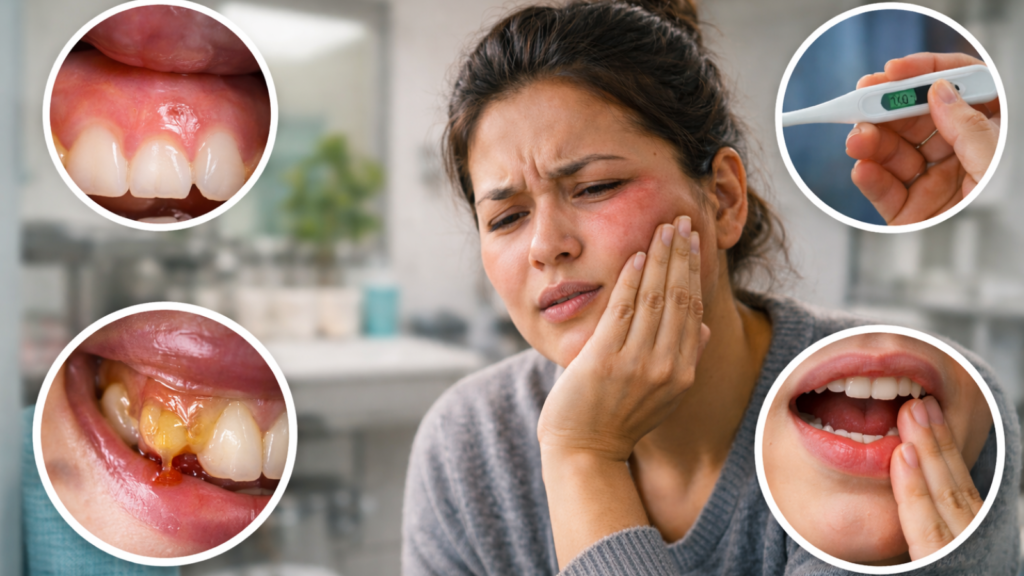
Tooth abscess symptoms often begin with throbbing pain, sensitivity, gum swelling, and pain when biting, but they can progress to facial swelling and fever. You might also notice a gum “pimple,” pus drainage, and a foul taste or smell in the mouth. Recognizing symptoms early can prevent the infection from spreading and reduce the chance of needing more complex treatment.
Typical symptoms: throbbing pain, swelling, bad taste, pus, chewing pain
Tooth abscess symptoms usually progress from mild to severe over days to weeks.
- Throbbing, pulsating pain is the hallmark symptom. The pain often worsens at night when lying down because blood flow to the head increases, intensifying pressure in the abscess. Many patients report that sitting upright provides temporary relief.
- Swelling begins at the gum line near the affected tooth and can expand to involve the cheek, jaw, or even the eye and neck in severe cases. The swollen area feels firm or fluctuant (like a water balloon) when touched.
- Bad taste or foul odor occurs when pus drains into your mouth. The taste is typically bitter, salty, or metallic, and breath odor becomes noticeably unpleasant even with brushing.
- Visible pus may appear as yellow, white, or greenish discharge at the gum line, or you may notice it when biting down or pressing the area.
- Pain when chewing or biting happens because pressure on the infected tooth transmits through the inflamed tissues at the root tip. You may instinctively avoid chewing on that side.
- Temperature sensitivity, especially to heat, indicates pulp involvement. Cold sensitivity that lingers is an earlier sign, but once the pulp dies, cold sensitivity may disappear while heat sensitivity and spontaneous pain intensify.
- General malaise, feeling unwell, fatigued, or having low-grade fever, reflects your immune system fighting the infection.
Visible signs: gum boil/pimple, facial swelling, tender lymph nodes
External and visible indicators help confirm an abscess even before professional examination.
- A gum boil (parulis) appears as a small, red or yellowish pimple-like bump on the gum near the tooth root. It may ooze pus when pressed. This is the drainage point where the abscess releases pressure.
- Facial swelling varies by infection location. Lower tooth abscesses typically cause cheek and jaw swelling below the lip line. Upper tooth abscesses can produce swelling in the upper cheek, under the eye, or even the lower eyelid. Swelling may be warm to touch and painful when pressed.
- Tender, swollen lymph nodes under the jaw or in the neck indicate your lymphatic system is responding to infection. These nodes feel like small, firm lumps and hurt when you touch them or turn your head.
- Tooth discoloration, a gray, dark yellow, or brown tint compared to adjacent teeth, suggests the pulp inside has died. Dead teeth often become brittle and more prone to fracture.
- Tooth mobility increases when infection destroys the bone and ligament supporting the tooth. The tooth may feel loose or shift slightly when pressed with your tongue or finger.
In our Putalisadak clinic, we photograph these visible signs (with your written consent) to track treatment progress and explain findings. These images remain confidential per Nepal Medical Council privacy guidelines.
Signs the infection may be spreading beyond the tooth
Recognizing systemic spread early prevents dangerous complications.
- Fever above 38°C (100.4°F) that persists beyond 24 hours suggests bacteria have entered your bloodstream (bacteremia). Chills, sweating, or feeling alternately hot and cold indicate your body is mounting a systemic immune response.
- Swelling that extends beyond the immediate area, crossing the midline of your face, reaching your eye, or tracking down your neck, shows the infection is not contained.
- Difficulty opening your mouth fully (trismus) occurs when infection spreads to the muscles of mastication. You may struggle to fit 2 to 3 fingers vertically between your teeth.
- Swallowing pain or difficulty, especially with liquids, signals infection in the throat or deep neck spaces. This symptom requires immediate emergency evaluation.
- Confusion, severe headache, stiff neck, or light sensitivity raises concern for intracranial spread (brain abscess or meningitis), which is rare but life-threatening.
- Rapid heart rate, fast breathing, or dizziness may indicate sepsis, a systemic infection response that can lead to organ failure.
Tooth abscess vs cavity vs gum infection vs sinus pain (fast comparison)
Patients often confuse these conditions. Here is how to differentiate them:
Tooth abscess: Constant throbbing pain that worsens at night, visible or palpable swelling, pus drainage, fever. Pain localized to one tooth but may radiate. Percussion (tapping) the tooth causes sharp pain.
Cavity (without abscess): Sensitivity to sweet, hot, or cold that resolves quickly when the stimulus is removed. Pain is usually not spontaneous or throbbing. No swelling or pus.
Gum infection (gingivitis/periodontitis): Bleeding gums when brushing, gum recession, bad breath. Pain is generalized across multiple teeth rather than localized to one. Teeth may feel loose. Periodontal abscesses cause localized swelling along the gum line but usually affect the side of the tooth, not the root tip.
Sinus infection (sinusitis): Dull, aching pain across multiple upper teeth on one or both sides. Pressure worsens when bending forward. Nasal congestion, post-nasal drip, and facial pressure above the cheekbones are common. Tapping individual teeth typically does not reproduce pain sharply.
Key differentiator: Tooth abscesses cause severe, localized pain with visible swelling and pus; cavities and gum infections cause milder, more diffuse symptoms; sinus pain affects multiple teeth and comes with nasal symptoms.
X-rays and clinical tests at BrightSmile Dental Clinic definitively distinguish these conditions, ensuring you receive appropriate treatment rather than unnecessary antibiotics or sinus medications.
How Dentists Diagnose a Tooth Abscess
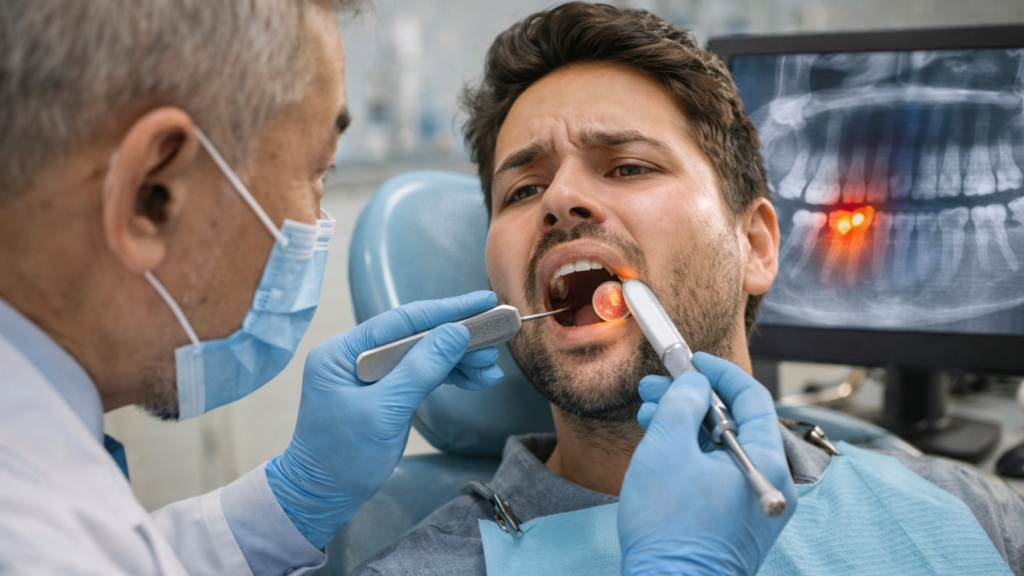
Dentists diagnose a tooth abscess by checking the tooth and gums for swelling, tenderness, drainage points, and signs of deep infection. They usually use X-rays to see the infection around the root or under the gumline and may do simple tests to identify which tooth is infected. Accurate diagnosis is important because treatment differs for a root-related abscess versus a gum/periodontal abscess.
What the dentist checks in the exam (tenderness, swelling, gum pockets)
Diagnosis begins with a thorough clinical examination combining visual inspection, palpation, and functional tests.
The dentist inspects your mouth for visible swelling, gum boils, discoloration, and decay. They look for asymmetry in your face and check if swelling is soft (pus-filled) or hard (inflammatory).
Palpation involves gently pressing the gum tissue around suspected teeth to locate tender areas. Abscessed teeth produce sharp pain when pressure is applied to the gum near the root tip (apical area). The dentist also palpates lymph nodes under your jaw and neck to assess immune response.
Percussion testing uses a dental instrument to tap each tooth gently. An abscessed tooth causes disproportionately sharp, shooting pain compared to healthy adjacent teeth. This helps pinpoint the exact tooth involved when pain radiates across multiple teeth.
Periodontal probing measures pocket depths around the tooth with a calibrated probe. Pockets deeper than 4 millimeters suggest periodontal disease; pockets deeper than 6 millimeters with pus indicate a periodontal abscess rather than a periapical abscess.
Checking for mobility reveals how much bone and ligament support remain. The dentist gently rocks the tooth with instruments; increased movement indicates bone loss from infection.
Tests that help confirm the source (vitality checks, probing)
Specialized tests determine whether the tooth pulp is alive or dead, which directs treatment.
Thermal testing applies cold (refrigerant spray or ice) or heat (heated gutta-percha) to the tooth. A healthy tooth produces immediate, brief sensitivity. A tooth with an inflamed but living pulp produces exaggerated, lingering pain. A tooth with a dead pulp shows no response to temperature, this lack of response confirms pulp necrosis and the need for root canal therapy or extraction.
Electric pulp testing uses a mild electric current to stimulate nerve fibers in the pulp. The dentist gradually increases current until you feel tingling. No response at maximum settings indicates a dead pulp. This test is particularly useful when thermal testing results are unclear.
Periodontal probing depth measurement and bleeding on probing help distinguish periodontal abscesses from periapical abscesses. Deep pockets with pus exudate along the side of the tooth point to periodontal origin.
Transillumination with a bright light may reveal cracks in the tooth that are not visible on X-rays. The dentist shines the light through the tooth; cracks appear as dark lines interrupting the light transmission.
X-rays (and when CBCT might be needed)
Radiographic imaging reveals infection extent and guides treatment planning.
Periapical X-rays capture the entire tooth from crown to root tip and surrounding bone. They show dark (radiolucent) areas at the root apex that indicate bone destruction from infection. The size of this dark area correlates with infection chronicity, larger areas suggest long-standing abscesses.
Bitewing X-rays help identify cavities between teeth and assess bone levels for periodontal disease but provide limited view of root tips.
Panoramic X-rays give a wide view of all teeth, sinuses, and jaw, useful for assessing infection spread or planning extractions. However, they offer less detail than periapical films.
Cone Beam Computed Tomography (CBCT) provides 3-dimensional imaging when standard X-rays are inconclusive. The dentist may order CBCT to locate hidden canals in teeth requiring root canal therapy, assess extent of bone destruction, identify tooth fractures, or plan implant placement after extraction. CBCT delivers higher radiation than standard X-rays, so it is used selectively when added information changes treatment decisions.
At BrightSmile Dental Clinic, we explain X-ray findings using visual aids on chairside monitors, showing you the infection and surrounding structures. This transparency helps you understand why specific treatments are recommended.
Why self-diagnosing can miss deeper infection
Online symptom checkers and mirror self-exams cannot replace professional diagnosis for several critical reasons.
Dental infections often involve teeth that appear healthy externally. A tooth with a dead pulp may have no visible cavity, intact enamel, and normal color, yet harbor deep infection at the root tip, visible only on X-rays.
Referred pain misleads patients. Infection in a molar may cause pain in the ear, temple, or multiple teeth, making it impossible to identify the source tooth without clinical testing.
Early-stage abscesses may produce minimal symptoms. By the time swelling or severe pain appears, bone destruction may be extensive. Regular dental check-ups detect infections before they become emergencies.
Multiple dental problems can coexist. You may have both a cavity and an abscess, or gum disease affecting multiple teeth. Treating only the most painful tooth leaves other problems to worsen.
Serious medical conditions mimic dental pain. Sinusitis, trigeminal neuralgia, heart attack (in rare cases upper tooth pain), and TMJ disorders can all cause tooth-like pain. Misdiagnosing these as dental abscesses delays appropriate medical treatment.
Professional diagnosis combines clinical findings, patient history, testing, and imaging to create a complete picture. This comprehensive approach ensures you receive appropriate treatment and avoid complications.
Urgent Treatment That Actually Works
The fastest relief usually comes from safely draining the infection and reducing pressure, but definitive treatment is needed to remove the source. Depending on the case, this may mean a root canal to save the tooth, an extraction if the tooth can’t be saved, or deep cleaning and gum treatment for a periodontal abscess. Antibiotics and pain relief may be used when necessary, but they are not a complete cure without fixing the underlying problem.
1. First goal: reduce pressure and drain infection safely
Effective abscess treatment begins with professional drainage to relieve pain and prevent spread.
The dentist creates a drainage pathway either through the tooth (accessing the pulp chamber) or through the gum tissue (incision and drainage). Drainage releases pus, drops pressure immediately, and allows antibiotics (if prescribed) to reach infected tissues more effectively.
For periapical abscesses, the dentist opens the tooth crown, removes diseased pulp, and allows drainage through the root canals. This procedure (pulpotomy or pulpectomy) provides rapid pain relief within hours. The tooth is left open for 24 to 48 hours to drain, then cleaned, shaped, and sealed during subsequent appointments.
For periodontal abscesses, the dentist makes a small incision in the gum to release pus, irrigates the area with saline or chlorhexidine, and may place drainage material temporarily. Deep cleaning (scaling and root planing) removes bacterial deposits from root surfaces and gum pockets.
Facial or neck abscesses may require surgical drainage in hospital settings, especially if infection involves deep tissue planes. This is performed under local or general anesthesia.
Drainage alone does not eliminate infection; definitive treatment of the source tooth or gum pocket is essential to prevent recurrence.
2. Definitive options: root canal vs extraction (how the decision is made)
After drainage, you face a decision: save the tooth with root canal therapy or remove it via extraction.
Root canal therapy (endodontic treatment) is the preferred option when the tooth structure is sufficient to restore. The dentist removes all infected pulp tissue, cleans and shapes the canals with files and irrigants, disinfects thoroughly, then seals the canals with gutta-percha filling. A crown or large filling restores the tooth afterward. Success rates exceed 85 to 95 percent for most teeth. At BrightSmile Dental Clinic, root canal treatment ranges from NPR 9,800 to NPR 16,000 depending on tooth complexity (front teeth have 1 canal; molars have 3 to 4 canals requiring more time and expertise).
Extraction becomes necessary when the tooth cannot be saved, extensive decay destroying crown structure, vertical root fracture, severe bone loss around the tooth, or persistent infection despite root canal therapy. Extraction eliminates the infection source permanently. Cost in Kathmandu typically ranges from NPR 2,000 to NPR 8,000 per tooth; surgical extractions (impacted teeth, broken roots) cost more.
Decision factors include:
Tooth restorability, can the remaining structure support a filling or crown? Strategic value, is the tooth essential for chewing, aesthetics, or supporting bridges? Cost considerations, root canal plus crown costs more upfront but preserves your natural tooth long-term; extraction is cheaper initially but may require implant or bridge later (implants NPR 60,000 to NPR 130,000 in Kathmandu). Patient preference and time availability for multi-visit root canal therapy versus single-visit extraction.
The dentist presents both options with transparent pricing and likely outcomes, allowing you to make an informed decision aligned with your priorities.
3. Periodontal abscess pathway: drainage and deep cleaning/gum treatment
Periodontal abscesses require different treatment than tooth-origin abscesses because the infection resides in gum pockets, not inside the tooth.
Immediate drainage via incision releases pus and reduces pressure. The dentist may insert a small drain for 24 to 48 hours to keep the pathway open.
Deep cleaning (scaling and root planing) removes calculus, plaque, and infected granulation tissue from root surfaces and pocket depths. This procedure is often performed under local anesthesia due to depth and sensitivity. Ultrasonic scalers and hand instruments clean below the gum line where brushing cannot reach.
Antibiotic therapy (oral or locally applied) may supplement mechanical cleaning. Locally delivered antibiotics (gels or chips placed directly in pockets) provide high concentrations at the infection site with minimal systemic effects.
Periodontal surgery (flap surgery, bone grafts) may be needed in advanced cases to reduce pocket depths permanently and regenerate lost bone.
Maintenance therapy every 3 to 4 months after initial treatment prevents recurrence. Periodontal disease is chronic; ongoing professional care and excellent home hygiene control it but do not cure it permanently.
At BrightSmile Dental Clinic, we coordinate periodontal treatment with your hygiene routine, providing tailored instructions on interdental cleaning, specialized brushes, and antimicrobial rinses.
4. Antibiotics: when they’re needed and why they’re not the main cure
Antibiotics support healing but cannot replace mechanical removal of the infection source.
Dentists prescribe antibiotics when infection shows signs of spreading beyond the tooth, fever, facial swelling, lymph node involvement, compromised immunity, or difficulty swallowing. Common choices include amoxicillin (500 milligrams three times daily), amoxicillin-clavulanate for broader coverage, or metronidazole combined with another antibiotic for anaerobic bacteria. Patients allergic to penicillin receive azithromycin or clindamycin.
However, antibiotics alone cannot cure a dental abscess. The infection source (dead pulp or periodontal pocket) lacks blood supply, so antibiotics cannot reach bacteria deep inside the tooth or within walled-off abscess pockets. Bacteria also form biofilms that resist antibiotic penetration. Without drainage and definitive treatment (root canal or extraction), the abscess will recur once antibiotics are stopped.
Antibiotic misuse risks include:
Delayed definitive treatment, patients may feel better temporarily and postpone necessary dental work, allowing bone destruction to worsen. Antibiotic resistance, repeated or incomplete courses encourage resistant bacteria. Side effects, nausea, diarrhea, allergic reactions, or disruption of healthy gut bacteria.
The evidence-based approach combines immediate drainage with antibiotics only when systemic spread is evident or patient risk factors warrant it. Healthy patients with localized abscesses often resolve successfully with drainage and root canal or extraction alone.
5. Pain control: what’s typically recommended (and what to avoid)
Effective pain management combines professional treatment with safe home medications.
Over-the-counter options include ibuprofen (400 to 600 milligrams every 6 to 8 hours) or naproxen (500 milligrams every 12 hours), which reduce both pain and inflammation. Acetaminophen (paracetamol, 500 to 1,000 milligrams every 6 hours) helps pain but does not reduce inflammation. Combining ibuprofen with acetaminophen provides stronger relief than either alone while staying within safe dosing limits.
Prescription pain medications (codeine combinations, tramadol) may be necessary for severe pain during the first 24 to 48 hours after drainage but should transition to over-the-counter options as pain decreases.
Pain control mistakes to avoid:
Aspirin placed directly on the gum causes chemical burns without improving dental pain. Swallow aspirin with water instead. Excessive alcohol consumption or narcotic misuse creates dangerous interactions and does not address infection. Ignoring worsening pain, increasing pain despite medication suggests complications requiring urgent re-evaluation. Heat application to the face can cause abscess to rupture outward or spread deeper; use cold compresses instead.
At BrightSmile Dental Clinic, we provide written pain management instructions tailored to your health conditions (avoiding NSAIDs if you have stomach ulcers or kidney disease) and ensure you have dentist contact information for after-hours concerns.
Home Care While You Arrange Treatment, Recovery and Prevention
Home care can help reduce pain temporarily, but it should only be a short bridge until you get professional treatment. Warm saltwater rinses, a cold compress, and safe pain relief can help, while heat, poking the swelling, or using leftover antibiotics can make things worse. After treatment, good oral hygiene, regular checkups, and early cavity/gum care are the best ways to prevent another abscess.
Safe steps for the next 24 hours (rinse, cold compress, oral hygiene)
While waiting for your dental appointment, these measures reduce discomfort and limit infection spread.
Rinse your mouth gently with warm salt water (1 teaspoon salt dissolved in 250 milliliters warm water) every 2 to 3 hours. Salt water has mild antiseptic properties, soothes inflamed tissues, and promotes drainage if the abscess has opened. Swish gently for 30 seconds then spit; do not swallow.
Apply a cold compress to the outside of your cheek over the swollen area for 15 minutes on, 15 minutes off. Cold reduces swelling and numbs pain. Wrap ice or a cold pack in a thin towel to prevent skin damage. Never apply heat, which can draw infection outward or encourage spread.
Maintain gentle oral hygiene. Brush your teeth carefully, including the affected area (avoid aggressive scrubbing directly on the abscess). Bacteria thrive on food debris and plaque, so keeping your mouth clean limits further bacterial growth. Use a soft-bristled brush and continue flossing other teeth.
Elevate your head when sleeping or resting. Use 2 to 3 pillows to prop yourself at a 45-degree angle. This position reduces blood flow to the head, decreasing pressure in the abscess and relieving throbbing pain.
Stay hydrated with water. Avoid sugary or acidic drinks that feed bacteria and irritate inflamed tissues.
Eat soft, nutritious foods that require minimal chewing. Cool or room-temperature foods (yogurt, smoothies, mashed vegetables, soups) are easier to tolerate than hot foods, which may increase pain.
What NOT to do (don’t poke/drain it, don’t rely on leftover antibiotics)
Avoid these common mistakes that worsen outcomes or delay proper treatment.
- Never attempt to drain the abscess yourself with needles, pins, or by squeezing. You risk spreading infection into deeper tissues, bloodstream, or surrounding bone. Unsterile instruments introduce additional bacteria. Professional drainage in a controlled dental environment is safe and effective.
- Do not take leftover antibiotics from previous illnesses or borrow antibiotics from others. Wrong antibiotics (type, dose, or duration) may suppress symptoms temporarily without curing infection, promoting antibiotic-resistant bacteria. Incomplete courses fail to eliminate bacteria fully, leading to relapse.
- Avoid delaying treatment because pain decreased. Spontaneous drainage or temporary pain relief does not mean the infection resolved. The source remains active and will recur.
- Do not apply heat packs, hot water bottles, or heating pads to your face. Heat can cause the abscess to rupture in uncontrolled directions or encourage deeper spread.
- Do not consume alcohol, especially if taking antibiotics (many interact dangerously) or pain medications. Alcohol impairs immune function and dehydrates you.
- Avoid smoking and tobacco use. Nicotine constricts blood vessels, reducing oxygen and immune cells to the infected area, delaying healing significantly.
- Do not ignore worsening symptoms. Increasing swelling, fever above 38.5°C (101.3°F), difficulty breathing or swallowing, or confusion require immediate emergency care, do not wait for your scheduled appointment.
Aftercare and recovery timeline (swelling, eating, follow-up)
Post-treatment recovery follows a predictable pattern when you adhere to aftercare instructions.
- First 24 to 48 hours: Pain decreases significantly after drainage or tooth opening. Swelling may initially increase slightly before improving. Take prescribed or recommended pain medications on schedule, not just when pain peaks. Continue salt water rinses. Eat soft foods and avoid chewing on the treated side.
- Days 3 to 7: Swelling subsides noticeably. Pain becomes mild and manageable with over-the-counter medications. You can gradually return to normal diet, though continue avoiding very hard or sticky foods until the tooth is permanently restored.
Maintain meticulous oral hygiene; bacteria can re-infect incompletely treated areas. - Week 2 to 4: Most symptoms resolve completely. Root canal-treated teeth require follow-up appointments to complete cleaning, shaping, and sealing the canals, then placement of a permanent filling or crown. Extracted tooth sites heal with bone and soft tissue filling the socket. Avoid disturbing blood clots by not rinsing vigorously or using straws, which create suction.
- Month 2 to 3: Bone remodels around root canal-treated teeth or extracted sites. Crown placement (if planned) occurs after swelling fully resolves and tooth structure stabilizes. For extractions, you can discuss replacement options (implants, bridges, or leaving the space if not functionally critical).
Warning signs requiring urgent follow-up:
Swelling that returns or worsens after initial improvement. Persistent fever beyond 3 days post-treatment. Increasing pain not controlled by medications. Pus drainage that continues beyond 1 week.
BrightSmile Dental Clinic schedules clear follow-up appointments and provides written aftercare instructions. We encourage questions via WhatsApp (+977-9748343015) between visits to address concerns promptly.
How to prevent a repeat abscess (cavity control, gum care and routine visits)
Prevention focuses on eliminating the causes of dental infection through consistent daily habits and professional partnership.
- Brush twice daily for 2 minutes with fluoride toothpaste. Use gentle circular motions, brushing all surfaces, outer, inner, and chewing surfaces. Replace your toothbrush every 3 months or when bristles fray.
- Floss daily between every tooth, even if gums bleed initially. Flossing removes bacteria and food particles from spaces your toothbrush cannot reach. Bleeding usually stops within 1 to 2 weeks of consistent flossing as gum health improves.
- Limit sugar and acidic foods. Bacteria metabolize sugar into acid that dissolves enamel. Consume sweets with meals rather than as frequent snacks, and rinse with water afterward.
- Visit your dental clinic in Kathmandu every 6 months for check-ups and professional cleaning. Early detection of cavities, cracks, or gum disease allows simple, less expensive treatment before abscesses develop.
- Address dental problems promptly. Do not ignore sensitivity, small chips, or gum bleeding, understanding the most common dental problems patients in Kathmandu face can help you catch issues before they become abscesses.
- Manage health conditions that increase infection risk. Control diabetes with your physician’s guidance. Inform your dentist of medications that cause dry mouth so they can recommend saliva substitutes or fluoride treatments.
- Protect teeth from trauma. Wear mouthguards during contact sports. Avoid chewing ice, hard candies, or using teeth as tools to open packages.
- Consider dental sealants for deep grooves in molars. Sealants are thin plastic coatings that prevent bacteria from colonizing hard-to-clean pits and fissures.
At BrightSmile Dental Clinic in Putalisadak, Kathmandu, we partner with you for long-term dental health. Our preventive focus includes personalized hygiene coaching, fluoride treatments, and early intervention, far more cost-effective than emergency abscess treatment. Routine cleanings cost NPR 2,000 to NPR 3,000; small fillings cost NPR 1,500 to NPR 3,000, both prevent abscesses that require root canals (NPR 9,800 to NPR 16,000) or extractions and implants (NPR 60,000 to NPR 130,000).
If you suspect a tooth abscess, do not wait. Contact BrightSmile Dental Clinic at +977-9748343015 or visit us in Putalisadak, Kathmandu. We prioritize urgent cases and provide transparent, fair pricing with clear treatment explanations. Your comfort and health are our commitment.
Can a tooth abscess go away on its own?
A tooth abscess rarely goes away on its own because the infection remains trapped inside the tooth or gums. Pain may lessen if pus drains, but bacteria can still spread. See a dentist immediately to drain the abscess and prevent serious complications.
What are the danger signs that mean I should go to the emergency room?
Go to the emergency room if you have trouble breathing, trouble swallowing, facial swelling, drooling, or high fever. These signs show that the infection is spreading and may block your airway or reach vital tissues.
What does a tooth abscess look like on the gum?
A tooth abscess on the gum looks like a small pimple or boil, often with a white or yellow point. It may feel soft or painful. Pus may drain, but the underlying infection remains and needs professional treatment.
Why does a tooth abscess cause a bad taste or bad smell?
A tooth abscess causes bad taste or smell when pus leaks into the mouth. Pus contains bacteria, dead tissue, and immune cells. The foul taste may come and go, but the infection still needs dental treatment.
Are antibiotics enough to treat a tooth abscess?
Antibiotics alone are not enough to treat a tooth abscess. They reduce infection spread but don’t remove the source. Most cases need drainage plus a root canal or extraction to fully eliminate the infection.
What is the fastest treatment for a tooth abscess?
The fastest treatment for a tooth abscess is draining the pus and reducing pressure. A dentist may open the tooth or gum and then perform a root canal or extraction. Pain relief and antibiotics may support healing but don’t replace drainage.
What should I do at home while I’m waiting to see a dentist?
Rinse with warm salt water 3–4 times daily, use cold compresses, and take OTC pain relievers like ibuprofen. Keep the area clean and avoid chewing on that side. Do not apply heat or use leftover antibiotics.
What happens if a tooth abscess bursts or starts draining?
If a tooth abscess bursts, pus drains and pain may decrease. This does not mean the infection is gone. Rinse gently with warm salt water and see a dentist quickly to treat the underlying source.
How do dentists decide between a root canal and extraction?
Dentists choose between a root canal and extraction based on the tooth’s condition, damage, and restorable potential. X-rays show infection size, cracks, and bone loss. If the tooth is restorable, a root canal is preferred; otherwise, extraction is done.
How can I prevent a tooth abscess from happening again?
Prevent a tooth abscess by brushing twice daily, flossing, treating cavities early, and getting regular cleanings. Manage gum disease and fix cracked teeth quickly. Use a mouthguard during sports to avoid trauma.