
Stained teeth from years of coffee, tea, tobacco, and certain foods can diminish confidence in your smile and affect how you present yourself professionally and socially. Professional teeth whitening offers a safe, dentist-supervised solution to reverse discolouration and restore natural brightness to your enamel. Understanding your options, costs, and payment flexibility helps you choose whitening treatment that fits both your aesthetic goals and financial situation.
Deciding on teeth whitening involves more than just picking the cheapest package, you need to evaluate treatment types, understand what each price includes, and know which method works best for your specific stain type and lifestyle. This guide breaks down whitening costs, compares package options objectively, and explains payment methods available at Kathmandu dental clinics to help you make confident, informed treatment decisions.
Teeth Whitening: What It Is and What to Expect
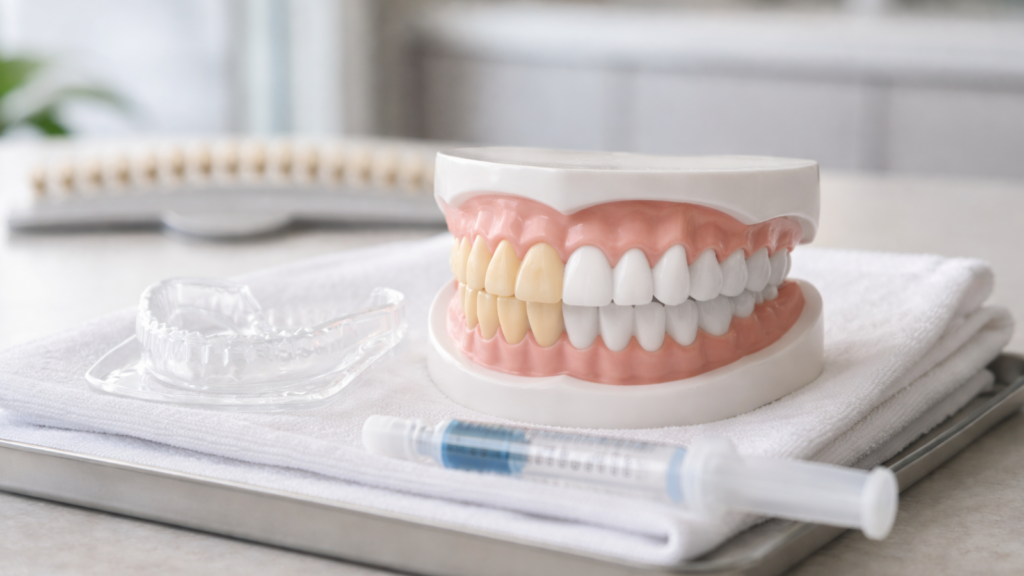
Professional teeth whitening removes years of accumulated stains through controlled peroxide treatments supervised by qualified dentists. Kathmandu dental clinics offer multiple whitening approaches, from rapid in-office sessions to gradual take-home kits, each designed for different patient needs and schedules. Understanding how whitening works, what results you can realistically achieve, and whether you qualify as a suitable candidate helps you make informed decisions before investing in treatment.
What teeth whitening actually does: results, timeline, and realistic expectations
Professional teeth whitening uses peroxide-based gels to oxidise and remove stains from tooth enamel. Treatment typically lightens teeth by 2 to 4 shades, targeting surface stains from coffee, tea, tobacco, wine, and certain foods. Results appear within 1 to 2 weeks depending on your chosen method, in-office treatments deliver immediate brightness in a single visit, while take-home kits work gradually over 7 to 14 days.
Teeth Whitening actually does:
- Removes stains from coffee, tea, tobacco, and wine
- Lightens teeth by 2 to 4 shades on average
- Works through peroxide oxidation of enamel stains
- Delivers results in 1 to 2 weeks depending on method
Whitening works best on yellow surface stains rather than greyish or brown intrinsic discolouration. Dentists in Kathmandu report that most patients notice visible improvement after one complete treatment course. Results last approximately 6 months to 2 years based on your oral hygiene habits and consumption of stain-causing substances.
Natural tooth enamel responds to bleaching, but existing dental work does not change colour. Veneers, crowns, and composite bonding materials remain their original shade after whitening treatment. Your dentist will assess your teeth before starting to ensure realistic expectations about final results.
Types of whitening results (shade guide): how dentists measure success
Dental professionals use standardised shade guides to measure whitening progress and results. Shade guides contain ceramic tabs ranging from very white (B1, A1) to darker yellow-brown tones (C4, D4). Your dentist records your starting shade before treatment and compares it to your final shade afterwards.
Most patients achieve 2 to 4 shade improvements with professional whitening. A person starting at shade A3 (common for many adults) might reach A1 or B1 after treatment. Dentists photograph your teeth before and after using consistent lighting to document changes objectively.
Realistic expectations matter, teeth naturally vary in colour, and whitening cannot make teeth “paper white” beyond their biological potential. Your dentist explains achievable results during consultation based on your current shade and stain type. Shade guides help you visualise expected outcomes before committing to treatment.
Typical appointment flow at a dental clinic: first visit to final check
Your first visit begins with an oral examination and shade assessment. Dentists check for cavities, gum disease, or other issues that must be treated before whitening. Clean teeth respond better to bleaching, so your dentist may recommend a professional scaling and polishing appointment before the whitening session.
In-office whitening takes 40 to 60 minutes per session. Dentists protect your gums and lips with barriers, then apply concentrated peroxide gel to tooth surfaces. Some clinics use curing lights or lasers to activate bleaching agents. You wait comfortably while gel works, then dentists rinse it away and apply fluoride to reduce sensitivity.
Follow-up appointments assess results and address any sensitivity issues. For take-home kits, your dentist takes impressions to create custom trays, provides whitening gel, and demonstrates proper usage. Return visits ensure you’re using trays correctly and achieving desired results without discomfort.
Who should (and shouldn’t) get professional whitening: safety and suitability
Professional whitening suits healthy adults with natural teeth and surface stains. Ideal candidates have good oral health, no untreated cavities, gum disease, or active infections. Dentists screen patients thoroughly before approving whitening treatment.
Good candidates:
- Adults with healthy natural teeth
- People with surface (extrinsic) staining
- Those with no untreated cavities or gum disease
- Non-pregnant, non-breastfeeding individuals
Should avoid or postpone:
- Pregnant and breastfeeding women
- Children under 16 years old
- People with severe intrinsic staining (fluorosis, tetracycline)
- Those with multiple visible crowns, veneers, or fillings
Heavy smokers and frequent coffee or tea drinkers experience faster re-staining after whitening. Your dentist discusses lifestyle modifications to extend results. Patients with many visible crowns, veneers, or fillings may need replacement restorations to match newly whitened natural teeth.
Cost Breakdown: Understanding Teeth Whitening Prices in Kathmandu
Whitening costs in Kathmandu vary significantly based on treatment method, clinic reputation, technology used, and materials selected. Patients often focus only on advertised package prices without considering additional expenses like pre-treatment cleaning, sensitivity management products, or future touch-up gel. Knowing all cost components upfront, from initial consultation through maintenance supplies, prevents budget surprises and allows accurate comparison between competing clinic offers.
What dental clinics charge: typical price components (consultation, treatment, follow-ups)
Teeth whitening costs in Kathmandu include multiple components beyond just the bleaching session. Initial consultation and oral examination fees typically run NPR 500 to NPR 1,000, though some clinics waive this when you proceed with treatment. Pre-whitening cleaning (scaling and polishing) adds NPR 2,000 to NPR 4,000 to your total bill. For a full breakdown of what clinics charge for examinations alone, see our guide on dental checkup costs in Kathmandu.
Cost components include:
- Initial consultation and examination: NPR 500 to NPR 1,000
- Pre-whitening cleaning (scaling/polishing): NPR 2,000 to NPR 4,000
- Core whitening treatment: NPR 12,000 to NPR 22,000 (in-office) or NPR 8,000 to NPR 15,000 (take-home)
- Follow-up visits and assessments: varies by clinic
- Sensitivity management products: NPR 500 to NPR 1,500
Core whitening treatment forms the largest cost component. In-office bleaching using professional-strength gel costs NPR 12,000 to NPR 22,000 per session depending on technique and materials used. Take-home kits range from NPR 8,000 to NPR 15,000 and include custom trays plus initial gel supply.
Follow-up visits for assessment and touch-ups may incur additional charges. Some clinics include one or two follow-up checks in package pricing, while others charge separately. Sensitivity management products like desensitising toothpaste add NPR 500 to NPR 1,500 to your final cost.
Common price ranges and package tiers in Kathmandu clinics
Basic in-office whitening packages start around NPR 12,000 to NPR 15,000 for single-session chairside bleaching. Mid-tier options cost NPR 15,000 to NPR 18,000 and may include pre-treatment cleaning or extra gel applications.
Laser-assisted or LED-boosted whitening represents premium pricing at NPR 15,000 to NPR 25,000 per session. Take-home whitening kits cost less than in-office treatments.
How clinic reputation, tech, and materials affect cost
Established dental clinics with modern facilities charge premium rates reflecting their investment in equipment and training. Clinics using imported American or European bleaching gels cost more than those using generic products. Laser and LED activation systems add thousands to clinic overhead, which translates into higher patient fees.
Dentist experience and specialisation influence pricing structure. Cosmetic dentists with advanced training often charge more than general practitioners offering whitening as one of many services. Clinic location matters too, dental offices in central Kathmandu neighbourhoods like Durbarmarg or Maharajgunj typically price higher than suburban locations.
Brand-name whitening systems like Philips Zoom or Opalescence cost more than unbranded alternatives. Patients paying premium prices receive stronger concentration gels, better sensitivity management products, and more predictable results. Your dentist explains which materials they use and why during the consultation.
Hidden or add-on costs to watch for (sensitivity treatment, polishing, trays)
Pre-treatment cleaning often appears as an unexpected addition to whitening quotes. Dentists require clean tooth surfaces for optimal bleaching, so scaling and polishing (NPR 2,000 to NPR 4,000) becomes mandatory before treatment. Ask whether cleaning is included in quoted whitening prices.
Sensitivity management adds cost for patients prone to tooth sensitivity triggered by hot and cold. Desensitising toothpaste, fluoride treatments, or potassium nitrate gel run NPR 500 to NPR 2,000. Some clinics include one tube of sensitivity toothpaste in packages, while others charge separately.
| Service Component | Typical Cost (NPR) | Often Included? |
| Initial consultation | 500 – 1,000 | Sometimes waived |
| Oral examination | 500 – 1,000 | Usually included |
| Pre-whitening cleaning | 2,000 – 4,000 | Rarely included |
| Core whitening treatment | 12,000 – 22,000 | Primary service |
| Sensitivity toothpaste | 500 – 1,500 | Sometimes included |
| Fluoride treatment | 500 – 1,000 | Often included |
| Follow-up visit (1st) | 0 – 1,000 | Usually included |
| Replacement gel (future) | 1,000 – 2,000 | Never included |
| Custom tray replacement | 3,000 – 5,000 | Never included |
| Total Range | 15,000 – 33,500 | Varies by package |
Replacement gel for touch-ups costs extra with take-home kits. Initial kits include 2 to 4 gel syringes, sufficient for one treatment course. Future maintenance requires purchasing additional gel at NPR 1,000 to NPR 2,000 per syringe. Custom tray replacements (if lost or damaged) cost NPR 3,000 to NPR 5,000.
Packages & Service Variants: Choosing the Right Option for Your Needs
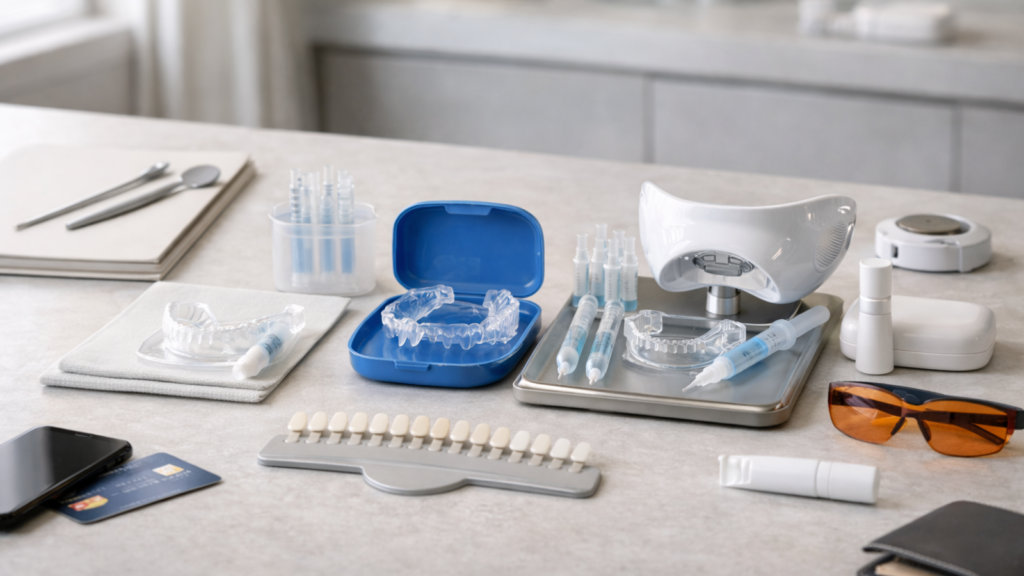
Dental clinics structure whitening into distinct package tiers ranging from basic single-visit treatments to comprehensive multi-session programmes with premium laser activation. Each package type offers different trade-offs between speed, cost, comfort, and result longevity, making it essential to match your selection to your timeline and budget constraints. Comparing packages objectively using metrics like cost-per-shade improvement and long-term maintenance requirements reveals which option delivers best value for your specific situation.
Standard in-office whitening packages explained (single-visit vs multi-visit)
Single-visit whitening packages complete treatment in one appointment lasting 40 to 90 minutes. Dentists apply concentrated peroxide gel (usually 35% to 40% hydrogen peroxide) to tooth surfaces and may reapply 2 to 3 times during your visit. Single sessions cost NPR 12,000 to NPR 18,000 and deliver immediate results—teeth appear 2 to 4 shades lighter when you leave.
Multi-visit packages spread treatment across 2 to 3 appointments over 1 to 2 weeks. Each session applies fresh bleaching gel for 30 to 45 minutes. Spreading treatment reduces sensitivity risk whilst achieving similar or better results than single visits. DentaLife’s online package bundles two sessions in one day for NPR 16,900, providing value compared to booking sessions separately.
| Feature | Single-Visit Package | Multi-Visit Package |
| Treatment Duration | 40-90 minutes (one day) | 2-3 sessions over 1-2 weeks |
| Gel Concentration | 35-40% hydrogen peroxide | 30-35% hydrogen peroxide |
| Applications Per Visit | 2-3 gel applications | 1-2 gel applications |
| Typical Cost | NPR 12,000 – 18,000 | NPR 16,000 – 20,000 |
| Results Timeline | Immediate (same day) | Gradual over 1-2 weeks |
| Shade Improvement | 2-4 shades | 3-5 shades |
| Sensitivity Risk | Moderate to high | Lower (gradual approach) |
| Best For | Time-sensitive events | Stubborn stains, sensitive teeth |
Multi-visit approaches suit patients with stubborn stains or those wanting gradual improvement without rushing. Single visits work well for people with time constraints or upcoming events requiring immediate results. Your dentist recommends the best approach based on your stain severity and sensitivity concerns.
Take-home tray packages vs hybrid (clinic-supervised home kits)
Take-home packages provide custom-fitted trays and professional-strength gel for self-application at home, a useful middle ground for patients weighing natural home whitening methods versus professional treatment. Dentists take impressions of your teeth and create clear plastic trays that fit precisely over upper and lower teeth. Kits include 4 to 6 gel syringes and detailed instructions for daily use over 1 to 2 weeks.
You fill trays with small amounts of gel and wear them 4 to 6 hours daily or overnight. Lower concentration peroxide (10% to 20% carbamide peroxide) works gradually with minimal sensitivity. Take-home packages cost NPR 8,000 to NPR 15,000 for both arches, significantly less than in-office treatments.
| Aspect | In-Office Whitening | Take-Home Kits | Hybrid Packages |
| Supervision | Dentist-administered | Self-applied at home | Both |
| Gel Strength | 35-40% peroxide | 10-20% carbamide peroxide | Varies |
| Treatment Time | 40-60 minutes | 4-6 hours daily (1-2 weeks) | Combination |
| Cost Range | NPR 12,000 – 22,000 | NPR 8,000 – 15,000 | NPR 20,000 – 30,000 |
| Results Speed | Immediate | 7-14 days | Immediate and maintenance |
| Convenience | Single clinic visit | Daily home application | Best of both |
| Longevity | 6-12 months | 6-12 months (with touch-ups) | 12-24 months |
Hybrid packages combine one in-office session with take-home maintenance kits. Dentists deliver immediate brightening in clinic, then provide trays and gel for touch-ups every few months. Hybrid approaches offer best value for long-term whiteness, though total cost reaches NPR 20,000 to NPR 30,000 initially.
Premium packages: laser/LED-boosted whitening and bundled cosmetic care
Laser-activated whitening represents top-tier packages in Kathmandu dental clinics. Dentists apply bleaching gel and use specialised laser or LED lamps to accelerate chemical reactions. Each 20 to 30-minute laser session produces more dramatic whitening than standard gel alone. Premier Dental describes laser treatment as ideal for “maximum whitening in minimal time.”
Premium laser packages cost NPR 15,000 to NPR 25,000 per session, roughly 30% to 50% more than standard in-office bleaching. Higher prices reflect equipment costs and shorter treatment times. Laser whitening suits busy professionals wanting fastest possible results or people with resistant stains needing extra bleaching power.
Bundled cosmetic packages combine whitening with other dental aesthetics. DentaLife offers “Cleaning & Whitening” bundles pairing scaling, polishing, and two bleaching sessions for NPR 19,900. These combinations cost less than booking services individually and can be planned as wedding-ready smile makeover options for special events.
Package comparisons: cost-per-shade, longevity, and maintenance needs
Cost-per-shade analysis helps compare package value objectively. A NPR 12,000 single-visit package achieving 3-shade improvement costs NPR 4,000 per shade. A NPR 8,000 take-home kit delivering 2-shade improvement costs the same NPR 4,000 per shade but requires more time and effort.
Value analysis by package type:
- Single-visit standard: NPR 12,000 for 3 shades = NPR 4,000 per shade
- Take-home kit: NPR 8,000 for 2 shades = NPR 4,000 per shade
- Laser premium: NPR 20,000 for 4 shades = NPR 5,000 per shade
- Multi-visit package: NPR 16,900 for 4-5 shades = NPR 3,380 to NPR 4,225 per shade
Laser packages costing NPR 20,000 for 4-shade improvement work out to NPR 5,000 per shade, premium pricing for premium speed. Multi-visit packages often deliver better cost-per-shade ratios because multiple gel applications compound results. Two sessions at NPR 16,900 might achieve 4 to 5 shades, reducing cost to NPR 3,380 to NPR 4,225 per shade.
Longevity varies by method and lifestyle. In-office results last 6 months to 1 year without maintenance, while take-home users can extend results by doing quarterly touch-ups at home. Laser whitening provides longest initial results (12 to 24 months) but requires professional touch-ups when fading occurs, adding NPR 10,000 to NPR 15,000 annually to long-term cost.
Payment Options & Financing: How to Pay for Whitening in Kathmandu
Modern Kathmandu dental practices accept diverse payment methods beyond traditional cash, including credit cards, mobile wallets like eSewa and Khalti, and bank transfers through ConnectIPS.
Some clinics extend Equated Monthly Instalment (EMI) financing for larger whitening packages, allowing patients to spread costs across 3 to 12 months rather than paying everything upfront. Exploring available discounts through seasonal promotions, group bookings, or competitor price matching can reduce your total whitening investment by 10% to 25%.
Common payment methods at local clinics (cash, card, bank transfer, mobile payment)
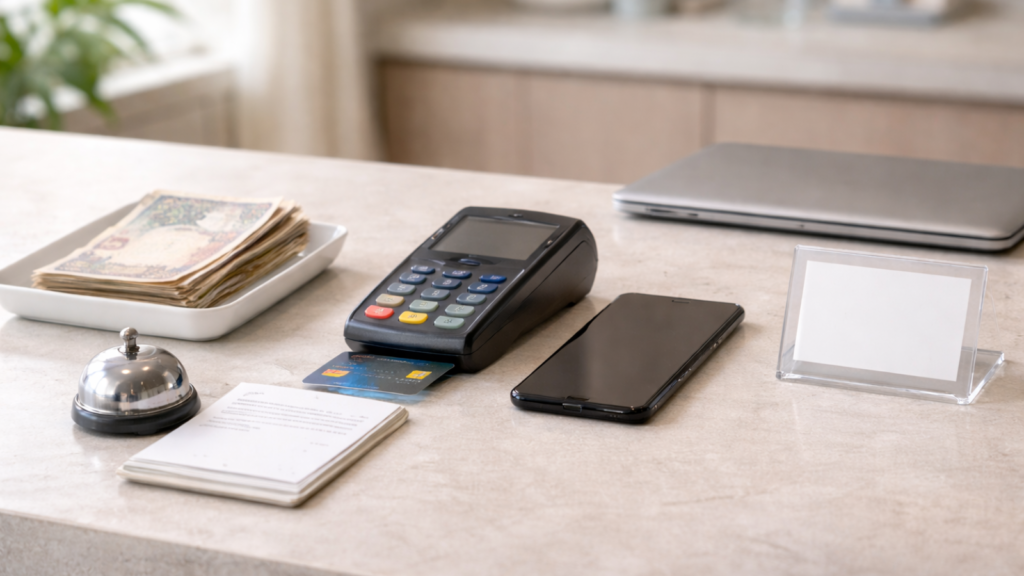
When booking whitening treatment, understanding how payment works at your clinic makes the process smoother. Across dental in Kathmandu practices, cash payments in Nepali Rupees are standard. Bring exact amounts or slightly more, as some smaller clinics may lack change for large denominations. Cash payments often receive small discounts (5% to 10%) at clinics trying to reduce card processing fees.
Major credit and debit cards (Visa, Mastercard, local banks) work at most modern dental offices. Dent Inn explicitly accepts all local and international cards through secure payment terminals. Card payments provide receipt records useful for insurance claims or personal expense tracking.
Digital payment options available:
- eSewa mobile wallet
- Khalti QR code payments
- PhonePe smartphone transfers
- ConnectIPS bank-to-bank transfers
- Online advance payment for deposits
Financing and installment plans: what to ask your clinic
Equated Monthly Instalment (EMI) financing helps spread whitening costs over 3 to 12 months. Larger treatments like orthodontics or implants commonly offer EMI, but some clinics extend this option to cosmetic procedures including whitening packages above NPR 15,000. Veda Dental Clinic advertises “EMI payment available for local residents.”
Ask your dentist about interest rates and down payment requirements for instalment plans. Typical EMI structures require 20% to 30% upfront, with remaining balance split into monthly payments. Interest rates range from 0% (promotional periods) to 12% to 18% annually depending on clinic partnerships with finance companies.
| Package Cost | Down Payment (25%) | Monthly EMI (6 months) | Monthly EMI (12 months) | Total with Interest (12%) |
| NPR 15,000 | NPR 3,750 | NPR 1,958 | NPR 1,020 | NPR 16,125 |
| NPR 20,000 | NPR 5,000 | NPR 2,611 | NPR 1,360 | NPR 21,500 |
| NPR 25,000 | NPR 6,250 | NPR 3,264 | NPR 1,700 | NPR 26,875 |
Note: Interest rates vary by clinic and financing partner. Some promotional periods offer 0% interest.
Not all clinics offer financing for whitening, smaller practices typically require full payment at service completion. Call ahead to confirm payment flexibility before booking expensive laser or multi-session packages. Larger dental chains and hospital-affiliated clinics more commonly provide instalment options.
Using insurance, health savings, or employee benefits , what’s possible
Private dental insurance remains uncommon in Nepal, and most policies exclude cosmetic procedures like teeth whitening. Check your policy documentation or contact your insurer directly to confirm coverage. Medical insurance through employers occasionally covers dental work if deemed medically necessary, but purely aesthetic whitening rarely qualifies.
Submit detailed clinic receipts to your insurance company if you believe whitening addresses medical issues (severe discolouration affecting mental health, for example). Some insurers reimburse portions of treatment costs on case-by-case basis. Dentists provide itemised bills showing consultation, examination, and treatment codes for insurance claims.
Health Savings Accounts (HSAs) or Flexible Spending Accounts (FSAs) available through multinational employers may cover whitening expenses. These pre-tax savings programmes sometimes permit cosmetic dental spending. Verify with your benefits administrator whether whitening qualifies under your specific plan rules.
Negotiation and package discounts: group rates, seasonal promotions, and trial offers
Seasonal promotions around Dashain, Tihar, New Year, or clinic anniversary dates offer 10% to 25% discounts on whitening packages. Dental clinics advertise limited-time offers on social media and clinic websites. Booking during promotional periods saves thousands of rupees on identical treatments.
Group discounts apply when booking for multiple family members or friends simultaneously. Some clinics reduce per-person rates by 10% to 15% for groups of 3 or more people scheduling whitening together. Couples packages pair two whitening treatments at combined discounted rates.
Ask about trial offers for new patients or first-time whitening customers. Clinics occasionally bundle free consultations, complimentary cleaning, or bonus touch-up gel with full-price whitening packages. Mentioning competitor pricing during consultation may prompt clinics to match or beat quoted rates, though avoid aggressive haggling in professional healthcare settings.
Book a professional whitening session in BrightSmile Dental Clinic
How much does basic teeth whitening cost in Kathmandu?
Basic in-office teeth whitening in Kathmandu costs NPR 12,000 to NPR 18,000 per session. Take-home whitening kits cost NPR 8,000 to NPR 15,000 for both arches. Prices vary by clinic location, whitening materials, and treatment complexity.
What’s included in a standard whitening package?
A standard teeth whitening package includes oral examination, shade assessment, gum protection, professional bleaching gel application, and post-treatment fluoride. Some clinics add a pre-whitening cleaning, so you understand what a teeth-cleaning appointment typically involves, along with sensitivity control products or follow-up visits depending on the package.
Do laser whitening packages cost more than regular bleaching?
Yes, laser or LED teeth whitening costs more than regular bleaching. Prices range from NPR 15,000 to NPR 25,000, about 30% to 50% higher. Higher costs reflect advanced equipment and faster, more noticeable results.
Can I pay for whitening in instalments?
Some Kathmandu dental clinics offer EMI instalment plans for whitening treatments above NPR 15,000. Plans usually require 20% to 30% down payment, with the remaining balance spread over 3 to 12 months. Availability varies by clinic.
How long do whitening results last before needing touch-ups?
Professional teeth whitening results last 6 months to 2 years. Longevity depends on oral hygiene and habits like coffee, tea, or tobacco use. Dentists usually recommend annual touch-ups to maintain brightness.
Which payment methods do Kathmandu dental clinics accept?
Kathmandu dental clinics accept cash, Visa and Mastercard debit or credit cards, and digital wallets such as eSewa, Khalti, and PhonePe. Larger clinics also support ConnectIPS bank transfers and online payments.
Are there package discounts for whitening multiple family members?
Many clinics offer group discounts for teeth whitening when three or more family members book together. Discounts typically reduce per-person costs by 10% to 15%. Couples packages also offer bundled savings.
What hidden costs should I watch for with whitening packages?
Hidden whitening costs include pre-treatment cleaning, sensitivity control products, and replacement whitening gel for touch-ups. These add-ons range from NPR 500 to NPR 4,000. Request an itemised quote before treatment.
Does dental insurance cover teeth whitening in Nepal?
Dental insurance in Nepal generally does not cover teeth whitening. Most policies exclude cosmetic procedures. Medically necessary bleaching may qualify for partial reimbursement after insurer review and receipt submission.
When do clinics offer seasonal discounts on whitening?
Kathmandu dental clinics offer seasonal whitening discounts during Dashain, Tihar, New Year, and clinic anniversaries. Promotions typically reduce prices by 10% to 25% for a limited time.