
Jaw pain and clicking can be annoying, but it doesn’t always mean something serious is “wrong” with your jaw joint. The temporomandibular joint (TMJ) is a small hinge-and-slide joint that works every time you talk, chew, yawn, or clench, and it can make popping or clicking sounds when the joint disc or surrounding muscles aren’t moving smoothly. In many people the sound is harmless, but when it comes with pain, stiffness, headaches, or locking, it may point to a temporomandibular disorder (TMD) that needs proper care.
In this guide, you’ll learn the most common causes of TMJ clicking and jaw pain, like teeth grinding, stress-related clenching, disc displacement, and arthritis, plus the key symptoms that help you tell mild issues from red flags. We’ll also cover simple at-home steps that often calm flare-ups, what treatments a dentist may recommend (such as splints/night guards and physiotherapy), and when imaging or advanced care is needed.
TMJ vs TMD Basics (And Why Your Jaw Clicks)
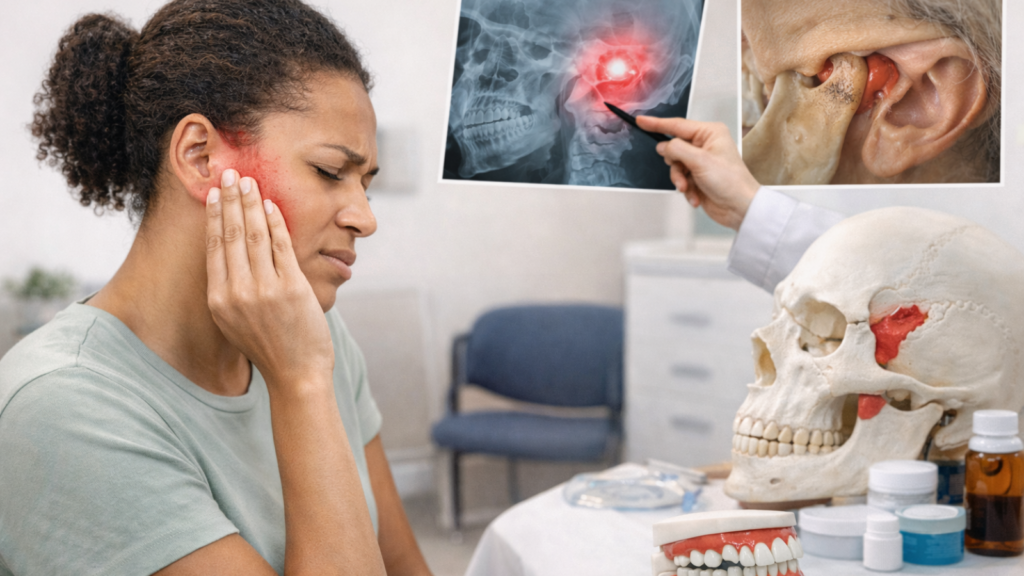
The TMJ is the jaw joint, while TMD is the broader term for problems affecting the joint, the disc, and the chewing muscles. Jaw clicking often happens when the small disc inside the joint doesn’t glide smoothly and “pops” as you open or close. Clicking without pain or limited opening is often harmless, but pain, stiffness, or locking suggests a treatable disorder.
TMJ vs TMD: Meaning and the main types (muscle vs joint vs mixed)
The temporomandibular joint (TMJ) is the hinge-like structure that connects your jawbone to your skull. Temporomandibular disorder (TMD) refers to a group of conditions affecting this joint and the surrounding muscles. Many people use these terms interchangeably, but understanding the distinction helps clarify what treatment addresses.
TMD falls into 3 main categories.
- Firstly, myofascial pain involves the muscles controlling jaw movement, you may feel tenderness in the jaw muscles, temples, or neck.
- Secondly, internal derangement affects the joint itself, often involving disc displacement or structural changes.
- Thirdly, degenerative joint disease includes arthritis that gradually damages the joint cartilage and bone.
Most patients experience a mixed pattern rather than a single type. For instance, chronic muscle tension from clenching can eventually strain the joint disc, creating both muscle pain and clicking sounds. The dominant pattern determines which treatment approach works best.
What causes jaw clicking and popping (disc movement, ligaments, joint mechanics)
Jaw clicking typically results from the articular disc moving out of its normal position between the jaw bone (condyle) and skull socket. The disc acts as a cushion, and healthy joints keep it centered during all jaw movements. Clicking occurs when the disc slips forward during rest, then snaps back into place when you open your mouth.
The sound you hear is the condyle moving over the displaced disc edge. Ligaments that normally hold the disc in position can stretch from chronic overloading, repeated strain, or sudden injury. The joint mechanics change when these ligaments lose tension, the disc begins to wander, creating the characteristic click or pop.
Some patients notice a single click when opening, while others experience reciprocal clicking (one click opening, another closing). The location and timing of the click reveal which direction the disc has displaced and how far it travels during jaw movement.
Jaw clicking without pain: when it’s usually normal and needs no treatment
Yes, jaw clicking without pain is usually normal and needs no treatment. Research shows that 33 to 40 percent of healthy adults have some degree of clicking or popping without dysfunction. The joint produces sounds the same way knuckles crack, gas bubbles releasing in the joint fluid or soft tissues moving over bone.
You can safely ignore clicking when it meets 3 criteria: firstly, no pain accompanies the sound; secondly, jaw function remains normal (full opening, smooth movement); thirdly, the clicking pattern stays stable over time. Many people live their entire lives with harmless clicking that never progresses to disorder.
Treatment becomes necessary only when clicking combines with pain, limited opening, locking episodes, or worsening symptoms. Intervening on painless clicking often causes more problems than it solves, unnecessary treatments can destabilize a joint that was functioning adequately despite the noise.
Common TMJ myths (and what evidence supports instead)
- The most persistent myth claims that TMJ clicking always requires aggressive treatment like surgery or permanent orthodontic changes. Evidence shows that 50 to 90 percent of TMD cases improve with conservative care, rest, physical therapy, and behavioral modifications work better than invasive procedures for most patients.
- Another widespread misconception suggests that bite alignment causes all TMJ problems. While severe malocclusion can contribute, research reveals that many people with “imperfect” bites never develop symptoms, while others with ideal alignment suffer significant TMD. Stress, muscle tension, and joint loading patterns matter more than minor tooth position variations.
- The third myth claims TMJ disorders are permanent and progressive. Studies tracking patients over 2 to 3 years demonstrate that most TMD symptoms fluctuate naturally, they worsen during stress periods, then improve without intervention. Only a small percentage develops chronic, treatment-resistant dysfunction.
Perhaps the most harmful myth insists you must find and fix “the root cause” before symptoms improve. Real-world TMD typically stems from multiple overlapping factors rather than a single identifiable trigger. Effective treatment addresses the symptom pattern and functional limitations rather than chasing a definitive structural diagnosis.
Causes & Risk Factors of Jaw Pain and TMJ Clicking
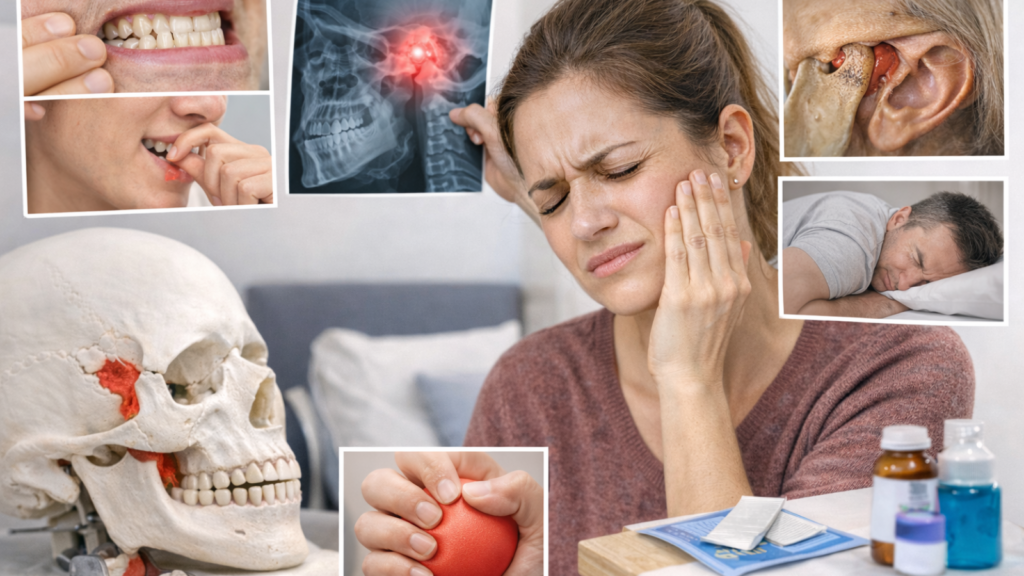
The most common drivers are clenching/grinding, stress-related muscle overuse, disc displacement, arthritis, and past jaw injury. Daily habits like chewing gum, nail biting, side-sleeping pressure on the jaw, or constantly taking big bites can repeatedly trigger flare-ups. Bite changes from a high filling, missing teeth, or chewing mainly on one side can also overload the joint and muscles over time.
1. Clenching and grinding (bruxism): how it overloads jaw muscles and joints
Teeth grinding and bruxism involves the habitual grinding or clenching of teeth, and it ranks as the leading risk factor for TMD development. Normal chewing generates approximately 50 to 70 pounds of force, while grinding can exceed 250 pounds, a 3 to 5 times increase that overwhelms both muscles and joints.
Sleep bruxism operates unconsciously for hours each night. The masseter and temporalis muscles contract repeatedly without the normal rest periods, accumulating microtrauma and inflammation. Daytime clenching responds to stress triggers, deadlines, traffic, arguments, and often goes unnoticed until pain develops.
The joint itself suffers from this chronic overload. Excessive pressure compresses the articular disc, restricts blood flow that brings nutrients, and accelerates wear on the joint surfaces. Over months or years, the disc may permanently deform or displace, creating the mechanical clicking and catching that characterizes internal derangement.
Risk factors that intensify bruxism include anxiety, sleep apnea (which increases arousal episodes), certain medications (particularly SSRIs), and stimulant use. Addressing these underlying drivers proves more effective than treating the grinding habit alone.
2. Disc displacement: why it clicks, catches, or feels like it “shifts”
Disc displacement occurs when the articular disc moves forward relative to the condyle, then reduces (pops back) when you open your mouth. Early displacement causes clicking but maintains normal function. The disc slips forward when your teeth are together, sits on the condyle during opening (producing the click), then slips forward again during closing (creating a reciprocal click pattern).
The sensation of “shifting” or “catching” signals that the disc is not reducing smoothly. You may need to move your jaw sideways or gradually ease it open to find the position where the disc pops into place. This workaround becomes habitual, many patients develop specific jaw movement patterns to avoid the uncomfortable catch.
Progressive displacement stretches the posterior attachment (the elastic tissue behind the disc) and eventually leads to non-reducing displacement. The disc stays forward permanently, the clicking stops, but jaw opening becomes limited. This transition from clicking to locking represents a critical stage that needs professional evaluation.
Displacement rarely occurs suddenly without warning. Most patients recall months of increasingly loud clicking, intermittent catching, or morning stiffness before a locking episode. Recognizing these progressive signs allows earlier intervention before permanent limitation sets in.
3. Arthritis, injury, hypermobility, and systemic factors that affect the TMJ
The TMJ can develop osteoarthritis or inflammatory arthritis just like other joints in the body. Osteoarthritis results from mechanical wear, the cartilage gradually breaks down, bone changes follow, and movement becomes painful and limited. TMJ arthritis typically develops in people over 50 years old or those with a history of trauma, chronic overloading, or prior disc displacement.
Rheumatoid arthritis (RA) affects the TMJ in approximately 50 percent of RA patients, though jaw symptoms may appear before hand or knee involvement. Juvenile idiopathic arthritis can damage the growing jaw joint, causing asymmetric development and bite changes that persist into adulthood.
Direct trauma from accidents, sports injuries, or prolonged dental procedures can injure the joint capsule, ligaments, or disc. Even whiplash transfers forces through the neck muscles to the jaw, creating delayed-onset TMD symptoms. Blunt trauma to the chin drives the condyle backward into the joint space, potentially fracturing bone or tearing the disc attachment.
Hypermobility disorders like Ehlers-Danlos syndrome increase TMD risk because loose ligaments fail to stabilize the joint. The disc wanders more easily, clicking develops earlier, and conservative treatments work less effectively. Systemic factors including hormonal fluctuations (estrogen affects joint laxity), vitamin D deficiency (linked to chronic musculoskeletal pain), and autoimmune conditions all influence TMJ health beyond local mechanical stress.
4. Habits that worsen TMJ (chewing gum, nail biting, big bites, posture, sleep position)
Repetitive jaw habits accumulate micro-stress that exceeds the joint’s repair capacity. Chewing gum forces the jaw through thousands of repetitive cycles, fatiguing muscles and compressing the working-side joint. Even sugar-free gum creates the same mechanical load, the issue is duration and repetition rather than gum type.
Nail biting, pen chewing, and holding objects between your teeth position the jaw in strained forward postures. These habits recruit jaw muscles inefficiently and load the joint at awkward angles. Most people perform these behaviors during concentration or anxiety, reinforcing the stress-jaw pain connection.
Taking large bites of thick sandwiches, bagels, or hard foods forces maximum jaw opening, which stretches already-irritated tissues. Patients often report flare-ups after eating corn on the cob, whole apples, or chewy meats. The jaw does not need this range for proper function, most eating occurs in the first 25 millimeters (approximately 1 inch) of opening.
Forward head posture changes the mechanical relationship between the skull and jaw. The jaw hangs more forward, posterior neck muscles tighten, and the natural resting position shifts. Over time, this postural stress contributes to both muscle pain and joint loading.
Sleep position affects TMJ health more than most patients realize. Sleeping on your stomach with your head turned forces the jaw to one side for hours. Side sleeping can compress the lower jaw upward if you use a high pillow or sleep with your hand under your cheek. These sustained pressures rival bruxism in their ability to irritate the joint and surrounding tissues.
Symptoms Checklist: Mild TMJ vs Serious Red Flags
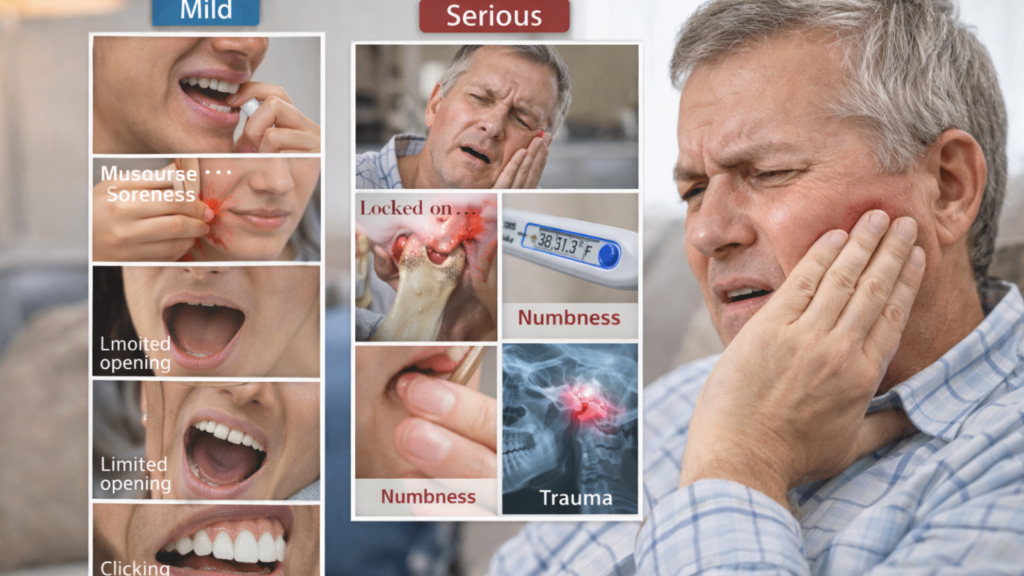
TMJ problems can feel like joint pain near the ear, muscle soreness in the cheeks/temples, headaches, or tightness when chewing. Some people notice clicking, limited opening, jaw deviation, or episodes of the jaw “sticking” or locking. Red flags include worsening lock, rapid swelling, fever, numbness, major bite change, or trauma, these need prompt dental or urgent medical assessment.
Jaw pain patterns: joint pain vs muscle pain vs referred tooth/facial pain
- Joint pain typically presents as a sharp, localized ache directly in front of the ear, worsening with jaw movement or chewing. You can pinpoint the pain with one finger over the TMJ. Opening your mouth, chewing firm foods, or yawning intensifies the discomfort. The pain often feels deep and mechanical, like a sore knee after exercise.
- Muscle pain creates a dull, broader ache across the jaw, temple, or cheek. The masseter muscle (the thick muscle you feel when clenching your teeth) becomes tender to touch, and the pain may radiate to the teeth, making them feel sore despite healthy dental examinations. Temple headaches that worsen through the day signal temporalis muscle involvement.
- Referred pain confuses many patients and dentists. TMJ dysfunction can mimic toothache, causing pain in perfectly healthy teeth. The trigeminal nerve carries sensation from the jaw joint and teeth on the same pathways, your brain interprets joint pain as coming from teeth. Similarly, jaw pain can refer to the ear, creating fullness or aching that an ENT examination cannot explain.
Understanding your pain pattern helps target treatment. Joint pain responds best to rest and anti-inflammatory approaches, muscle pain improves with stretching and stress management, while referred pain resolves only when you address the source rather than the symptom location.
Locking jaw and limited opening: open-lock vs closed-lock and what it signals
Jaw locking falls into 2 distinct patterns that require different management approaches. Open-lock occurs when your jaw gets stuck in the fully open position, you cannot close your mouth. The condyle slides forward past the articular eminence (the bony bump limiting forward movement) and becomes trapped. Open-lock creates immediate panic but usually reduces with gentle downward pressure on the back molars while guiding the jaw backward.
Closed-lock presents as severe opening limitation, you can barely fit 2 fingers between your front teeth. The displaced disc blocks the condyle from sliding forward, preventing normal opening. Closed-lock typically develops after months or years of clicking that progressively worsens. The clicking suddenly stops (because the disc no longer reduces), replaced by stiffness and limited function.
Normal jaw opening measures 40 to 50 millimeters (approximately 2 inches) between upper and lower front teeth. Opening less than 35 millimeters indicates significant restriction. Measure your opening by stacking 3 fingers vertically, most adults can fit 3 finger widths without strain.
Sudden locking needs same-day evaluation, while gradual limitation developing over weeks allows scheduled consultation. Some closed-locks resolve spontaneously as inflammation decreases, but early physical therapy and exercises prevent permanent restriction and improve long-term outcomes.
Ear symptoms, headaches, neck pain, tinnitus/pressure: how TMJ can overlap
Approximately 42 percent of TMD patients report ear-related symptoms, creating diagnostic confusion. The TMJ sits millimeters from the ear canal, and inflammation in the joint capsule can create referred ear pain, fullness, or pressure. The shared nerve supply (auriculotemporal nerve) between the ear and jaw explains why joint inflammation triggers ear sensations.
Tinnitus (ringing in the ears) affects up to 33 percent of chronic TMD patients. The mechanism remains debated, but theories include muscle tension affecting the tensor tympani muscle (which dampens sound in the middle ear), altered blood flow from chronic neck muscle tightness, or direct pressure on auditory structures from joint inflammation. TMJ-related tinnitus typically fluctuates with jaw symptoms rather than remaining constant.
Tension-type headaches often coexist with TMD. The temporalis muscle covers the temple and side of the head, when it stays contracted from jaw clenching or postural strain, it generates headache pain. These headaches typically worsen through the day, improve with rest, and respond to jaw relaxation techniques better than standard headache medications.
Neck pain accompanies TMD in the majority of cases because the jaw and neck muscles function as a connected system. Forward head posture tightens posterior neck muscles while weakening deep neck stabilizers. The sternocleidomastoid and upper trapezius muscles develop trigger points that refer pain to the jaw, creating a bidirectional pain cycle. Addressing neck posture and flexibility proves essential for resolving persistent TMD symptoms.
Red flags that need urgent care (trauma, fever/swelling, worsening lock, major bite change)
Certain symptoms signal serious conditions requiring immediate professional evaluation. Recent facial trauma (motor vehicle accident, fall, assault, sports injury) followed by jaw pain, swelling, or inability to close your teeth together properly suggests fracture. Jaw fractures need prompt diagnosis, delayed treatment allows misalignment and chronic dysfunction.
Fever combined with jaw swelling and pain indicates possible infection (abscess, septic arthritis, or salivary gland infection). Swelling that rapidly increases over hours, difficulty swallowing, or swelling that extends down the neck requires emergency evaluation. Dental infections can spread to the jaw joint space, creating life-threatening airway compromise.
Progressive locking that worsens over 24 to 48 hours despite rest and soft diet suggests displaced disc or internal derangement requiring urgent intervention. The window for conservative disc reduction is short, waiting weeks allows scar tissue formation and permanent restriction.
Sudden bite changes where teeth no longer fit together properly signal either fracture, significant disc displacement, or severe muscle spasm. Your brain uses tooth contact patterns to position the jaw, when these patterns change suddenly, underlying structural issues need investigation.
Severe pain unrelieved by over-the-counter medications, pain accompanied by numbness or tingling in the jaw or face, or symptoms appearing after wisdom tooth extraction or dental procedures merit same-day consultation. These presentations suggest nerve involvement, infection, or iatrogenic injury requiring specific management beyond routine TMD care.
Diagnosis & Rule-Outs (What Else It Could Be)
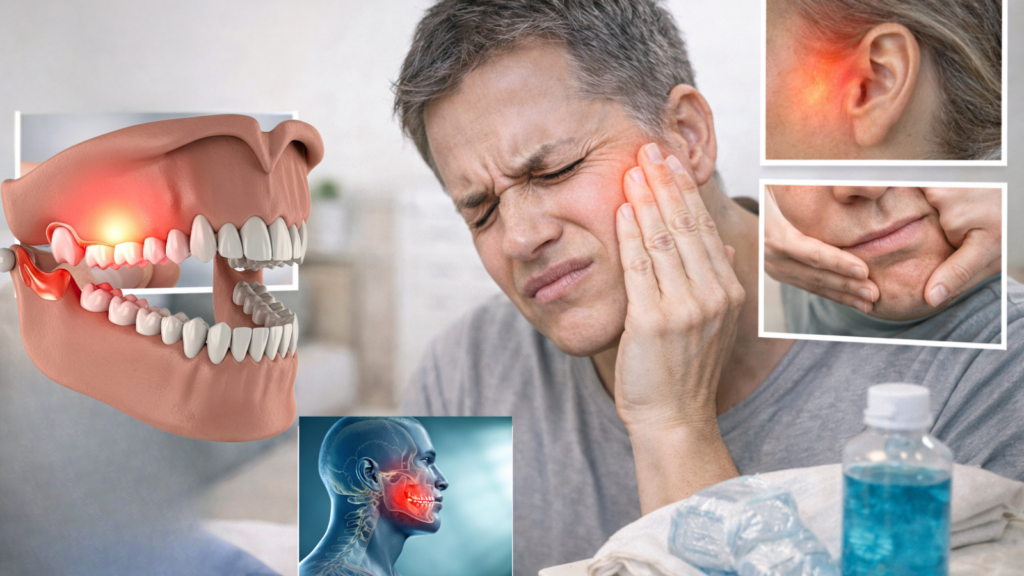
A proper exam checks jaw opening range, joint sounds, muscle tenderness, bite balance, and signs of tooth wear from grinding. Because jaw pain can mimic tooth infection, ear/sinus issues, or nerve pain, dentists also rule out these causes before confirming TMD. Imaging like CBCT or MRI is used only when needed, especially with persistent locking, suspected joint damage, or unclear symptoms.
TMJ vs tooth infection vs ear/sinus problems vs nerve pain: quick rule-out guide
Differentiating TMJ disorders from dental infections requires checking specific signs. Toothache causes and symptoms follow a distinct pattern: constant, throbbing pain localized to one or more teeth, often worsening with hot/cold exposure. The tooth feels “high” when you bite, and tapping it reproduces sharp pain. TMJ pain, by contrast, worsens with jaw movement but does not localize to specific teeth, and temperature sensitivity does not occur.
Ear infections cause deep ear pain, hearing changes, discharge, and fever. The pain stays constant rather than varying with jaw movement. ENT examination shows a red, bulging eardrum with middle ear fluid. TMJ-related ear symptoms fluctuate with jaw use, show normal ear examination findings, and often include clicking or jaw tenderness absent in true ear pathology.
Sinus problems create pain and pressure across the cheeks, forehead, or between the eyes, worsening when bending forward. Nasal congestion, post-nasal drip, and facial pressure upon waking characterize sinus inflammation. TMJ pain typically affects the jaw joint area and temple, lacks nasal symptoms, and worsens with chewing rather than head position changes.
Trigeminal neuralgia produces sudden, electric-shock-like facial pain triggered by light touch, eating, or talking. The pain lasts seconds to minutes, then disappears completely until the next trigger. TMJ pain builds gradually, persists as a dull ache, and creates tenderness rather than shock-like episodes. Neuralgic pain also affects specific trigeminal nerve branches (upper teeth/cheek or lower jaw) rather than the joint area.
At-home self-check and symptom diary (triggers, chewing side, morning pain, stress/sleep)
A structured symptom diary reveals patterns that guide treatment more effectively than memory alone. Track 5 key variables daily for 2 weeks:
- Firstly, pain level (0 to 10 scale) and location;
- Secondly, jaw function (opening range, locking episodes);
- Thirdly, dietary triggers (which foods worsened symptoms);
- Fourthly, stress events and sleep quality;
- Fifthly, timing (morning vs evening, weekday vs weekend patterns).
Morning pain and stiffness suggest nighttime bruxism. Jaw tightness upon waking, tooth indentations on your tongue edges, or headaches starting before breakfast all indicate sleep grinding. Evening pain that worsens through the day points toward cumulative daytime stress, postural strain, or repetitive jaw habits.
Note which side you favor when chewing. Unilateral chewing overloads one joint while underusing the opposite side, creating asymmetric muscle development and joint stress. Many patients unknowingly avoid the painful side, which perpetuates muscle imbalance.
Track stress events and their jaw symptom correlation. Many patients notice flare-ups following deadlines, arguments, or sleep disruption. Recognizing this connection helps you implement stress-reduction techniques during high-risk periods rather than waiting for pain to develop.
Perform a simple opening measurement daily using 3 stacked fingers. Normal opening accommodates 3 fingers comfortably; 2 fingers indicates moderate restriction; 1 finger signals severe limitation requiring urgent evaluation. Tracking opening range detects gradual worsening that might otherwise go unnoticed.
What the dentist examines: jaw opening range, deviation, muscle tenderness, bite, tooth wear
The clinical examination combines measurement, palpation, and functional assessment. The dentist measures maximum comfortable opening (typically 40 to 50 millimeters in healthy adults) and notes whether opening follows a straight path or deviates to one side. Deviation suggests muscle imbalance or disc displacement pulling the jaw off center.
Muscle palpation reveals which specific muscles hurt and how severely. The examiner presses the masseter, temporalis, lateral pterygoid, and neck muscles, comparing tenderness between sides. Muscle pain locations predict which activities worsen symptoms and which exercises will help most.
Joint palpation places fingers just in front of the ears while you open and close. The examiner feels for clicking, crepitus (grinding/grating sounds indicating arthritis), or tenderness. Clicking location (early, mid, or late opening) indicates disc displacement severity.
Bite examination checks how teeth meet when you close naturally. The dentist looks for dental wear patterns (flat, shiny spots on tooth edges indicate grinding), broken fillings or chipped teeth (signs of excessive force), and whether back teeth touch evenly on both sides. Uneven bite contact can perpetuate muscle imbalance, while severe wear confirms chronic bruxism. A comprehensive dental checkup will document all of these findings together so that no contributing factor is missed.
Range of motion testing includes lateral movements (sliding the jaw left and right) and protrusion (jutting the jaw forward). Healthy jaws move 7 to 10 millimeters to each side and protrude 7 millimeters. Limited range in specific directions helps diagnose which structures are damaged.
When imaging helps (X-ray/CBCT vs MRI) and what each test can show
Panoramic X-rays and cone beam computed tomography (CBCT) visualize bone structure but cannot show soft tissue. Panoramic radiographs screen for fractures, arthritis, asymmetry, or bone changes but miss disc displacement entirely. CBCT provides 3-dimensional bone imaging, revealing condyle shape, joint space narrowing, or erosive changes indicating degenerative disease.
Imaging becomes necessary when you suspect fracture (trauma history), arthritis (chronic pain in patients over 50 years old), asymmetric facial development (one jaw side appears flatter), or surgical planning. Most early TMD cases need no imaging, the history and examination provide adequate diagnostic information.
Magnetic resonance imaging (MRI) shows soft tissues including the disc, ligaments, joint fluid, and inflammation. MRI is the only imaging that confirms disc displacement, but clinical signs (clicking pattern, deviation, locking history) diagnose disc problems accurately without MRI in the majority of cases. MRI becomes valuable when conservative treatment fails and you are considering injections or surgery that require precise anatomical mapping.
Advanced imaging should not replace a thorough examination. Many asymptomatic people show disc displacement or mild arthritis on MRI without clinical dysfunction. Treating imaging findings rather than symptoms leads to unnecessary interventions that can worsen outcomes.
Best TMJ Treatments (Step-by-Step “Conservative First” Ladder)
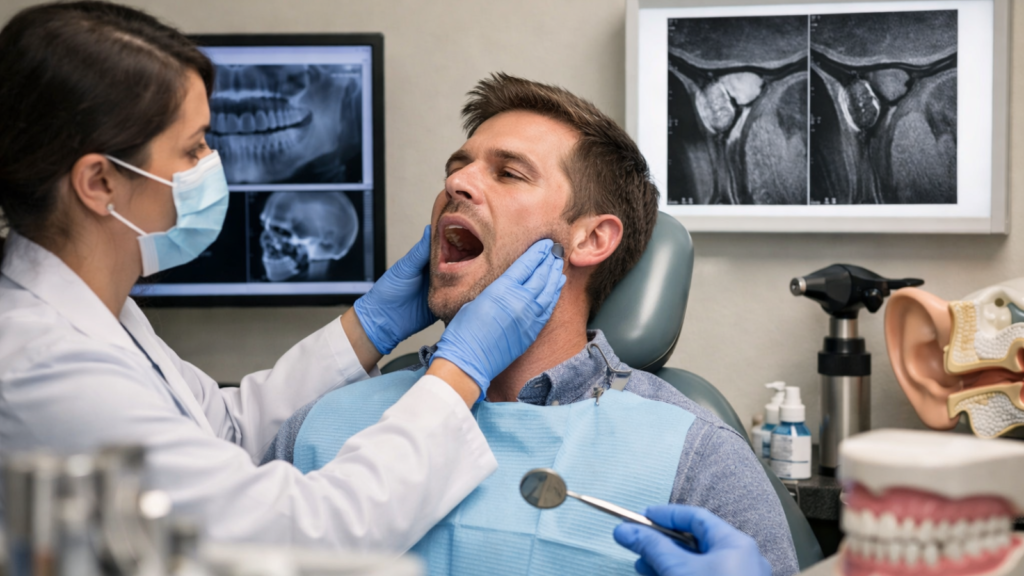
Most cases improve with simple measures first: a soft diet, heat/ice, avoiding wide opening, relaxing the jaw posture, and reducing clenching triggers. If symptoms persist, a dentist may recommend a customized night guard/splint, targeted physiotherapy, and short-term medications to calm inflammation and muscle spasm. In resistant cases, options can include injections or joint procedures, while surgery is reserved for select severe conditions.
Self-care that works: Do/Don’t checklist, heat/ice, soft diet, resting jaw posture
Conservative self-care resolves 50 to 75 percent of acute TMD flare-ups without professional intervention. The “Do” checklist includes: firstly, maintain a soft diet for 7 to 14 days (avoid chewy meats, hard bread, raw vegetables, gum); secondly, practice conscious jaw relaxation (“lips together, teeth apart” throughout the day); thirdly, apply moist heat for 15 to 20 minutes twice daily to sore muscles.
The “Don’t” list addresses habits that perpetuate dysfunction: firstly, do not wide-yawn (suppress yawns by keeping your tongue on the roof of your mouth); secondly, do not bite nails, chew pens, or hold objects between teeth; thirdly, do not sleep on your stomach or with your jaw compressed by a hand or pillow; fourthly, do not clench when stressed (place reminder notes where you typically clench, computer, car dashboard, phone).
Heat versus ice selection depends on symptom type. Muscle pain responds best to moist heat, which increases blood flow and relaxes tight muscles. Joint inflammation improves with ice (15 minutes every 2 to 3 hours), which reduces swelling and numbs acute pain. Many patients benefit from alternating heat and ice, heat first to loosen muscles, then ice to reduce inflammation.
Resting jaw posture, the position your jaw maintains between swallows and speech, affects recovery significantly. The ideal resting position keeps lips gently closed, teeth slightly apart (2 to 3 millimeters), and tongue resting against the roof of your mouth behind the front teeth. This position minimizes muscle activity and joint loading. Patients who clench habitually need conscious practice to maintain this posture throughout the day.
Soft diet modifications prevent reinjury during healing. Cut food into small pieces, cook vegetables until tender, choose fish over steak, and avoid foods requiring wide opening (thick sandwiches, whole apples). Even healthy foods like salads can strain healing tissues. Resume normal diet gradually over 2 to 3 weeks as symptoms improve.
Dental care: night guards/splints, who benefits, who doesn’t, and how they’re used
Occlusal splints (night guards) protect teeth from grinding damage and can reduce TMJ symptoms, but they do not work for everyone. The splint creates a flat, even surface that distributes forces across all teeth, preventing single-tooth overload. This protection benefits patients with confirmed bruxism (worn teeth, morning headaches, jaw fatigue upon waking) by reducing nighttime muscle activity and joint compression.
Hard acrylic splints that cover either upper or lower teeth work better than soft silicone “boil-and-bite” guards. Soft guards can increase clenching activity in some patients, the material feels like something to chew, triggering muscle engagement rather than relaxation. A custom-fitted night guard made by a dentist allows precise adjustment of tooth contacts and jaw position, and understanding the types, fitting process, and expected lifespan can help you make an informed decision before committing.
Splint therapy requires 4 to 6 weeks of consistent nightly use before benefits appear. The splint should feel comfortable, not create new pain or bite changes, and should be adjusted if symptoms worsen. Daytime splint use helps some patients during high-stress periods but is not necessary for most.
Not all TMD patients need splints. Those without bruxism, those whose pain stems primarily from disc displacement rather than muscle issues, and those with severe arthritis may gain little benefit. Splints treat the effect (grinding) rather than the cause (stress, sleep issues), so combining splint therapy with stress management and sleep hygiene produces better outcomes than splint use alone.
Poorly designed splints can worsen TMD by forcing the jaw into unnatural positions or creating bite instability. Never continue using a splint that causes new pain, changes how your teeth fit together when you remove it, or creates morning jaw stiffness rather than relief.
Physio & exercises: jaw rehab, posture, manual therapy, and common mistakes to avoid
Physical therapy addresses muscle imbalance, limited range of motion, and postural dysfunction that perpetuate TMD. Jaw exercises focus on 3 goals: firstly, gentle stretching to regain opening range; secondly, strengthening weak muscles; thirdly, coordination training to restore smooth, symmetric movement.
Opening exercises should progress gradually. Passive stretch (using finger pressure to gently assist opening) for 30 seconds, held 3 to 5 times daily, improves range without forcing. Never push through sharp pain, work to mild stretch tension only. Lateral movement exercises (sliding the jaw side-to-side against gentle finger resistance) restore mobility while strengthening stabilizer muscles.
Postural correction proves essential for long-term resolution. Forward head posture shortens posterior neck muscles, pulling the skull backward and forcing the jaw to hang more forward. Chin tucks (gently retracting the chin to align ears over shoulders) performed 10 times every 2 hours reprogram postural patterns. Scapular retraction (pulling shoulder blades together and down) prevents the rounded-shoulder collapse that drives forward head position.
Manual therapy techniques including massage, trigger point release, and joint mobilization relieve muscle tension that self-care cannot reach. Therapists trained in TMD management use intraoral techniques (working inside the mouth on the lateral pterygoid and medial pterygoid muscles) to release deep muscle spasm contributing to disc displacement and limited opening.
Common exercise mistakes derail recovery. Forcing opening too aggressively inflames healing tissues, creating more pain and muscle guarding. Inconsistent practice (exercising only when symptoms flare) prevents progression, daily consistency matters more than exercise intensity. Neglecting posture while performing jaw exercises wastes effort, the postural strain recreates the dysfunction you are trying to correct.
When pain persists: medications, injections, and procedures (arthrocentesis/arthroscopy; surgery as last resort)
Medications play a supporting role in TMD management, addressing pain and inflammation but not correcting mechanical dysfunction. Non-steroidal anti-inflammatory drugs (NSAIDs like ibuprofen 400 to 600 milligrams every 6 to 8 hours) reduce joint inflammation and muscle pain. Use NSAIDs for 7 to 10 days during acute flares, always with food to protect the stomach.
Muscle relaxants (cyclobenzaprine 5 to 10 milligrams before bed) help patients with severe muscle spasm or bruxism-related pain. These medications reduce nighttime muscle activity and improve sleep quality but cause drowsiness that limits daytime use. Short courses (2 to 3 weeks) work best to avoid dependence.
Trigger point injections deliver local anesthetic directly into muscle knots, providing immediate pain relief and allowing therapeutic exercises that were previously too painful. Botulinum toxin (Botox) injections into the masseter and temporalis muscles reduce chronic clenching and grinding when other treatments fail. Results last 3 to 4 months before repeat injection becomes necessary.
TMJ injections include corticosteroids (reducing severe joint inflammation) and hyaluronic acid (lubricating the joint and potentially promoting healing). Injection therapy suits patients with confirmed joint arthritis or inflammation who have not responded to conservative care.
Arthrocentesis involves inserting 2 needles into the joint space under local anesthesia, flushing the joint with saline to remove inflammatory debris and adhesions. This minimally invasive procedure improves outcomes in patients with chronic closed-lock or severe joint inflammation. Recovery takes 1 to 2 weeks, with continued physical therapy afterward.
Arthroscopy (keyhole surgery) allows direct visualization of the joint interior through a tiny camera, enabling the surgeon to remove scar tissue, reposition the disc, or smooth damaged cartilage. Arthroscopy suits patients who have failed arthrocentesis, those with confirmed mechanical blockage, or those needing diagnostic visualization.
Open joint surgery (arthrotomy) remains the last resort for severe structural damage, failed previous surgeries, ankylosis (bony fusion), or tumors. Open surgery requires weeks of recovery, risks permanent nerve damage or scarring, and should be considered only after exhausting all conservative options. The success rate for open TMJ surgery varies widely, second opinions from TMJ specialists prove essential before proceeding.
Prevention, Recovery Timeline & When to See a Dentist in Kathmandu
TMJ pain often improves over weeks, but longer-standing cases may need a few months of consistent habit change, therapy, and protective care. Prevent flare-ups by limiting hard/chewy foods, stopping gum chewing, correcting posture, managing stress and sleep, and addressing grinding early. If you are looking for dental in Kathmandu and experiencing jaw pain that lasts more than 1–2 weeks, keeps returning, affects chewing or sleep, or includes locking or a bite change, book an evaluation to get the right diagnosis and safest plan.
Prevent flare-ups: daily habits, food choices during TMJ pain, and sleep/stress adjustments
Preventing TMJ flare-ups requires consistent daily habits rather than reacting after pain develops. The most effective preventive strategy maintains proper jaw posture: check your jaw position every hour, confirming lips closed, teeth apart, and tongue resting on the palate. Set phone reminders until this position becomes automatic.
Dietary prevention during vulnerable periods includes 3 strategies: firstly, cut food into small, bite-sized pieces requiring minimal opening; secondly, chew evenly on both sides (alternate sides every few bites); thirdly, avoid hard (nuts, raw carrots, ice), chewy (bagels, steak, gum), or thick (large sandwiches, whole apples) foods that strain the joint.
Sleep adjustments protect the jaw overnight. Side sleepers should use a thin pillow that maintains neutral neck alignment without elevating the head excessively. Stomach sleeping should be avoided entirely, it forces the jaw into rotated positions for hours. Consider a cervical pillow that supports the natural neck curve while keeping the jaw in neutral position.
Stress management directly reduces muscle tension and bruxism. Techniques that consistently lower TMD symptoms include: mindfulness meditation (10 to 15 minutes daily reduces baseline tension), scheduled worry time (limiting rumination to a specific 20-minute period prevents all-day anxiety), progressive muscle relaxation (tensing then releasing muscle groups teaches conscious control), and consistent sleep schedules (going to bed and waking at the same time regulates stress hormones).
Screen time posture deserves special attention. Prolonged phone use in “text neck” position (head flexed forward, shoulders rounded) creates the same forward head posture that drives TMD. Hold phones at eye level, position computer monitors so the top third aligns with eye height, and take 2-minute posture breaks every 30 minutes.
How long TMJ takes to improve: realistic timelines and what “progress” looks like
Acute TMD flares typically improve significantly within 2 to 4 weeks with consistent conservative care. Week 1 focuses on reducing inflammation and pain through rest, soft diet, and ice. You should notice decreased pain intensity and frequency during this phase, though symptoms may still spike with certain movements.
Weeks 2 to 4 emphasize restoring function through gentle exercises, heat therapy, and gradual diet expansion. Opening range increases 2 to 5 millimeters per week with consistent stretching. Clicking may persist even as pain resolves, the sound alone does not indicate treatment failure.
Chronic TMD (symptoms lasting longer than 3 months) requires 8 to 12 weeks of structured therapy before significant improvement occurs. Progress follows a non-linear pattern, good days and bad days alternate before gradually stabilizing. Measuring progress by weekly trends rather than daily fluctuations prevents discouragement.
Realistic recovery milestones include: firstly, reduced morning pain and stiffness (weeks 1 to 2); secondly, ability to eat moderately firm foods without increased symptoms (weeks 3 to 4); thirdly, normal opening range with minimal deviation (weeks 6 to 8); fourthly, resumption of most activities without limitation (weeks 8 to 12). Complete symptom resolution may take 3 to 6 months for complex cases involving disc displacement or arthritis.
Factors that slow recovery include: inconsistent treatment adherence, ongoing high stress or poor sleep, continuing provocative habits (gum chewing, wide yawning, clenching), uncontrolled systemic disease (rheumatoid arthritis, fibromyalgia), and psychological comorbidities (anxiety, depression, catastrophizing).
Stress, sleep, and chronic pain overlay: when it changes the treatment plan
Chronic TMD that persists despite appropriate mechanical treatment often reflects central sensitization, the nervous system amplifies pain signals beyond tissue damage. Sleep disturbance, chronic stress, and pain catastrophizing (believing pain signals serious harm) feed into this cycle, maintaining symptoms even after structural issues improve.
Sleep quality affects TMD recovery profoundly. Patients averaging fewer than 6 hours per night experience worse pain, slower healing, and higher treatment failure rates. Sleep deprivation increases pain sensitivity, raises stress hormone levels, and impairs tissue repair. Addressing sleep problems, whether insomnia, sleep apnea, or restless legs, becomes as important as jaw-specific treatment.
Chronic stress maintains elevated cortisol and muscle tension, preventing the jaw from fully relaxing even during treatment. Stress-focused interventions that improve TMD outcomes include: cognitive behavioral therapy (restructuring pain-related thoughts and behaviors), biofeedback (learning to consciously reduce muscle tension), and anti-anxiety medication when appropriate.
Pain overlay changes the treatment plan by requiring broader intervention beyond mechanical correction. Successful chronic TMD management typically combines: firstly, continued physical treatments (exercises, manual therapy); secondly, sleep optimization (sleep hygiene, treatment of sleep disorders, sometimes short-term sleep medication); thirdly, stress reduction (therapy, meditation, lifestyle changes); fourthly, central pain modulators (medications like amitriptyline or duloxetine that normalize pain signaling).
Recognizing when TMD has become chronic pain disorder prevents wasted time on repeated mechanical interventions that cannot address the neurologic component. Red flags suggesting pain overlay include: pain intensity far exceeding physical findings, symptoms spreading beyond the jaw to include widespread body pain, minimal improvement despite correct treatment adherence, significant anxiety or depression, and catastrophic beliefs about the pain (fearing permanent damage or disability).
BrightSmile Dental Clinic in Putalisadak, Kathmandu offers comprehensive TMJ evaluation and conservative treatment. Our approach begins with thorough examination to identify the specific type and severity of your TMD, followed by personalized treatment plans that emphasize proven conservative care. We provide custom night guards made with precise bite adjustment, TMJ-focused physical therapy guidance, and coordinated care for complex cases. For a broader picture of what care involves financially, see our guide on dental treatment costs in Kathmandu.
Early intervention prevents progression from simple clicking to painful dysfunction or permanent limitation. Call 977-9748343015 or message us on WhatsApp for a TMJ evaluation. Our team explains your diagnosis clearly, outlines realistic treatment timelines, and works with you to develop a management plan that fits your lifestyle and budget.
Is jaw clicking normal, or is it always TMJ disorder?
Jaw clicking is normal if it occurs without pain, limited motion, or locking. It often results from minor disc shifts in the jaw joint. TMJ disorder is more likely if clicking is new, worsening, painful, or affects chewing or opening. Seek a dental evaluation if symptoms change or persist.
Why does my jaw hurt when I chew, yawn, or talk?
Jaw pain during movement is often caused by clenching, grinding, or joint inflammation. Overuse from hard chewing, yawning, or uneven bite pressure can strain muscles or the TMJ. Pain near the ear suggests joint issues; cheek or temple pain suggests muscle tension. A dental exam can identify the cause.
Can TMJ problems cause ear pain, ringing, or ear fullness?
TMJ problems can cause ear symptoms like pain, fullness, or ringing due to shared nerves and muscle pathways. Jaw tension often refers pain into the ear and temple. If symptoms persist, worsen, or include fever or discharge, rule out true ear infections or sinus issues.
What does it mean if my jaw locks open or closed?
Jaw locking means the joint disc or muscles are interfering with smooth movement. A closed-lock restricts opening; an open-lock keeps the jaw stuck after yawning. Frequent or prolonged locking signals joint strain and requires evaluation. Avoid forcing the jaw, as it can worsen the issue.
How can I stop clenching or grinding my teeth at night?
Reduce night clenching by avoiding late caffeine and alcohol, managing stress, and using a bedtime routine. Practice “lips together, teeth apart” during the day. A night guard can protect teeth and reduce strain. If symptoms are strong, check for sleep or airway issues.
Do night guards or splints actually help TMJ pain and clicking?
Night guards can help TMJ symptoms caused by clenching or grinding. A custom splint reduces muscle tension and protects teeth. It may not stop clicking caused by disc position, but it prevents flare-ups. Poorly fitting over-the-counter guards may worsen symptoms.
What are the best home treatments for TMJ flare-ups?
Treat TMJ flare-ups by eating a soft diet, avoiding wide bites, using heat or cold, and doing gentle stretches. Over-the-counter pain relievers can reduce inflammation. Avoid jaw movements that increase pain or clicking. See a dentist if symptoms last more than two weeks.
When should I see a dentist (or go urgently) for jaw pain?
See a dentist if jaw pain lasts over 1–2 weeks, recurs, or limits eating or sleep. Go sooner for locking, bite changes, or limited opening. Seek urgent care if pain includes swelling, fever, trauma, or difficulty breathing, which may indicate infection or serious issues.
Is TMJ caused by a “bad bite,” braces, or wisdom teeth?
TMJ is rarely caused by bite issues alone. Clenching, stress, injury, and joint wear are more common causes. Braces and wisdom teeth do not usually cause TMJ, though changes in bite can affect symptoms. Diagnosis is essential before making permanent bite changes.
How long does TMJ take to get better, and can it be cured?
TMJ often improves within weeks using soft food, habit changes, and heat/ice. Chronic cases may take months, especially with muscle tension or sleep clenching. Clicking may persist even after pain fades. Long-term comfort and function are realistic goals, even if full “cure” isn’t guaranteed.