
A dental crown protects and restores a damaged tooth. It covers the entire visible portion above your gum line. Dentists call it a “cap” for this reason. The crown restores your tooth to its original size and shape. It prevents further damage during normal chewing.
Crowns serve multiple purposes in modern dentistry. They strengthen teeth after root canal treatment. They support dental bridges between gaps. They attach to dental implants as replacement teeth. Crowns also repair teeth with large fillings or cracks. This guide covers everything about Dental Crown.
What Is a Dental Crown and When Do You Need One?
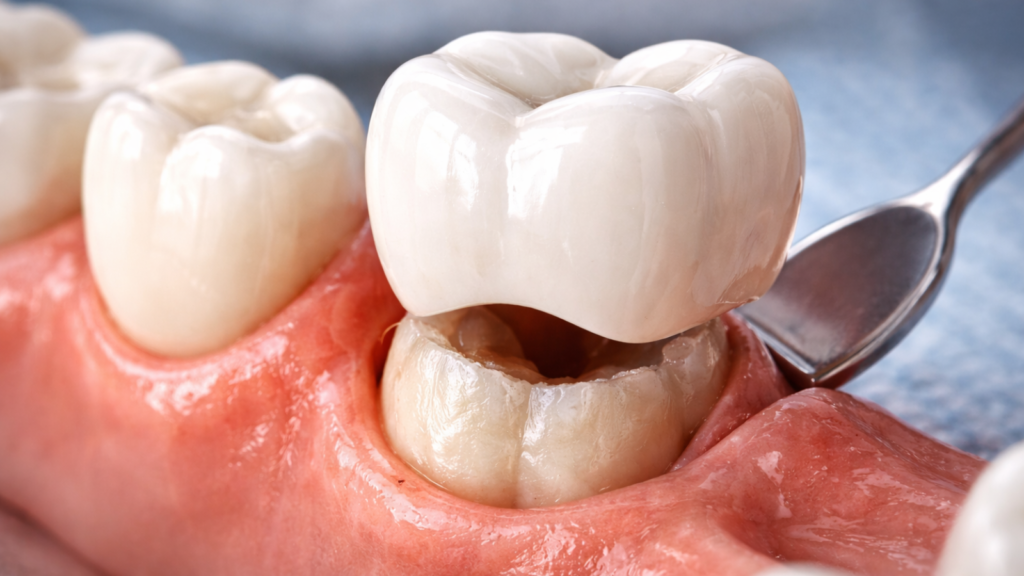
A dental crown is a tooth-shaped cap that covers a damaged tooth completely. Dentists recommend crowns when fillings cannot restore the tooth adequately. Crowns protect weak teeth, restore function after root canals, and support bridges or implants.
What a crown does (and why it’s called a “cap”)
A dental crown is a tooth-shaped restoration that completely covers the visible portion of a damaged tooth above the gum line. Dentists call it a “cap” because it fits over your natural tooth like a protective helmet. The crown restores the tooth to its original size, shape, and function while preventing further damage.
The restoration bonds permanently to your prepared tooth structure. It bears all the chewing forces that your natural tooth would normally handle. Crowns protect weak teeth from splitting apart during normal use.
Signs you may need a crown (crack, large filling, weak tooth)
You need a crown when your tooth structure becomes compromised beyond what a simple filling can repair. Dentists recommend crowns in these situations:
- Firstly, when a crack extends from the chewing surface toward the root;
- Secondly, when an existing filling occupies more than 50 percent of the tooth;
- Thirdly, when the remaining tooth walls measure less than 2 millimeters (0.08 inches) thick.
Teeth become brittle after root canal treatment (RCT). The nerve removal leaves the tooth without internal moisture and nutrients. A crown prevents these treated teeth from fracturing during meals. Heavy grinding habits also weaken teeth over time, creating stress lines that eventually turn into breaks.
Severe decay that reaches deep into the tooth requires crown coverage after the dentist removes all compromised structure. The remaining tooth becomes too fragile to support normal biting pressure. Crowns distribute forces evenly across the entire tooth surface rather than concentrating stress on thin remaining walls.
Crown vs filling vs veneer vs onlay: how dentists choose
Dentists select the restoration type based on how much natural tooth remains and which surfaces need coverage. Fillings work when decay or damage affects less than 40 percent of the tooth and all walls remain intact. The material fills the cavity space without requiring significant tooth reduction.
Veneers cover only the front surface of front teeth. They correct cosmetic issues like staining, minor chips, or small gaps. Veneers require minimal tooth preparation (0.5 to 0.7 millimeters or 0.02 to 0.03 inches) and work only on teeth that still have strong internal structure.
Onlays (or partial crowns) restore one or more cusps of a back tooth. They require less tooth reduction than full crowns while providing more coverage than fillings. Dentists choose onlays when the damage extends to the chewing surface but the outer walls remain healthy.
Full crowns become necessary when damage affects multiple surfaces or when the tooth needs comprehensive protection. The choice depends on three factors (remaining tooth structure, bite forces on that tooth, and aesthetic requirements).
Crowns after root canal, crowns for bridges, and crowns for implants (key use-cases)
Root canal treatment (RCT) removes the tooth pulp, leaving a hollow shell. This treated tooth needs a crown because the internal structure no longer flexes naturally during chewing. Crowns placed within 3 months (90 days) of RCT prevent fractures that often occur in unprotected root-canal teeth. Most dentists in Kathmandu recommend crowning molars and premolars immediately after RCT, while front teeth sometimes survive with large fillings if minimal structure was removed.
Bridges use crowns on adjacent teeth to support a false tooth in between. The dentist prepares the teeth on either side of the gap, creating space for crowns that connect to the replacement tooth. This three-unit structure functions as a single piece. Bridge crowns must be stronger than single crowns because they support extra chewing forces.
Implant crowns attach to titanium posts placed in your jawbone. The crown screws or cements onto an abutment (connector piece) that emerges through your gum. Implant crowns differ from natural-tooth crowns because they lack the small amount of natural movement that teeth have. The crown material and design must account for this rigid foundation. Learn more about dental implants in Kathmandu.
Types of Dental Crowns: Materials and Best Use by Tooth Location
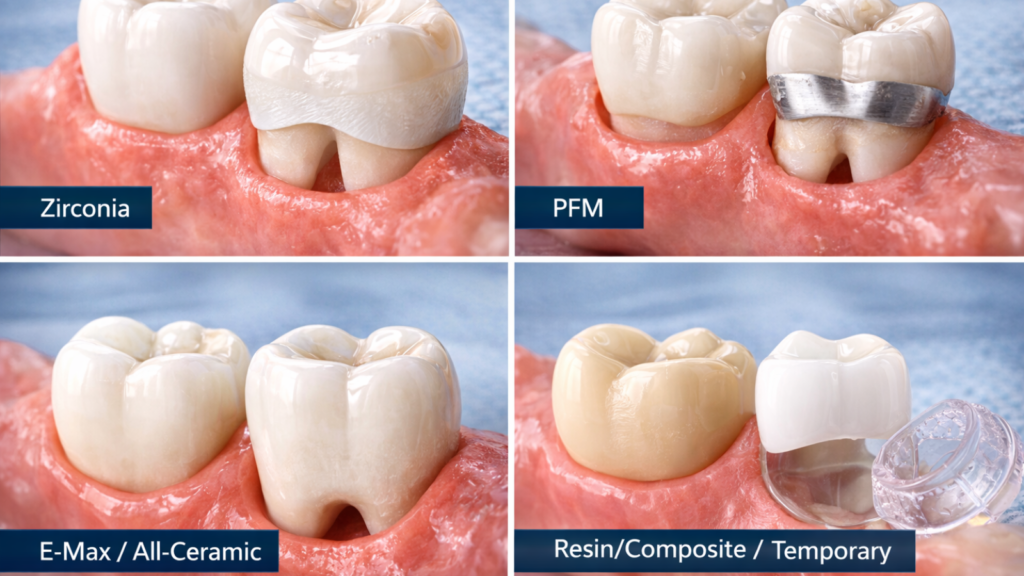
Crown materials vary based on strength requirements and aesthetic needs. Zirconia crowns offer maximum strength for back teeth. Ceramic crowns provide superior aesthetics for front teeth in your smile zone.
1. Zirconia crowns: strength for back teeth and layered options for front
Zirconia crowns use a crystalline form of zirconium oxide that withstands bite forces exceeding 900 newtons (202 pounds-force). This material works exceptionally well for molars and premolars where strength matters more than translucency. Solid zirconia crowns appear slightly opaque compared to natural teeth, making them less ideal for front teeth unless you layer porcelain over the framework.
Layered zirconia crowns combine a strong inner core with hand-applied ceramic on the visible surfaces. The porcelain layer mimics the light-transmitting properties of natural enamel. These layered versions suit front teeth where you smile widely, though the porcelain layer can chip under extreme grinding forces.
Zirconia resists staining better than other materials. Coffee, tea, and curry do not penetrate the non-porous surface. The material also generates less bacterial plaque accumulation compared to metal-ceramic crowns. Most zirconia crowns last 15 to 20 years (5,475 to 7,300 days) with proper care.
2. PFM crowns: strong, budget-friendly, but gum-line considerations
Porcelain-fused-to-metal (PFM) crowns feature a metal base covered with tooth-colored ceramic. The metal framework (usually nickel-chromium or gold alloy) provides strength while the porcelain layer offers aesthetic appeal. These crowns cost 30 to 40 percent less than all-ceramic options in Kathmandu.
The metal margin at the gum line creates a potential aesthetic problem. A dark line appears at the gum when your gums recede over time. This happens because the metal base extends to the crown edge. Dentists can hide this line by placing the margin slightly under the gum, but this requires precise technique.
PFM crowns excel for back teeth where the metal line remains invisible. The metal base prevents fractures better than all-ceramic crowns on teeth that clench heavily. Some people develop gum inflammation around the metal margin, though this reaction occurs in fewer than 5 percent of patients.
3. E-max / all-ceramic crowns: aesthetics-first cases
E-max crowns use lithium disilicate glass-ceramic, which transmits light similarly to natural tooth enamel. These crowns blend seamlessly with your surrounding teeth. The material comes in various translucency levels to match different tooth shades and opacity preferences.
All-ceramic crowns suit front teeth and premolars where appearance matters most. The material lacks the ultimate strength of zirconia, with fracture resistance around 400 to 500 megapascals (58,000 to 72,500 pounds per square inch) compared to zirconia’s 900 to 1,200 megapascals (130,000 to 174,000 pounds per square inch). Heavy grinders risk cracking E-max crowns on molars.
The ceramic requires thicker walls than metal-based crowns. Your dentist removes slightly more tooth structure to accommodate the minimum 1.5 millimeters (0.06 inches) thickness needed for strength. This extra reduction matters less on damaged teeth but becomes a consideration for purely cosmetic cases. Before deciding, compare veneers vs crowns vs composite bonding (which option fits your smile goals) and explore teeth whitening options for aesthetic improvements.
4. Resin/composite and temporary crowns: when they’re used (and limits)
Temporary crowns protect your prepared tooth between visits. Dentists fabricate these from acrylic resin or pre-formed plastic shells filled with soft composite. They cement temporarily so the crown pulls off easily when your permanent crown arrives from the lab.
Temporary crowns serve three purposes: firstly, protecting exposed dentin from sensitivity; secondly, maintaining your bite position so adjacent teeth do not shift; thirdly, allowing you to eat normally during the 7 to 14 days (168 to 336 hours) lab fabrication takes. These crowns break easily under hard foods like nuts or ice.
Permanent composite crowns exist but rarely get used in modern practice. The resin material stains within 2 to 3 years (730 to 1,095 days) and wears faster than ceramic or metal. Some dentists use composite crowns for pediatric patients who will lose the baby tooth within a few years. Adults should avoid permanent composite crowns in favor of stronger materials.
Crown Procedure Step-by-Step: Visits, Timing, and Variations
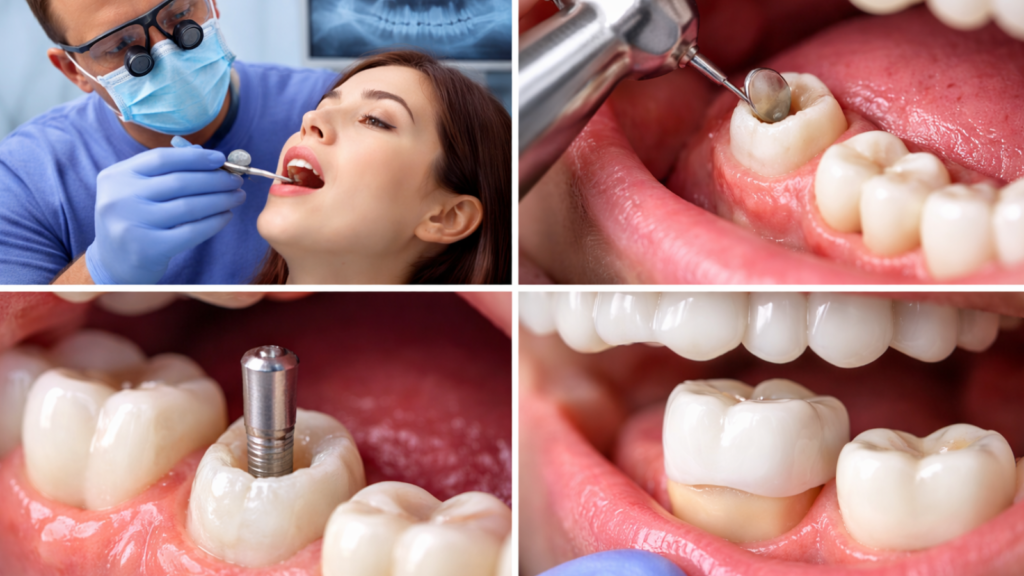
The crown procedure typically requires two visits separated by 7 to 14 days. Your dentist prepares the tooth during the first visit and places a temporary crown. The second visit involves removing the temporary crown and cementing the permanent restoration.
Exam, X-ray, bite planning (what your dentist checks first)
Your dentist evaluates the tooth structure, surrounding bone, and opposing teeth before recommending a crown. Periapical X-rays reveal decay extent, root condition, and bone support. The dentist measures the space between upper and lower teeth when you bite together. Crowns need 1.5 to 2 millimeters clearance from the opposing tooth to fit without making your bite feel high.
The examination identifies infections or bone loss that require treatment before crown work begins. Active gum disease compromises crown margins because inflamed tissue bleeds during impressions and creates unclear borders. Dentists resolve gum inflammation through scaling and root planning before taking crown impressions.
Your dentist discusses material options based on the tooth location, your bite force, and budget considerations. Front teeth prioritize aesthetics, while back teeth prioritize strength. The dentist shows you shade guides to match the crown color to your natural teeth. Digital photos help the lab technician replicate your tooth anatomy.
Tooth preparation and anesthesia (what you’ll feel)
Local anesthesia blocks pain signals from the tooth and surrounding gum. You feel pressure and vibration during preparation but no sharp pain. The dentist injects anesthetic near the tooth root, and the area becomes numb within 3 to 5 minutes. The numbness lasts 2 to 4 hours after the procedure.
The dentist removes 1 to 2 millimeters (0.04 to 0.08 inches) of tooth structure from all surfaces using a high-speed handpiece. The prepared tooth resembles a smaller version of the original, with tapered walls that allow the crown to slide on smoothly. Sharp corners get rounded to prevent stress concentrations that could crack the crown.
A thin cord (retraction cord) pushes your gum tissue away from the tooth margin. This step exposes the preparation edge clearly for accurate impressions. The cord stays in place for 5 to 10 minutes before the dentist takes impressions. Some bleeding occurs when the dentist removes the cord, which is normal.
Build-up / post & core: when a crown needs extra support
Teeth with large fillings or extensive decay lack sufficient structure to hold a crown. The dentist rebuilds the missing tooth structure using composite resin (build-up) or a metal post embedded in the root (post and core). Build-ups work when at least 50 percent of the coronal tooth remains above the gum.
Post and core becomes necessary when the tooth breaks at the gum line or when RCT removes most internal structure. The dentist drills a channel into the root canal space and cements a metal or fiber post. Composite resin fills around the post to create an artificial core that the crown grips. This adds NPR 3,000 to NPR 6,000 to the total crown cost in Kathmandu.
Posts create a small risk of root fracture if forces concentrate on the post rather than distributing evenly. Modern adhesive materials reduce this risk by bonding the entire post-core-crown complex as one unit. Your dentist evaluates whether enough root length (at least 10 millimeters or 0.4 inches) remains to safely place a post.
Lab-made vs same-day CAD/CAM crowns and typical timeline
Traditional lab-made crowns require two visits separated by 7 to 14 days (168 to 336 hours). The dentist takes impressions during the first visit and sends them to a dental laboratory where technicians handcraft your crown. You wear a temporary crown while the lab works. The second visit involves removing the temporary crown, fitting the permanent crown, and cementing it permanently.
CAD/CAM (computer-aided design and manufacturing) systems create crowns in a single visit. The dentist scans your prepared tooth with an intraoral camera instead of taking traditional impressions. Software designs the crown shape, and a milling machine carves it from a ceramic block. The entire process takes 1 to 2 hours (60 to 120 minutes). Same-day crowns cost 10 to 20 percent more than lab-made crowns in most Kathmandu clinics.
Lab-made crowns offer superior aesthetics for front teeth because technicians layer porcelain by hand to match complex color variations. CAD/CAM crowns work well for back teeth where function matters more than nuanced appearance. The choice depends on your schedule constraints and aesthetic expectations.
How Long Do Crowns Last and How to Make Them Last Longer
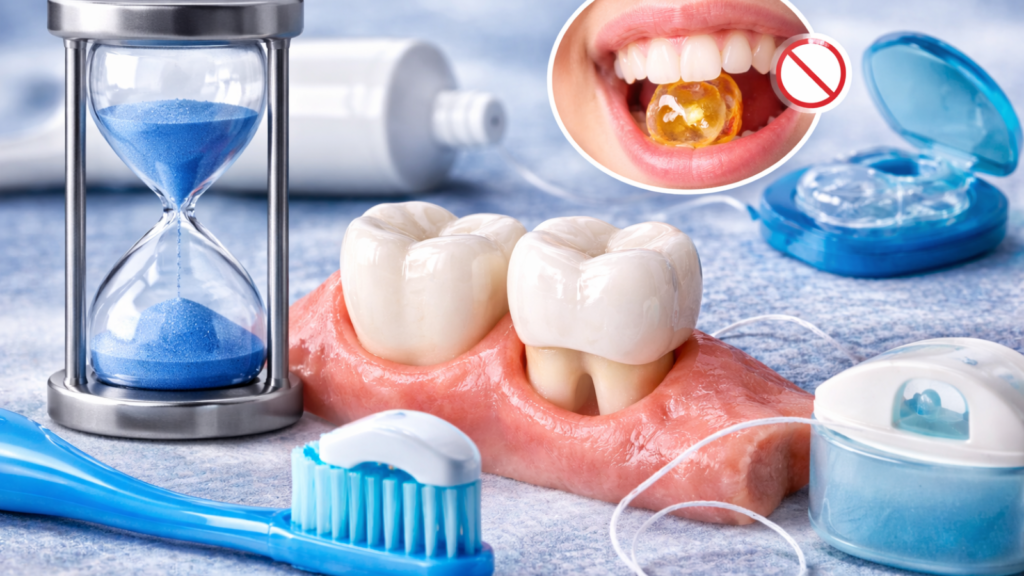
Dental crowns last 10 to 15 years (3,650 to 5,475 days) on average with proper care. Daily brushing, flossing, and avoiding hard foods extend crown lifespan significantly. Night guards protect crowns from grinding damage during sleep.
Typical crown lifespan ranges and what affects longevity
Dental crowns last 10 to 15 years (3,650 to 5,475 days) on average, with properly maintained zirconia crowns reaching 20 years (7,300 days) or more. Lifespan depends on three main factors: firstly, the material strength and fabrication quality; secondly, your oral hygiene habits; thirdly, the forces your teeth encounter daily.
Gold crowns outlast all other materials, surviving 25 to 30 years (9,125 to 10,950 days) in many patients. Porcelain-fused-to-metal (PFM) crowns typically last 12 to 15 years (4,380 to 5,475 days). All-ceramic crowns average 10 to 12 years (3,650 to 4,380 days) on front teeth but may crack sooner on molars if you grind heavily.
Crowns fail when decay develops under the margin, when the cement washes out, or when the crown material fractures. Teeth with crowns remain alive (unless root canal treated), so decay can still form where the crown meets natural tooth. Regular check-ups catch edge decay before it spreads under the entire crown.
Daily care: brushing, flossing around crowns, and gum health
Crowned teeth need the same brushing routine as natural teeth. Brush twice daily for 2 minutes (120 seconds) using fluoride toothpaste. Angle the brush bristles toward the gum line where the crown margin meets your gum. Plaque accumulates at this junction and causes gum inflammation if not removed daily.
Floss between crowned teeth every day. The floss slides under the contact point just like with natural teeth. Many people skip flossing around crowns, mistakenly thinking the artificial material does not need cleaning. Gum disease progresses faster around crowns than natural teeth when you neglect flossing because the crown margin sometimes sits slightly below the gum.
Antimicrobial mouthwash reduces bacteria around crown margins. Rinse for 30 seconds (30,000 milliseconds) after brushing and flossing. The liquid reaches areas your brush misses, especially in back molars where access remains difficult. Maintain healthy gums to extend your crown lifespan.
Food habits and chewing risks (ice, sticky foods, hard nuts)
Hard foods concentrate extreme forces on small tooth areas, creating crack initiation points in ceramic crowns. Ice chewing generates forces exceeding 700 newtons (157 pounds-force), which approaches the fracture threshold of E-max crowns. Popcorn kernels, hard candy, and bones create similar risks.
Sticky foods like caramel or dried fruit pull on crowns. The pulling force sometimes exceeds the cement bond strength, especially on temporary crowns. Permanent crowns resist this pulling better, but you should still chew sticky items carefully. Cut sticky foods into small pieces rather than biting through them with your front teeth.
The temperature difference between hot soup and ice water causes expansion and contraction cycles in crown materials. Extreme temperature swings (above 60 degrees Celsius or 140 degrees Fahrenheit, then below 5 degrees Celsius or 41 degrees Fahrenheit) create microscopic cracks over time. Let hot foods cool slightly and avoid immediately following hot items with ice water.
Grinding/clenching: when a night guard protects your crown
Nocturnal grinding (bruxism) generates forces 3 to 4 times higher than normal chewing. You produce up to 1,200 newtons (270 pounds-force) during sleep grinding episodes. These forces fracture ceramic crowns and loosen the cement bond between crown and tooth. Night guards distribute grinding forces across all teeth rather than concentrating pressure on individual crowns. The acrylic guard absorbs some force and creates a slippery surface that reduces lateral grinding motion. Guards cost NPR 8,000 to NPR 15,000 in Kathmandu, which protects your NPR 15,000 to NPR 40,000 crown investment.
Dentists identify grinding through several signs: worn tooth surfaces, fractured fillings, jaw muscle tenderness, and morning headaches. You may not realize you grind because it happens during sleep. Your dentist examines your teeth for flat spots and shine patterns that indicate grinding. A night guard becomes essential if you show these signs and have ceramic crowns.
Dental Crown Cost in Kathmandu: Real Price Drivers and What’s Included
Crown costs in Kathmandu range from NPR 10,000 to NPR 35,000 depending on material choice. The price includes tooth preparation, temporary crown, lab fabrication, and permanent cementation. Additional procedures like root canal treatment or post-and-core add to the total cost.
Kathmandu crown price snapshot by material (NPR ranges)
When planning your budget for dental in Kathmandu, it helps to know what each material costs upfront. Zirconia crowns range from NPR 15,000 to NPR 28,000 per tooth, depending on whether you choose monolithic or layered porcelain versions. Solid zirconia costs NPR 15,000 to NPR 20,000 and suits back teeth. Layered zirconia (zirconia base with hand-applied porcelain) costs NPR 22,000 to NPR 28,000 for front teeth where aesthetics matter.
Porcelain-fused-to-metal (PFM) crowns cost NPR 10,000 to NPR 18,000. The price varies based on the metal alloy used in the base. Semi-precious alloys (gold-palladium mix) cost more than non-precious nickel-chromium alloys. PFM crowns offer good value for back teeth where the gum-line metal edge remains hidden.
E-max and all-ceramic crowns range from NPR 20,000 to NPR 35,000. The higher cost reflects the material expense and the lab work required to match natural tooth translucency. These crowns work best for front teeth and premolars in your smile zone.
What the quote should include (temporary, lab, cementation, follow-ups)
Complete crown treatment includes several components beyond the crown itself. Your quote should specify: tooth preparation (including anesthesia), temporary crown fabrication and cementation, final crown fabrication by the lab, permanent cementation, and one follow-up visit to check your bite and gum response.
Temporary crown material and lab time cost NPR 2,000 to NPR 3,500. This price gets included in most quoted crown fees, but some clinics charge it separately. The final crown fabrication (lab fee) typically represents 40 to 50 percent of the total crown cost. Premium labs that produce highly aesthetic crowns command higher fees.
Follow-up adjustments within the first month should be included. Your bite may feel slightly high immediately after crown placement because the anesthesia prevents you from closing normally. The dentist removes small amounts of ceramic during the follow-up visit to perfect your bite. Unlimited adjustments within 30 days (720 hours) protect you from additional costs.
Add-on costs that change the total (RCT, post & core, old crown removal)
Root canal treatment (RCT) adds NPR 9,800 to NPR 16,000 to your total cost if the tooth needs pulp removal before crown preparation. Most molars require RCT when decay reaches the nerve or when the tooth fractures deeply. Read about what to expect during RCT to plan your treatment sequence and budget accurately.
Post and core build-up costs NPR 3,000 to NPR 6,000 when extensive tooth structure is missing. This step happens before crown preparation and requires additional lab work. The post-core unit supports the crown and prevents it from dislodging under chewing forces.
Removing an old crown that failed adds NPR 1,500 to NPR 3,000 to your bill. Old crowns cement tightly to the tooth, and removing them without damaging the underlying tooth requires skill and time. Some dentists include this cost in the new crown fee, while others charge separately.
Payment options and planning multiple crowns in stages
Most Kathmandu dental clinics accept cash, eSewa, Khalti, and credit cards. Some clinics offer installment plans for multiple crown cases. You pay 50 percent before the first preparation visit and the remaining 50 percent when the permanent crown gets cemented.
Treating multiple teeth in stages spreads your cost over several months. Prioritize teeth with pain or visible damage first. Crown back molars before front teeth if both need treatment, because you chew primarily with molars and their failure creates more immediate problems.
BrightSmile Dental Clinic offers transparent pricing with all inclusions specified upfront. Contact us at 9748343015 or brightsmileclinic33@gmail.com to discuss your crown needs and payment preferences. We provide detailed treatment plans with no hidden fees.
Risks, Troubleshooting, and Alternatives to Crowns
Mild sensitivity and gum soreness are normal for the first week after crown placement. Crowns occasionally chip, loosen, or develop decay at the margins over time. Alternatives include onlays, veneers, bridges, or implants depending on your specific dental situation.
Normal after-effects vs red flags (sensitivity, pain, gum irritation)
Mild sensitivity to cold temperatures occurs in 30 to 40 percent of patients during the first week after crown placement. The sensitivity results from minor pulp inflammation caused by tooth preparation. This discomfort fades within 7 to 14 days (168 to 336 hours) as the pulp heals. Use toothpaste formulated for sensitive teeth during this period.
Slight gum soreness around the crown margin is normal for 3 to 5 days (72 to 120 hours). The retraction cord and impression material irritate the gum tissue temporarily. Rinse with warm salt water (dissolve half a teaspoon in 250 milliliters or 8.5 fluid ounces of water) three times daily to promote healing.
Severe pain when biting, persistent throbbing, or sensitivity that worsens after 2 weeks (336 hours) signals a problem. These symptoms may indicate high bite contact, pulp infection, or a crack in the remaining tooth structure. Contact your dentist immediately if pain prevents you from eating normally or disturbs your sleep.
When your crown or temporary crown comes off: what to do now
Temporary crowns detach easily because the cement is designed for removal. The crown comes off when you eat sticky foods or if you accidentally bite down at an angle. Rinse the crown and your tooth with water. Try sliding the crown back onto your tooth to protect the prepared surface from sensitivity and shifting.
Dry the inside of the crown with a tissue. Apply a small amount of toothpaste (not denture adhesive, which bonds too strongly) inside the crown. Press the crown firmly onto your tooth. The toothpaste holds the crown temporarily until you reach your dentist. Avoid chewing on that side.
Permanent crowns rarely detach unless the cement fails or decay develops under the crown. A dislodged permanent crown requires immediate attention. Store the crown in a clean container and schedule an emergency visit within 24 hours (1,440 minutes). Your dentist will clean the crown and tooth, check for decay, and re-cement the crown if the tooth structure remains sound.
Common failures: crown feels high, chips, loosens, decay under crown
A high bite causes discomfort every time your teeth meet. The crowned tooth contacts before other teeth, concentrating all chewing force on one point. This triggers a dull ache in the tooth and surrounding jaw muscles. Your dentist adjusts the crown by removing small amounts of ceramic from the contact point. Most adjustments take 5 to 10 minutes (300 to 600 seconds).
Ceramic crowns chip when impact forces exceed the material strength. The chip usually occurs on the edge where porcelain meets your opposing tooth. Small chips (less than 2 millimeters or 0.08 inches) can be polished smooth or repaired with composite resin. Large chips require crown replacement because the exposed inner material lacks aesthetic appearance and may fracture further.
Loose crowns move slightly when you press them with your finger or tongue. The cement bond has failed, allowing bacteria and saliva to seep between the crown and tooth. This situation leads to decay and eventual crown loss. Your dentist removes the crown, cleans both surfaces, and re-cements it with fresh adhesive. Crowns that loosen repeatedly may need remake if the fit is poor.
Decay develops under crowns when plaque accumulates at the margin. You notice a dark line at the gum edge or sensitivity in the crowned tooth. The dentist removes the crown, excavates the decay, and evaluates whether enough tooth remains for a new crown. Severe decay extending below the gum line may require extraction.
Alternatives: onlay/inlay, veneer, bridge, implant, extraction
- Onlays (partial crowns) restore damaged cusps without covering the entire tooth. They conserve more natural tooth structure than full crowns and cost NPR 12,000 to NPR 18,000 in Kathmandu. Onlays work when decay affects only one or two cusps and the outer walls remain intact. They do not protect teeth after RCT.
- Veneers cover only the front surface of front teeth. They correct cosmetic issues like staining, small chips, or gaps between teeth. Veneers require minimal tooth reduction (0.5 millimeters or 0.02 inches) and cost NPR 18,000 to NPR 30,000 per tooth. They fail on teeth with heavy bite forces or extensive decay.
- Bridges replace missing teeth by crowning adjacent teeth and suspending a false tooth between them. Three-unit bridges cost NPR 45,000 to NPR 90,000 depending on materials. Bridges work when you have healthy teeth on both sides of the gap and prefer a fixed solution over removable dentures.
- Implants replace missing teeth with titanium posts embedded in your jawbone. An implant crown attaches to the post, functioning like a natural tooth. Single implants cost NPR 60,000 to NPR 130,000 in Kathmandu. Implants preserve bone and avoid damaging adjacent teeth, making them the preferred option for single-tooth replacement when sufficient bone exists.
- Extraction becomes necessary when decay extends too far below the gum line or when the tooth fractures vertically through the root. Extraction costs NPR 2,000 to NPR 8,000 depending on tooth position and complexity. You must replace the extracted tooth with an implant, bridge, or partial denture to prevent adjacent teeth from shifting, compare options in dental implants vs bridges: which replacement is right for you.
Crown vs filling: how do I know which one I need?
The main difference between a crown and a filling is how much natural tooth structure remains. Choose a crown if the tooth is weak, cracked, or has a large filling that can’t hold. Choose a filling for small to moderate decay or damage without structural compromise.
Do dental crowns hurt during or after the procedure?
Dental crowns usually do not hurt during the procedure due to local anesthesia. Afterward, mild sensitivity to cold or biting is common but temporary. Persistent pain may indicate a bite issue that requires adjustment by your dentist.
How many visits does a crown take in Kathmandu?
Dental crowns in Kathmandu typically take two visits: one for tooth preparation, impression, and temporary crown, and a second for final placement. Some clinics offer same-day crowns using CAD/CAM technology if the case is suitable.
How long do dental crowns last?
Dental crowns last between 5 to 15 years on average, depending on material, oral hygiene, bite force, and habits like grinding. With good care, some crowns last much longer than average.
Which crown is best: zirconia vs E-max vs PFM?
The main difference between zirconia, E-max, and PFM crowns is in strength and appearance. Zirconia offers high strength, E-max provides natural aesthetics for front teeth, and PFM balances durability with cost. The best choice depends on tooth location and budget.
Do I need a crown after a root canal?
You usually need a crown after a root canal because the treated tooth becomes weaker. A crown protects it from fracture and restores function. The final decision depends on how much tooth remains and its role in your bite.
What if there isn’t enough tooth left for a crown to hold?
If not enough tooth is left to hold a crown, your dentist may build it up using a core foundation or add post support. These steps help secure the crown and affect the total treatment cost.
What should I avoid eating with a temporary crown?
Avoid sticky foods like gum and caramel, and hard items like nuts and ice when wearing a temporary crown. These can loosen or dislodge the crown before the permanent one is placed.
What should I do if my crown (or temporary crown) falls off?
If your crown falls off, keep it safe and contact your dentist immediately. Avoid chewing on that side and protect the exposed tooth until it’s refitted or replaced.
Why does my bite feel “high” after a crown?
A high bite after a crown means the new crown is slightly elevated and uneven. Dentists fix this with a small adjustment to balance pressure and prevent discomfort or jaw pain.
Can a tooth with a crown still get cavities?
Yes, a tooth with a crown can still get cavities, especially at the margin where the crown meets natural tooth. Decay risk increases with poor brushing or flossing, so daily hygiene is essential.
What do crowns usually cost in Kathmandu (and what changes the price)?
Crowns in Kathmandu usually cost more based on material; PFM, E-max, or zirconia. Total cost increases if you need root canal, post build-up, or old crown removal. Price pages often list base prices and separate optional charges.
Need a crown evaluation? Visit BrightSmile Dental Clinic at Putalisadak, Kathmandu. We provide transparent crown pricing, detailed treatment planning, and gentle dental care. Call 9748343015 or email brightsmileclinic33@gmail.com to schedule your consultation. Our experienced team will assess your tooth and recommend the best restoration option for your specific situation.