
A comprehensive dental checkup is a systematic, complete examination of your oral health that goes far beyond a quick look at your teeth. It combines clinical assessment, diagnostic imaging, preventive care, and personalized treatment planning to detect problems early and maintain long-term dental health.
Most dental patients in Kathmandu understand they need regular checkups, but many do not realize what “comprehensive” truly means or why it matters for preventing costly, painful problems down the line.
What a “Comprehensive Dental Checkup” Means (And Who It’s For)

A comprehensive dental checkup is a full-mouth evaluation that checks teeth, gums, bite, and oral tissues, not just one painful tooth. It’s designed to find early problems like small cavities, gum disease, cracks, and bite wear before they become emergencies. It’s ideal for beginners who haven’t had a recent exam, and also for intermediate patients who want a clearer long-term plan. Kids, adults, seniors, smokers, diabetics, and people with braces or past dental work benefit the most from this deeper screening.
What “comprehensive” really means vs a quick routine exam
A comprehensive checkup is a baseline evaluation that documents your complete oral health status, not just a visual scan for obvious cavities.
The difference lies in depth and documentation. A quick routine exam might take 10 to 15 minutes and focus on visible tooth decay or gum redness. A comprehensive checkup typically requires 45 to 60 minutes. It includes medical history review, full dental charting (recording every filling, crack, and worn area), X-rays to see beneath the surface, gum measurements with a probe, soft-tissue screening for lesions, and bite analysis.
This level of detail creates a permanent record. Future visits compare against this baseline to catch subtle changes, like a filling that is starting to leak, a small cavity forming between teeth, or gum pockets deepening over time. Problems caught at this stage often need simpler, less expensive treatment.
Dental checkup vs dental cleaning: what’s the difference for patients?
The checkup is the diagnostic exam performed by the dentist; the cleaning is the preventive procedure performed by the dental hygienist or dentist to remove plaque and tartar.
Patients often use these terms interchangeably, but they serve different purposes. The checkup identifies problems (cavities, gum disease, infections, bite issues). The cleaning prevents problems by removing bacterial buildup that brushing and flossing cannot eliminate.
Both happen during the same appointment in most clinics. The hygienist or dentist performs scaling and polishing first, then the dentist examines your teeth and reviews X-rays. Some patients need only a checkup without cleaning (for example, if they had professional cleaning recently), while others need cleaning but may not need a full comprehensive exam every visit.
What a full checkup can detect early (before pain starts)
Comprehensive checkups identify silent threats that do not cause symptoms until they become serious.
Early-stage cavities appear as white spots or tiny brown discolorations; they have not yet reached the nerve, so you feel nothing. Gum disease begins with mild inflammation and shallow pockets; you might notice slight bleeding when brushing, but no pain. Cracks in teeth, worn enamel from grinding, loose fillings, early signs of oral cancer, TMJ dysfunction, and misaligned bites all develop gradually without obvious warning.
The checkup catches these conditions when treatment is still straightforward. A small cavity can be remineralized with fluoride or filled in one visit. Gum disease caught early responds to improved home care and professional cleaning. Cracks identified before they split the tooth vertically can be protected with a crown. Oral lesions detected early have far better outcomes.
Waiting for pain means waiting for damage. Root canals, extractions, gum surgery, and complex restorations become necessary once problems advance. The comprehensive checkup is your best defense against emergency dental visits and high treatment costs.
How long it usually takes and how to plan your appointment (time and comfort)
Plan for 45 to 60 minutes for a comprehensive checkup, longer if you have not visited a dentist in several years or if multiple X-rays are needed.
The appointment breaks down roughly as follows: 5 to 10 minutes for medical history review and questions, 15 to 20 minutes for X-rays and photos, 10 to 15 minutes for clinical exam (tooth-by-tooth inspection, gum probing, bite check), and 10 to 15 minutes for discussion of findings and treatment planning. Cleaning adds another 20 to 30 minutes depending on tartar buildup.
To make the visit comfortable, eat a light meal beforehand (low blood sugar can make you feel lightheaded in the chair). Brush and floss before you arrive. If you feel anxious, mention it to the clinic when booking; many dentists in Kathmandu offer calming options like topical numbing gel before injections or explanations of each step to reduce uncertainty. Bring headphones if listening to music helps you relax.
Arrive 10 minutes early to complete paperwork. If you have previous dental records or X-rays from another clinic, bring them; this helps the new dentist understand your history and may reduce the need for duplicate imaging.
What’s Included in the Clinical Exam Step-by-Step
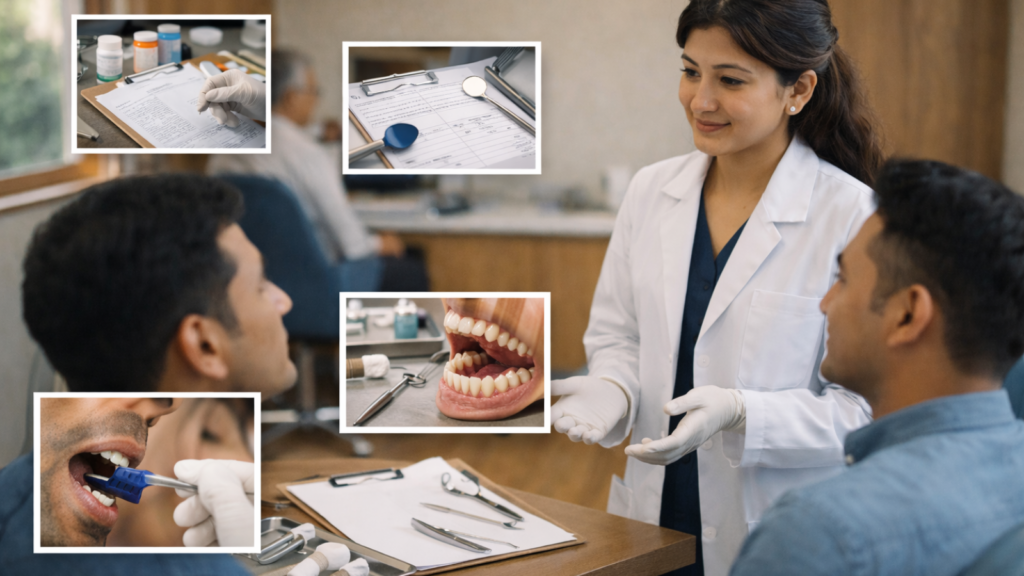
The visit usually starts with your medical history and risk factors because health conditions and medications can affect your mouth and healing. Then the dentist does a tooth-by-tooth exam to check for decay, old filling issues, cracks, sensitivity triggers, and bite problems. Your gums are assessed for bleeding, swelling, and pocket depth to spot early gum disease. A soft-tissue check is also done to examine the tongue, cheeks, and throat for ulcers, infection signs, and unusual changes.
1. Medical history and risk review (diabetes, smoking, meds, pregnancy, etc.)
The dentist begins by reviewing your medical conditions, medications, and lifestyle factors because oral health is directly influenced by systemic health.
Conditions like diabetes increase your risk of gum disease and slow healing after dental procedures. Smoking weakens gum tissue and raises oral cancer risk. Pregnancy causes hormonal changes that can lead to gum inflammation. Medications such as blood thinners affect how the dentist manages extractions or surgery, while some drugs cause dry mouth, which accelerates tooth decay.
The dentist will ask about allergies (especially to antibiotics, anesthetics, or latex), recent hospitalizations, and family history of oral cancer or severe gum disease. This information shapes your treatment plan. For instance, diabetic patients may need more frequent cleanings, and pregnant patients might delay elective X-rays until after delivery.
Be honest and thorough during this review. The dentist is not judging your habits; they need accurate information to provide safe, effective care.
2. Dental charting & baseline records (existing fillings, problem areas, tracking changes)
Dental charting is the process of recording the current state of every tooth, including fillings, crowns, missing teeth, cavities, cracks, and wear patterns.
The dentist examines each tooth and dictates findings to an assistant or enters data into a digital system. Notations include tooth numbers (using the universal numbering system), surfaces affected (mesial, distal, occlusal, buccal, lingual), and the type of problem or restoration present. For example, “Tooth 14: occlusal composite filling, watch mesial for recurrent decay.”
This record serves as a baseline. At your next visit, the dentist compares current conditions to the chart. A filling that was intact six months ago but now has a gap indicates leakage and possible decay underneath. A tooth that had a “watch” notation for a small cavity might now need a filling.
Charting also helps track wear patterns from grinding, which might prompt a night guard recommendation, or receding gums, which might indicate brushing too hard or gum disease progression.
3. Tooth-by-tooth exam plus bite (occlusion) & jaw/TMJ screening
The dentist inspects each tooth visually and with instruments, then evaluates how your teeth fit together and whether your jaw joint functions properly.
Using a small mirror and explorer (a fine metal probe), the dentist checks for cavities, cracks, chips, worn enamel, and staining. The explorer detects soft spots on the tooth surface that indicate early decay. The mirror allows the dentist to see the back sides of teeth and areas hidden from direct view.
Bite analysis involves asking you to close your teeth together while the dentist observes alignment. Misaligned bites (malocclusion) can cause uneven wear, jaw pain, headaches, and difficulty chewing. The dentist may place thin colored paper (articulating paper) between your teeth and ask you to bite; the paper leaves marks showing which teeth contact first and where pressure is uneven.
TMJ (temporomandibular joint) screening includes palpating the jaw joint in front of your ears while you open and close your mouth. The dentist listens for clicking or popping sounds and asks about jaw pain, locking, or limited opening. TMJ disorders are common in people who grind their teeth or have misaligned bites, and early detection allows for conservative treatment like a night guard or physical therapy.
4. Soft-tissue screening: periodontal charting (probing) and oral cancer check
Gum health is measured by probing the depth of the space (sulcus or pocket) between your tooth and gum tissue; deeper pockets indicate gum disease.
The dentist or hygienist uses a thin ruler-like instrument called a periodontal probe. It is gently inserted along the gum line around each tooth, and the depth is recorded in millimeters. Healthy gums have pockets of 1 to 3 millimeters. Pockets of 4 millimeters or more suggest gum disease (periodontitis), which requires more aggressive cleaning or treatment.
The dentist also notes bleeding on probing, which indicates inflammation, and checks for gum recession (when gum tissue pulls away from the tooth, exposing the root). Recession increases sensitivity and cavity risk on root surfaces.
Soft-tissue screening involves inspecting your lips, cheeks, tongue, floor of the mouth, palate, and throat for unusual lumps, sores, white or red patches, or asymmetry. Oral cancer early signs are more treatable when caught at this stage, and many early lesions are completely painless, making visual screening essential. Risk factors include tobacco use, heavy alcohol consumption, HPV infection, and sun exposure (for lip cancer).
The dentist might palpate (gently press) your neck and under your jaw to check for swollen lymph nodes, which can signal infection or, rarely, cancer.
Diagnostic Tests That Make the Checkup “Comprehensive”
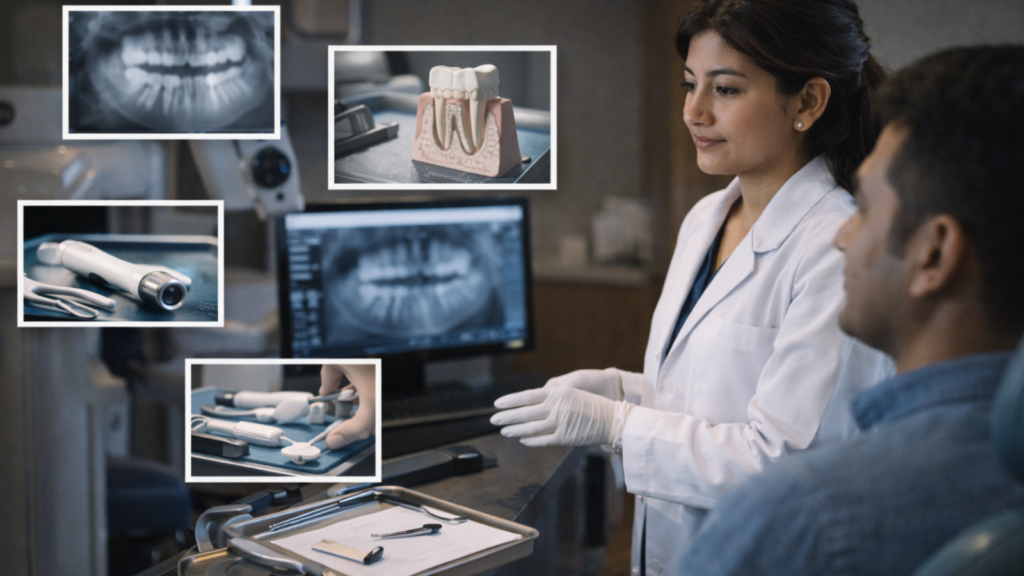
Diagnostic tests help the dentist see problems that aren’t visible during a normal look. Dental X-rays may be used to detect hidden decay between teeth, root infections, bone loss, and impacted teeth. Photos or digital scans can record baseline details so small changes can be tracked across future visits. These tests are chosen based on your risk level, symptoms, and dental history, not automatically for everyone.
Types of dental X-rays: bitewing vs periapical vs panoramic (what each shows)
Different X-ray types reveal different structures; the dentist selects the appropriate images based on your age, risk, and symptoms.
- Bitewing X-rays show the crowns of upper and lower teeth on the same film. They are excellent for detecting cavities between teeth (interproximal decay) and checking the fit of fillings and crowns. They also reveal bone levels around teeth, which helps diagnose gum disease. Bitewings are typically taken during routine checkups every 12 to 24 months for adults.
- Periapical X-rays capture the entire tooth from crown to root tip, plus the surrounding bone. They diagnose infections (abscesses), root fractures, cysts, and bone loss around specific teeth. The dentist orders periapicals when you have pain, swelling, or trauma, or when planning root canal treatment or extractions.
- Panoramic X-rays provide a wide view of your entire mouth, including all teeth, jaws, sinuses, and temporomandibular joints, on a single image. They are useful for assessing wisdom teeth position, jaw fractures, tumors, and overall bone structure. Panoramic films are often taken for new patients, orthodontic planning, or pre-surgical evaluation but are not detailed enough to diagnose small cavities.
Full-mouth series (FMX) vs targeted X-rays: who needs what and why
A full-mouth series (FMX) is a complete set of X-rays (usually 14 to 18 individual films) that captures every tooth and surrounding bone; it serves as a comprehensive diagnostic baseline.
New patients typically receive an FMX or a panoramic X-ray plus bitewings to establish a complete record. The FMX allows the dentist to see all existing fillings, root canals, bone levels, hidden cavities, and potential problems that are not visible during a visual exam.
Once the baseline is established, future visits usually require only targeted X-rays. For example, 2 to 4 bitewings every 12 to 24 months to check for new cavities, or a periapical X-ray if a specific tooth is painful. Patients with high cavity risk (dry mouth, frequent snacking, poor oral hygiene) may need bitewings every 6 to 12 months. Those with low risk and good oral health may need them only every 24 to 36 months.
Full-mouth series are repeated every 3 to 5 years for most adults, or sooner if significant changes occur (new dental work, trauma, gum disease progression).
Intraoral photos and digital scans: how they help monitor your teeth over time
Intraoral photos are high-resolution images of your teeth and gums taken with a dental camera; digital scans create 3D models of your teeth using laser or light technology.
Photos document the current appearance of your teeth, gums, and any visible problems. They are especially useful for tracking cosmetic changes (tooth discoloration, gum recession), monitoring suspicious lesions, and showing you what the dentist sees (many patients understand their dental issues better when they can see photos on a screen).
Photos also serve as legal documentation. If you later disagree about whether a filling was cracked before treatment or whether a tooth was already discolored, the photo provides objective evidence.
Digital scans (using intraoral scanners) capture the exact shape and position of your teeth without the need for traditional impression putty. These scans are used for orthodontic planning, designing crowns or veneers, and monitoring wear or shifting over time. Comparing scans from different visits reveals subtle changes that might indicate grinding, bite problems, or shifting teeth after extractions.
Both photos and scans improve communication between you and your dentist and allow for more precise, personalized treatment.
X-ray safety and how often you need them (risk-based, not “one rule for all”)
Dental X-rays use very low radiation doses, and the frequency is determined by your individual risk factors, not a fixed schedule.
A single bitewing X-ray delivers approximately 0.005 millisieverts (mSv) of radiation. A full-mouth series delivers roughly 0.15 mSv. For comparison, the average person receives about 3 mSv per year from natural background radiation (cosmic rays, radon, soil). A flight from Kathmandu to Bangkok exposes you to about 0.03 mSv.
Modern digital X-rays use up to 80 percent less radiation than traditional film X-rays. Clinics use lead aprons and thyroid collars to shield your body from scatter radiation.
The dentist follows the ALARA principle (As Low As Reasonably Achievable). X-rays are taken only when the diagnostic benefit outweighs the minimal risk. High-risk patients (history of many cavities, gum disease, dry mouth, smoking) need more frequent imaging to catch problems early. Low-risk patients (excellent oral hygiene, no cavities for years, healthy gums) need fewer X-rays.
Pregnant patients should avoid elective X-rays during the first trimester; emergency X-rays are safe with proper shielding. Children need X-rays less frequently than adults because their teeth and jaws are still developing.
If you have recent X-rays from another dentist, bring copies to avoid unnecessary repeat imaging.
Cleaning, Prevention, and What Gets Done the Same Day
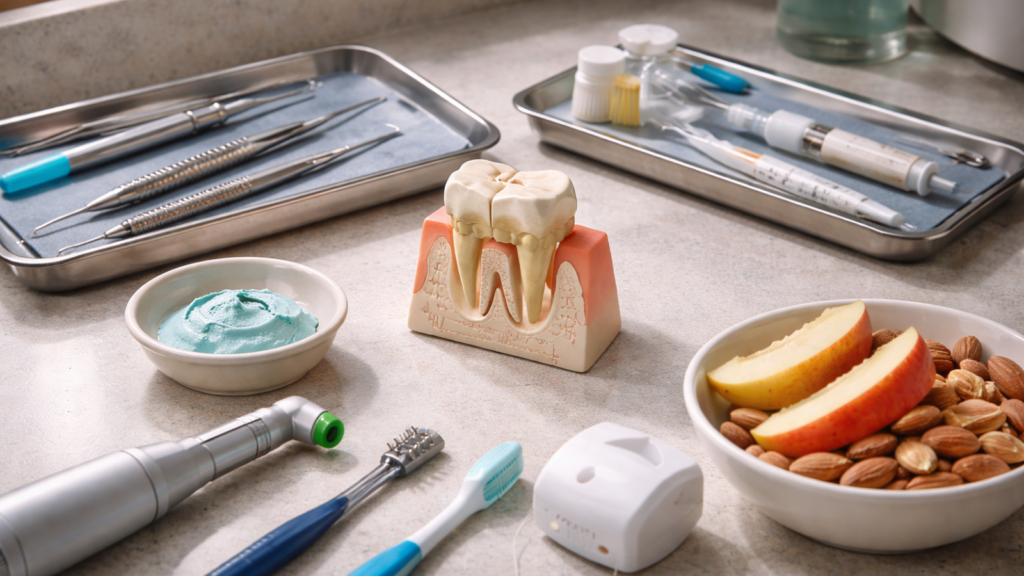
In many cases, the same appointment includes scaling and polishing to remove plaque, tartar, and surface stains. If there is heavy buildup or inflamed gums, cleaning may be staged so the dentist can measure and treat gum pockets properly. Preventive add-ons like fluoride or sealants may be recommended depending on cavity risk and age. You should also receive simple, personalized brushing/flossing guidance and diet tips to prevent the same problems from returning.
Scaling and polishing: what it removes and why brushing can’t replace it
Scaling removes hardened plaque (tartar or calculus) from tooth surfaces and below the gum line; polishing smooths the enamel and removes surface stains.
Plaque is a sticky bacterial film that forms on teeth within hours of eating. Brushing and flossing remove fresh plaque, but any plaque left behind mineralizes into tartar within 24 to 48 hours. Tartar is rock-hard; you cannot remove it with a toothbrush or floss. It harbors bacteria that cause gum inflammation (gingivitis) and, if untreated, gum disease (periodontitis).
The hygienist or dentist uses ultrasonic scalers (which vibrate at high frequency to break up tartar) and hand scalers (metal instruments with sharp edges) to remove deposits. Ultrasonic scalers also spray water to cool the tooth and flush away debris. The procedure is usually painless for healthy gums, though patients with gum inflammation may experience brief sensitivity.
After scaling, polishing uses a rubber cup and gritty paste to smooth the tooth surface and remove surface stains from coffee, tea, or tobacco. Smooth teeth resist plaque buildup better than rough surfaces.
Professional cleaning every 6 to 12 months (depending on your gum health) prevents tartar accumulation and keeps your gums healthy.
When a “regular cleaning” isn’t enough: heavy buildup, gum inflammation, staged care
Patients with significant tartar buildup or gum disease may need deep cleaning (scaling and root planing) or multiple appointments instead of a single standard cleaning.
Deep cleaning involves scaling below the gum line and smoothing (planing) the root surfaces to help gums reattach to the tooth. It is performed under local anesthesia and usually done in quadrants (one section of the mouth per visit) to keep the procedure comfortable and manageable.
Patients who have not had professional cleaning in several years, or those with advanced gum disease, often require staged care. The first visit might focus on removing the most accessible tartar and treating areas of active infection or bleeding. Subsequent visits address deeper pockets and more difficult areas once inflammation is reduced, this is part of what typically happens in a professional teeth-cleaning visit when gum disease is present.
Dentists in Kathmandu sometimes recommend an initial “gross debridement” (heavy scaling) followed by a standard cleaning a few weeks later. This approach ensures thorough tartar removal without overwhelming the patient or the tissues.
If your gums bleed heavily during probing or if pocket depths exceed 4 millimeters, the dentist will explain why standard cleaning is not sufficient and outline a treatment plan that may include deep cleaning, antibiotics, or referral to a periodontist (gum specialist).
Fluoride and sealants: who benefits and when dentists recommend them
Fluoride treatments strengthen enamel and reverse early cavities; sealants are protective coatings applied to the chewing surfaces of back teeth to prevent decay.
- Fluoride is a mineral that makes tooth enamel more resistant to acid attacks from bacteria and sugary foods. Professional fluoride treatments deliver a concentrated dose (foam, gel, or varnish) that is far stronger than over-the-counter toothpaste. The dentist applies fluoride after cleaning and asks you not to eat or drink for 30 minutes so it can penetrate the enamel.
Fluoride is recommended for children, adults with a history of cavities, patients with dry mouth (which reduces saliva’s natural protective effect), those undergoing orthodontic treatment, and anyone with exposed root surfaces due to gum recession.
- Sealants are thin plastic coatings painted onto the grooves and pits of molars and premolars. These deep grooves trap food and bacteria; even careful brushing cannot always clean them effectively. Sealants create a smooth, easy-to-clean surface that blocks out bacteria. They are most effective when applied to children’s newly erupted permanent molars (around ages 6 and 12), but adults with deep grooves and no existing fillings also benefit.
Both fluoride and sealants are quick, painless preventive measures that reduce cavity risk significantly.
Personalized oral hygiene instruction: brushing, flossing, diet tips based on your risks
The dentist or hygienist reviews your brushing and flossing technique and provides tailored advice based on your specific oral health problems and risk factors.
Most patients think they brush correctly, but common mistakes include brushing too hard (which wears away enamel and causes gum recession), using horizontal scrubbing motions (which misses plaque along the gum line), and brushing for less than 2 minutes. The hygienist demonstrates proper technique: angling the brush at 45 degrees toward the gum line, using gentle circular motions, and brushing all surfaces (outer, inner, chewing).
Flossing instruction focuses on proper technique (curving the floss around each tooth in a C-shape and sliding it gently beneath the gum line) rather than sawing back and forth, which damages gums. For patients who struggle with traditional floss, alternatives like floss picks, interdental brushes, or water flossers are recommended.
Diet advice is personalized. Patients with frequent cavities might be told to reduce sugary snacks between meals, rinse with water after acidic drinks, or chew sugar-free gum to stimulate saliva. Those with gum disease might be advised to increase vitamin C intake and stay hydrated to support tissue healing.
This one-on-one instruction is far more effective than generic advice because it addresses your actual problems and habits.
After the Checkup: Results, Priorities, and Your Treatment Plan
After the exam, the dentist explains what was found and what needs action now versus what can be monitored. Treatments are usually prioritized by urgency: infection and pain first, then chewing function, then cosmetic improvements. You may receive a written plan showing options, estimated visits, and a timeline that fits your schedule. The dentist will also recommend when you should return based on your risk level, not just a fixed “every 6 months” rule.
Understanding your findings: “watch areas,” early cavities, gum stages, and tooth wear
The dentist explains what was found during the exam using clear, specific terms, distinguishing between problems that need immediate treatment and those that should be monitored.
“Watch areas” are spots where the tooth shows early signs of weakening (white spots, slight discoloration, or rough texture) but has not yet developed a cavity that requires drilling. These areas can often be reversed with improved hygiene, fluoride, and reduced sugar intake. The dentist will re-examine them at your next visit.
Early cavities are small areas of decay that have broken through the enamel but have not reached the deeper layers of the tooth. They typically need a simple filling to prevent progression.
Gum disease is classified by severity. Gingivitis is the mildest form (inflammation, bleeding, no bone loss; reversible with better hygiene and cleaning). Early periodontitis shows 4 to 5 millimeter pockets and slight bone loss. Moderate periodontitis has 6 to 7 millimeter pockets and noticeable bone loss. Advanced periodontitis involves deep pockets (8 millimeters or more), significant bone loss, loose teeth, and potential tooth loss.
Tooth wear includes attrition (wear from grinding or clenching), abrasion (wear from aggressive brushing or abrasive toothpaste), and erosion (chemical wear from acidic foods, drinks, or stomach acid). The dentist explains the likely cause and recommends protective measures like night guards or diet changes.
Ask for clarification if any terms are unclear. Understanding your diagnosis helps you make informed decisions about treatment.
What gets treated first: infection/pain, then function, then aesthetics
Dentists prioritize treatment based on urgency: eliminating active infection and pain, restoring the ability to chew and speak, and improving appearance.
Active infections (abscesses, severe gum disease, infected pulp) are addressed first. Untreated infections can spread to other parts of the body and, in rare cases, become life-threatening. Root canals, extractions, or antibiotics resolve infections, and if you’re anxious, it helps to understand how comfortable modern root canal treatment can be.
Pain management is next. Cracked teeth, exposed nerves, or severe sensitivity interfere with daily life and require prompt attention.
Functional restoration follows. Broken teeth, missing teeth that affect chewing, or bite problems that cause jaw pain are treated to restore normal mouth function.
Cosmetic improvements (whitening, veneers, alignment) come last. These treatments improve appearance but do not address health or function.
However, some treatments serve multiple purposes. For example, a crown on a severely worn front tooth both restores function and improves aesthetics. The dentist will explain which treatments are urgent, which are important but can wait a few months, and which are optional.
Your written treatment plan: options, timeline, visits needed, and follow-up steps
A comprehensive treatment plan is a written document that lists all recommended procedures, estimated costs, number of visits, and the sequence in which treatments should be completed.
The plan includes firstly, the diagnosis for each tooth or area; secondly, the recommended treatment and alternatives (for example, crown vs large filling, implant vs bridge); thirdly, the estimated cost in NPR based on dental treatment costs in Kathmandu price bands (scaling NPR 2,000 to NPR 3,000; whitening NPR 12,000 to NPR 22,000; RCT NPR 9,800 to NPR 16,000; implants NPR 60,000 to NPR 130,000 per tooth).
The timeline outlines which treatments are urgent (within 1 to 2 weeks), which should be done soon (within 1 to 3 months), and which can be scheduled later (within 6 to 12 months). For complex cases, the dentist may break treatment into phases to spread out costs and appointments.
The plan also notes follow-up requirements. For example, root canals need a crown within a few weeks to protect the tooth, gum disease requires re-evaluation after deep cleaning, and whitening touch-ups may be needed every 12 to 24 months.
Keep a copy of your treatment plan. Use it to budget for upcoming procedures and track what has been completed.
How often you should return: risk-based recall intervals (not always every 6 months)
Recall intervals (how often you return for checkups and cleanings) are tailored to your individual risk, not a universal 6-month rule.
Low-risk patients (excellent oral hygiene, no cavities for years, healthy gums, no tobacco use) may need checkups only every 9 to 12 months. Standard-risk patients (occasional cavities, mild gum inflammation, moderate hygiene) benefit from 6-month visits. High-risk patients (active gum disease, frequent cavities, dry mouth, diabetes, smoking) should return every 3 to 4 months.
Children, especially those with developing permanent teeth, often need 6-month visits to monitor eruption and apply sealants or fluoride. Orthodontic patients need more frequent visits to check bracket stability and oral hygiene around braces.
The dentist sets your recall interval based on your exam findings and will adjust it if your oral health improves or worsens. Following the recommended schedule helps catch problems early and keeps treatment simple and affordable.
Choosing a Dental Clinic in Kathmandu for a Proper Comprehensive Checkup
A good dental in Kathmandu should offer a clear exam checklist, proper sterilization, and the ability to take needed X-rays or scans when clinically justified. You should feel that the dentist takes time to ask history questions, examine gums, check bite, and explain findings in simple language. Look for transparent pricing ranges, proper documentation, and a plan you can understand, not pressure. If you have swelling, fever, severe pain, trauma, or pus, choose a clinic that can handle urgent care quickly.
What to ask before booking: exam checklist, X-ray options, sterilization, documentation
Ask specific questions before booking to ensure the clinic performs truly comprehensive checkups and follows proper hygiene protocols.
- Exam checklist questions: Does the checkup include medical history review, full dental charting, periodontal probing, soft-tissue screening, and bite analysis? Are X-rays included or charged separately? Which X-rays are taken (bitewings, panoramic, or full-mouth series)?
- X-ray options: Does the clinic use digital X-rays (lower radiation, faster results)? Can you receive copies of your X-rays and records for your personal files or if you change dentists?
- Sterilization questions: Are instruments autoclaved (heat-sterilized) between patients? Does the clinic use disposable items (gloves, masks, suction tips) for each patient? Can you see the sterilization area or protocols?
- Documentation questions: Will you receive a written treatment plan with cost estimates? Does the clinic keep digital records you can access? Is there a dentist available to explain findings and answer questions after the exam?
Clinics that answer these questions confidently and transparently demonstrate professionalism and patient-centered care.
Signs of a thorough checkup vs a rushed one (what you should see happen)
A thorough checkup involves specific steps you can observe; a rushed exam skips critical elements and may miss problems.
- Signs of a thorough checkup include firstly, the dentist or hygienist asks detailed questions about your medical history, medications, and any symptoms; secondly, X-rays are taken and reviewed before the clinical exam; thirdly, the dentist examines every tooth with a mirror and explorer, not just a quick visual scan.
Additionally, gum pockets are measured with a probe around multiple teeth (not just a few). The dentist checks your bite by asking you to close your teeth together and may use articulating paper. Soft tissues (tongue, cheeks, palate) are inspected. The dentist explains findings clearly and answers your questions without rushing you out of the chair. You receive a written or verbal summary of what was found and what needs to be done.
- Signs of a rushed checkup include minimal conversation (the dentist barely asks about your health), no X-rays taken or X-rays taken but not discussed, quick visual glance at teeth without using instruments, no gum probing or soft-tissue exam, and the dentist provides vague statements like “everything looks fine” or “you have a few cavities” without specifics.
A comprehensive checkup should never feel hurried. The dentist should spend at least 15 to 20 minutes examining you and explaining findings.
Cost factors in Kathmandu (no fixed prices): what changes the final bill
Comprehensive checkup costs in Kathmandu vary based on what is included; understanding the breakdown helps you compare clinics fairly.
Typical checkup components and Kathmandu price ranges as of January 2026:
- Consultation and visual exam (often included or NPR 500 to NPR 1,000).
- Bitewing X-rays (2 to 4 films): NPR 1,000 to NPR 2,000.
- Panoramic X-ray: NPR 1,500 to NPR 2,500.
- Full-mouth X-ray series: NPR 4,000 to NPR 6,000.
- Intraoral photos: often included or NPR 500 to NPR 1,000.
- Scaling and polishing (cleaning): NPR 2,000 to NPR 3,000.
A basic comprehensive checkup (exam, bitewings, cleaning) typically costs NPR 3,500 to NPR 6,000. Adding a panoramic X-ray or full-mouth series increases the total to NPR 5,000 to NPR 9,000.
Factors that raise costs include
- Firstly, more X-rays (full-mouth series vs bitewings only);
- Secondly, digital imaging (higher upfront cost for the clinic, sometimes passed to patients);
- Thirdly, specialty services (intraoral scanning, photos, detailed periodontal charting).
Factors that lower costs include package deals (some clinics bundle checkup, X-rays, and cleaning for a fixed price). New patient promotions (discounted first visit to attract patients). Payment plans (spreading costs over several months).
Always ask for an itemized estimate before proceeding. Compare what is included, not just the total price. A NPR 4,000 checkup with X-rays, cleaning, and a written treatment plan may offer better value than a NPR 2,500 exam with no X-rays or cleaning.
When to book urgently: warning signs that should not wait for a routine checkup
Certain symptoms indicate serious problems that need immediate attention; do not wait for your next scheduled checkup if you experience any of these signs.
Urgent symptoms include severe toothache (throbbing pain, especially at night, that interferes with sleep or eating). Swelling in the face, jaw, or gums (can indicate infection or tooth abscess). Loose permanent tooth (trauma, advanced gum disease, or infection). Broken or knocked-out tooth (especially if the nerve is exposed or pain is severe).
Sores or lumps in the mouth that do not heal within 2 weeks (potential oral cancer or infection). High fever combined with dental pain or swelling (suggests spreading infection). Difficulty swallowing or breathing (rare but potentially life-threatening).
Most dental clinics in Kathmandu, including BrightSmile Dental Clinic in Putalisadak, offer emergency appointments for urgent cases. Call ahead to describe your symptoms; the clinic will prioritize your visit. Emergency treatment focuses on relieving pain, controlling infection, and stabilizing the problem; follow-up appointments complete the treatment.
Do not delay when symptoms are severe. Early intervention prevents complications, saves teeth, and reduces treatment costs.
How long does a comprehensive dental checkup take?
A comprehensive dental checkup typically takes 30–60 minutes. The duration increases if X-rays, scans, or gum charting are required. Cleanings or additional procedures add more time. Inform the clinic if you experience dental anxiety so they can adjust the pace of the appointment.
Is a comprehensive dental checkup painful?
A comprehensive dental checkup is not usually painful. Mild pressure may occur during gum probing or on sensitive areas. Tenderness is more likely if inflammation is present. Tell the dentist if you feel sharp pain so they can adjust the procedure.
Do I need X-rays every time?
You do not need dental X-rays at every visit. Dentists recommend them based on your risk level, symptoms, or history of decay or gum disease. Low-risk patients may only need X-rays every few years.
What’s the difference between a checkup and a cleaning?
The main difference between a checkup and a cleaning is that a checkup focuses on diagnosis, while a cleaning removes plaque and tartar. A checkup identifies issues like cavities, gum disease, or bite problems. A cleaning improves gum health and prevents buildup.
What if the dentist finds a cavity or gum problem?
If a dentist finds a cavity or gum problem, they will explain the severity and suggest treatment. Minor cavities may need fillings or monitoring. Gum issues may require better oral care or deep cleaning depending on severity.
Can kids have a comprehensive dental checkup too?
Children can receive comprehensive dental checkups. Dentists assess tooth eruption, decay risk, and bite alignment. Preventive care like sealants or fluoride may be suggested. Parents receive guidance on brushing and diet.
What should I do before my appointment?
Before your dental appointment, brush and floss gently. Bring a list of medications and note any symptoms like sensitivity or jaw clicking. If you have past X-rays or records, bring them with you.
How often should I get a comprehensive dental checkup?
Most people should get a comprehensive dental checkup every 6–12 months. Patients with gum disease, frequent cavities, or risk factors like smoking or diabetes may need more frequent visits.
How much does a comprehensive checkup cost in Kathmandu?
In Kathmandu, the cost of a comprehensive dental checkup varies based on services included. Basic exams cost less, while full diagnostics and cleanings increase the price. Request a detailed breakdown from the clinic.
When should I book urgently instead of waiting for a routine checkup?
Book an urgent dental appointment if you have swelling, fever, pus, severe pain, or trauma. Sudden bleeding, loose teeth, or jaw-locking also require same-day care. Contact the clinic immediately.
Ready for a comprehensive checkup in Putalisadak, Kathmandu? BrightSmile Dental Clinic offers thorough exams with digital X-rays, detailed charting, and transparent pricing. Contact us at +977-9748343015 or email brightsmileclinic33@gmail.com to schedule your appointment for a checkup and cleaning visit. We explain every finding and create a personalized treatment plan that fits your needs and budget.