
Your wedding day ranks among the most photographed moments of your life. Every smile captured in those photos becomes a lasting memory. This reality drives many people to seek cosmetic dental improvements before their big day arrives.
A smile makeover for weddings focuses on targeted cosmetic treatments that deliver visible results within tight timelines. Unlike comprehensive dental transformations that span months or years, event-focused smile makeovers prioritize treatments that fit your schedule while creating meaningful aesthetic improvements for your special occasion.
What Is a Smile Makeover for Weddings & Special Events?

A smile makeover for weddings focuses on cosmetic dental treatments completed within 1 to 8 weeks before your special event. These treatments prioritize visible improvements to front teeth through procedures like professional whitening, composite bonding, veneers, and gum contouring. Unlike comprehensive dental transformations requiring months, event-focused makeovers deliver photogenic results within compressed timelines while avoiding extensive healing periods.
What dentists mean by a “quick smile makeover”
A quick smile makeover refers to cosmetic dental treatments completed in 1 to 8 weeks. Dentists select procedures based on 3 factors: your timeline, your aesthetic goals, and your current dental health.
These treatments focus on visible improvements to the front teeth that appear when you smile. Common quick makeover options include professional whitening, composite bonding, and gum contouring. Dentists avoid procedures requiring extensive healing periods or multiple adjustment appointments when planning event-focused work.
Who should consider an event-based smile makeover
Event-based smile makeovers benefit people with healthy teeth and gums who want aesthetic improvements before a specific date. You make a good candidate if you have concerns about tooth color, minor chips, small gaps, or gum visibility in photos.
Those planning destination weddings in Kathmandu often schedule consultations 2 to 3 months before their ceremony. This timeline allows dentists to complete treatments and address any sensitivity issues before travel. Parents of brides and grooms frequently request quick whitening or bonding to look their best in family photos without committing to extensive dental work.
Full smile makeover vs event-focused cosmetic dentistry
Full smile makeovers address comprehensive aesthetic and functional concerns across all teeth. These transformations typically require 6 to 18 months and may include orthodontics, multiple crowns, extensive veneers, or dental implants.
Event-focused cosmetic dentistry prioritizes visible improvements within compressed timelines. Dentists concentrate on the teeth visible when you smile, usually the upper front 6 to 10 teeth. This targeted approach delivers photogenic results without the time commitment or cost associated with full-mouth reconstruction. The treatments reverse easily or require minimal maintenance after your event concludes.
Smile makeovers for weddings vs other special events
Wedding smile makeovers typically involve more comprehensive planning than other event-focused treatments. Brides and grooms often schedule consultations 3 to 4 months in advance and consider how their smile coordinates with makeup, photography, lighting, and dress colors.
Other special events like engagements, milestone birthdays, or professional photoshoots usually involve simpler treatments with shorter planning periods. A corporate headshot might only require professional whitening completed 1 week before the session. Anniversary celebrations or festival appearances often need minimal preparation beyond basic cleaning and polishing.
How early you should plan dental treatments before a wedding
Professional whitening requires 1 to 2 weeks of advance planning to allow for any temporary sensitivity to resolve. Composite bonding needs 2 to 3 weeks to ensure proper bonding and adjustment time. Dental veneers demand 4 to 6 weeks minimum, accounting for laboratory work and final placement appointments.
Starting your consultation 8 to 12 weeks before your wedding date provides flexibility for most treatment options. This buffer accommodates unexpected issues like extended sensitivity, the need for preliminary treatments, or adjustments to initial results. Dentists recommend beginning discussions even earlier if you have significant dental concerns or want to explore multiple treatment options before committing.
Who Typically Gets a Wedding Smile Makeover?
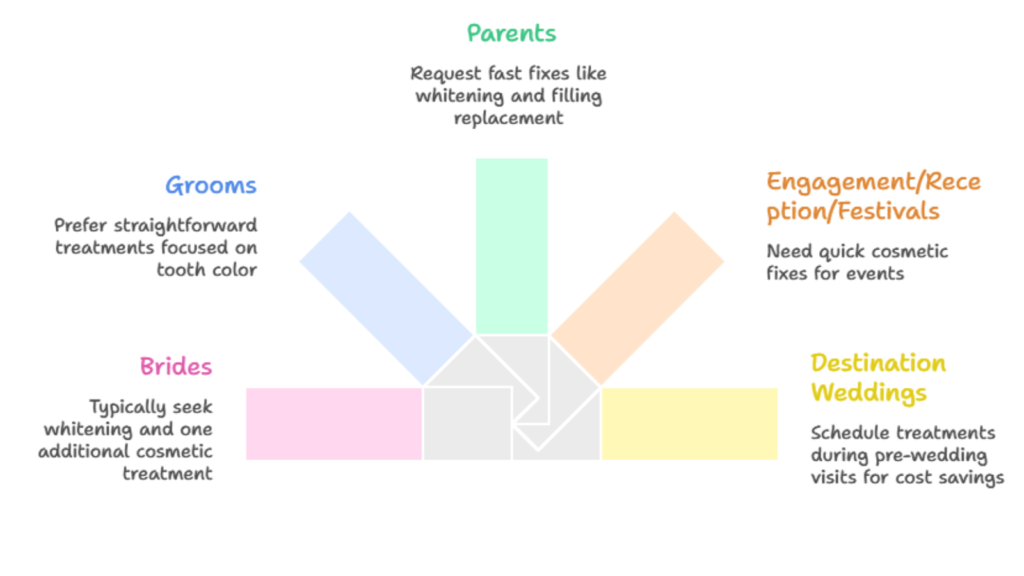
Brides represent approximately 70% of wedding smile makeover requests, typically seeking professional whitening combined with one additional cosmetic treatment. Grooms generally prefer straightforward treatments focused on tooth color, while parents of the couple request fast fixes like whitening and replacing discolored old fillings. International guests planning dental tourism in Kathmandu sometimes schedule treatments during pre-wedding visits, taking advantage of cost savings compared to Western countries.
1. Smile makeover options for brides
Brides represent approximately 70% of wedding-related smile makeover requests in dental in Kathmandu. Most brides seek professional whitening combined with one additional cosmetic treatment.
Common bride-specific requests include whitening to complement bridal makeup, bonding to repair minor chips or gaps, and gum contouring to balance a gummy smile. Brides often bring photos from engagement sessions to identify specific concerns visible in close-up shots. Many coordinate tooth shade selection with their makeup artist to ensure their smile photographs naturally under professional lighting conditions.
2. Smile makeover options for grooms
Grooms typically request straightforward treatments focused on tooth color rather than structural changes. Professional whitening remains the most popular choice, followed by minor bonding to repair visible chips or smooth uneven edges.
Male patients often prefer subtle improvements that look natural rather than dramatically white or perfectly uniform teeth. Grooms planning to grow beards or mustaches before the wedding sometimes delay treatment timing to see how facial hair frames their smile. Most groom consultations happen 4 to 6 weeks before the wedding, later than typical bride appointments.
3. Parents of the bride and groom: fast cosmetic fixes
Parents seek smile improvements that refresh their appearance without suggesting extensive dental work. The most requested treatments include professional whitening to remove years of staining and bonding to replace discolored old fillings visible in photos.
Many parents have existing dental work that appears yellowed or worn. Replacing these restorations before wedding photos creates a more uniform, youthful appearance. Some parents coordinate their treatments with the couple’s timeline but complete work earlier to avoid scheduling conflicts during peak wedding planning periods.
4. Smile makeovers for engagement ceremonies, receptions & festivals
Engagement ceremonies in Kathmandu often involve substantial photography and videography, prompting couples to seek cosmetic improvements earlier in their wedding journey. These early treatments can last through both engagement events and wedding ceremonies if properly maintained.
Reception-focused makeovers typically happen after the main ceremony for couples who want improvements for the larger celebration. Festival appearances during wedding season, like Dashain or Tihar family gatherings, motivate some individuals to schedule quick whitening treatments independent of specific wedding dates.
5. Destination weddings and overseas guests visiting Kathmandu
International guests planning destination weddings in Kathmandu sometimes schedule dental treatments during pre-wedding visits to the city. The cost advantage compared to Western countries makes this timing attractive for extensive work like multiple veneers or full-mouth whitening.
Overseas relatives visiting for weddings occasionally request quick cosmetic fixes before the ceremony. Dentists maintain flexible scheduling during peak wedding seasons (October to December and February to April) to accommodate these short-notice requests. Most international patients schedule initial consultations via video call before arriving to maximize their limited time in Kathmandu.
Fast Smile Makeover Treatment Options
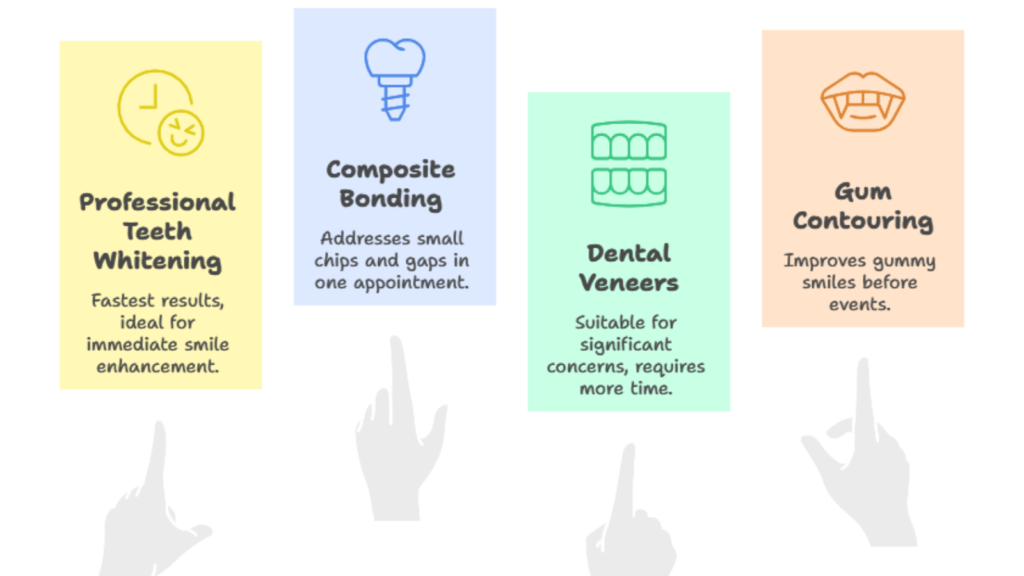
Professional teeth whitening delivers the fastest results, lightening teeth by 4 to 8 shades in a single 60 to 90-minute appointment with immediate visibility. Composite bonding reshapes, rebuilds, or closes gaps in one appointment per tooth, making it ideal for small chips and minor spacing issues. Dental veneers require 4 to 6 weeks across 2 to 3 appointments but address more significant concerns like severe discoloration or multiple cosmetic issues affecting several front teeth.
1. Professional teeth whitening: the fastest wedding smile fix
Professional teeth whitening lightens tooth color by 4 to 8 shades in a single 60 to 90-minute appointment. Dentists apply high-concentration bleaching gel (typically 35% to 40% hydrogen peroxide) to your teeth while protecting your gums with a barrier material.
This treatment works fastest because it requires no tooth preparation, laboratory work, or healing time. You see immediate results the same day. Most patients experience mild sensitivity for 24 to 48 hours afterward, which resolves completely before your event when scheduled 1 to 2 weeks in advance.
In-office whitening outperforms take-home kits for event-based timelines. Take-home systems require 2 to 3 weeks of daily wear to achieve comparable results. Combining in-office treatment with take-home maintenance kits extends your whitening results through your wedding day and beyond.
2. Composite bonding for chips, gaps, and uneven teeth
Composite bonding applies tooth-colored resin material directly to your teeth to reshape, rebuild, or close gaps. Dentists complete most bonding cases in a single 60 to 90-minute appointment per tooth.
The procedure requires minimal tooth preparation, dentists lightly roughen the tooth surface to help bonding material adhere. They then sculpt and shape composite resin to match your natural teeth before hardening it with a special light. Final polishing creates a smooth, natural appearance.
Bonding works exceptionally well for small chips, minor gaps between front teeth, and slightly uneven tooth lengths. The results last 3 to 7 years with proper care. This timeline makes bonding ideal for event-focused improvements that you can later upgrade to more permanent solutions like veneers if desired.
3. Dental veneers for weddings: when short timelines still work
Dental veneers cover the front surface of teeth with thin shells of porcelain or composite material. The process requires 2 to 3 appointments spanning 4 to 6 weeks, longer than bonding but still achievable before many wedding timelines.
Dentists prepare your teeth during the first appointment by removing a thin layer of enamel (typically 0.5 millimeters). They take impressions and place temporary veneers while the laboratory crafts your permanent ones. The final appointment involves bonding the custom veneers to your prepared teeth.
Veneers address more significant concerns than bonding alone, including severe discoloration, larger gaps, noticeably uneven teeth, or multiple cosmetic issues affecting several front teeth. The results last 10 to 15 years, making them a substantial investment that extends well beyond your wedding day. This permanence appeals to patients wanting long-term improvements, not just event-focused fixes.
4. Gum contouring for gummy smiles before events
Gum contouring removes excess gum tissue to expose more of your tooth structure, creating a more balanced smile line. Dentists complete most contouring procedures in a single 45 to 60-minute appointment using laser technology or precise surgical instruments.
Laser gum contouring causes minimal bleeding and discomfort compared to traditional surgical methods. The treated area heals within 7 to 14 days, requiring you to schedule this procedure at least 3 to 4 weeks before your wedding. This buffer ensures complete healing and allows time for any residual swelling to disappear before photos.
The procedure works best for patients with naturally excessive gum tissue rather than those whose gummy smile results from jaw positioning. Dentists evaluate your gum-to-tooth ratio and facial proportions during consultation to determine whether contouring will create your desired outcome.
Why braces and aligners are rarely ideal for last-minute weddings
Traditional braces require 12 to 24 months to complete treatment. Even fast-track clear aligner systems need 6 to 12 months for visible improvements. Neither option fits event-focused timelines under 6 months.
Some patients consider wearing aligners during their wedding, but most find them uncomfortable and visible in close-up photography. Removing aligners for the ceremony disrupts treatment progress and risks losing the appliances during the event.
Orthodontic treatment makes sense for weddings planned 18 to 24 months in advance. Couples with longer engagement periods sometimes complete braces vs Invisalign treatment before other cosmetic work, creating an ideal foundation for whitening or veneers closer to the wedding date.
Smile Makeover Timelines: What’s Possible Before Your Big Day?

Professional whitening represents the only substantive cosmetic treatment reliably completed within 1 week, with sensitivity resolving within 2 to 3 days. Three to 4 weeks allows completion of whitening combined with bonding on multiple teeth or gum contouring with proper healing time. Two to 3 months provides sufficient time for dental veneer placement, combination treatments, and addressing any preliminary dental health issues before cosmetic work begins.
Smile makeover options you can complete within 1 week
Professional in-office whitening represents the only substantive cosmetic treatment reliably completed in 1 week. Dentists perform the procedure in a single appointment, with any sensitivity resolving within 2 to 3 days.
Emergency cosmetic bonding for a single chipped tooth also fits within 1-week timelines when dental practices accommodate short-notice appointments. Most clinics in Kathmandu reserve emergency slots for these urgent requests during wedding season.
Basic dental cleaning and polishing improve your smile’s appearance within this timeframe but produce subtle rather than dramatic changes. These services remove surface stains and create a fresh, clean baseline before your event.
What can realistically be done in 3–4 weeks
Three to 4 weeks allows completion of professional whitening combined with cosmetic bonding on multiple teeth. This combination addresses both color concerns and minor structural issues like chips, gaps, or uneven lengths.
Gum contouring fits comfortably within 4-week timelines, allowing 2 to 3 weeks for healing after the procedure. You retain 1 week of buffer time before your event to ensure complete recovery and resolution of any residual sensitivity.
Replacing old, discolored fillings with tooth-colored composite restorations becomes feasible in this timeframe. Dentists complete these replacements in 1 to 2 appointments depending on the number of fillings involved. The new restorations blend naturally with your whitened teeth, creating a uniform appearance in photos.
Smile makeover plans for 2–3 months before the wedding
Two to 3 months provides sufficient time for dental veneer placement, including consultation, tooth preparation, laboratory work, temporary veneers, and final placement. This extended timeline also accommodates any adjustments needed after initial placement.
Combination treatments work well within this timeframe, for example, completing gum contouring first to establish proper tooth exposure, then adding veneers or bonding to perfect tooth shape and color. The extended planning period allows your dentist to stage treatments for optimal results.
Patients requiring preliminary treatments like cavity fillings or minor gum disease therapy before cosmetic work benefit from this longer timeline. Addressing underlying dental health issues first ensures cosmetic treatments adhere properly and last longer.
Why some treatments require healing or adjustment time
Gum contouring requires 7 to 14 days of healing before gum tissues stabilize at their new position. Proceeding with other treatments before this healing completes risks compromising results or causing unnecessary discomfort.
Dental veneers sometimes require adjustment appointments after initial placement. Minor bite irregularities or rough edges may need smoothing. Scheduling veneers with at least 2 to 3 weeks of buffer time before your wedding allows for these refinements without stress.
Tooth sensitivity after whitening typically resolves within 48 to 72 hours but occasionally persists for 7 to 10 days. Planning whitening treatments 2 weeks before your event ensures you have comfortable, normal sensation by your wedding day.
When it’s “too late” to start a smile makeover
Less than 1 week before your event leaves insufficient time for anything beyond basic cleaning or emergency repairs. Even professional whitening becomes risky this close to an important date, as unresolved sensitivity could affect your comfort during the ceremony.
Two weeks before your wedding creates tight timelines for anything more complex than whitening alone. Dentists in Kathmandu generally recommend against starting bonding or veneer work this close to major events, as complications or adjustments cannot be addressed properly.
Responsible dentists decline requests for cosmetic work when timelines compromise either safety or results quality. Rushing dental procedures increases risks of poor aesthetic outcomes, persistent sensitivity, or incomplete healing that negatively affects your experience on your important day.
Common Smile Problems Before Weddings And Their Best Solutions
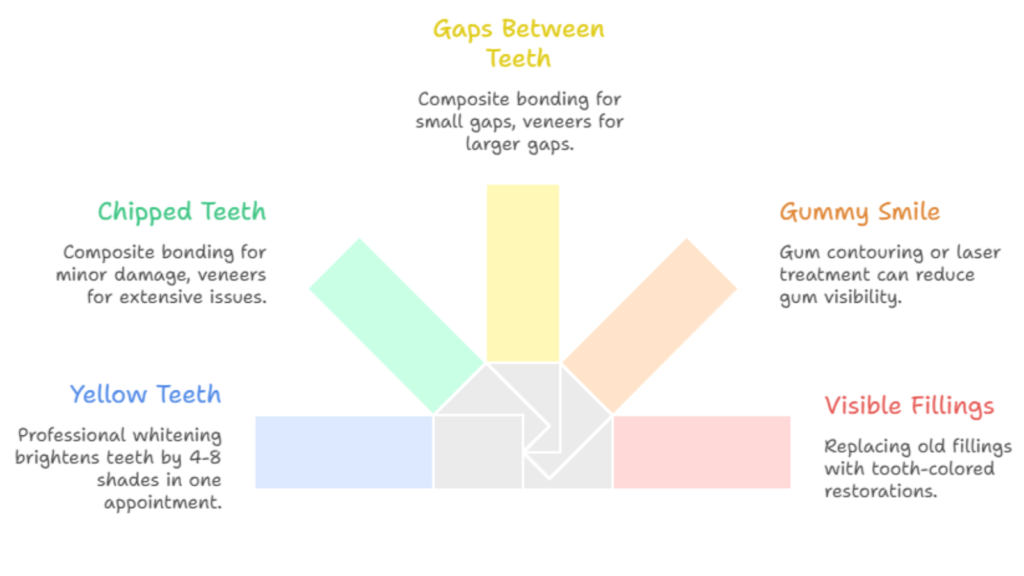
Yellow or stained teeth respond best to professional in-office whitening, which brightens teeth by 4 to 8 shades in a single appointment and lasts 6 to 18 months. Chipped, broken, or uneven front teeth benefit from composite bonding for minor damage or veneers for more extensive issues requiring 4 to 6 weeks. Small gaps between front teeth close effectively with composite bonding in one appointment, while larger gaps may require veneers on multiple teeth for balanced, natural-looking closure.
1. Yellow or stained teeth before a wedding or event
Yellow or stained teeth result from 4 primary causes: dietary staining (coffee, tea, wine), tobacco use, age-related enamel thinning, or certain medications. Professional in-office whitening addresses all stain types except those caused by medications or developmental conditions.
The treatment whitens teeth by 4 to 8 shades in a single appointment. Results last 6 to 18 months with proper maintenance. Dentists recommend combining in-office treatment with take-home maintenance kits for weddings planned several months away, ensuring maximum brightness on your actual wedding day.
Severely yellowed teeth sometimes require repeated whitening sessions for optimal results. Schedule your first appointment 6 to 8 weeks before your wedding to allow time for a second session if needed.
2. Chipped, broken, or uneven front teeth
Composite bonding provides the fastest solution for minor chips and uneven front teeth. Dentists reshape and rebuild affected teeth in a single appointment lasting 60 to 90 minutes per tooth.
Small chips (less than 2 millimeters) bond reliably and look natural in photos. Larger chips or multiple damaged teeth may require veneers for more durable, aesthetic results. Veneers need 4 to 6 weeks for completion, so plan accordingly.
Severely broken teeth sometimes require crowns rather than cosmetic bonding or veneers. Crowns take 3 to 4 weeks to complete and provide stronger, longer-lasting restoration for teeth with substantial damage.
3. Gaps or spacing that show in photos
Small gaps between front teeth (under 3 millimeters) close effectively with composite bonding. Dentists add material to the adjacent tooth surfaces, bringing them together without requiring orthodontic movement. This approach delivers results in a single appointment.
Larger gaps (over 3 millimeters) may require veneers on multiple teeth to create balanced, natural-looking closure. Simply filling large gaps with bonding material can make teeth appear too wide or poorly proportioned.
Orthodontic treatment provides the most natural solution for significant gaps but requires 8 to 12 months minimum. This timing works only for weddings planned far in advance. Most couples with compressed timelines choose cosmetic solutions like bonding or veneers rather than orthodontics.
4. Gummy smiles affecting bridal photos
Laser gum contouring removes excess gum tissue that covers too much of your tooth structure. The procedure takes 45 to 60 minutes and heals within 7 to 14 days, making it achievable for weddings planned 4 to 6 weeks away.
Not all gummy smiles result from excess gum tissue. Some occur because of jaw positioning or hyperactive lip muscles. Dentists evaluate the underlying cause during consultation. Gummy smiles caused by jaw structure cannot be corrected with gum contouring alone and may require alternative approaches beyond event timelines.
The procedure creates permanent results, reshaping your smile line for all future photos, not just your wedding day. This permanence makes gum contouring a valuable investment for patients bothered by excessive gum visibility in everyday life.
5. Old fillings or restorations visible when smiling
Old amalgam (silver) fillings appear dark gray or black in photos, especially when located on back teeth visible during wide smiles. Replacing these with tooth-colored composite fillings takes 1 to 2 appointments depending on the number of fillings involved.
Stained or discolored crowns on front teeth sometimes need replacement before wedding photos. New crowns require 3 to 4 weeks for laboratory fabrication. Dentists match the new crown shade to your whitened natural teeth, creating a uniform appearance.
Some patients have composite fillings that have yellowed over time. Whitening does not affect filling color, so these restorations may appear darker than your newly whitened teeth. Replacing them after whitening treatment ensures perfect color matching.
Wedding Photography & Aesthetic Considerations
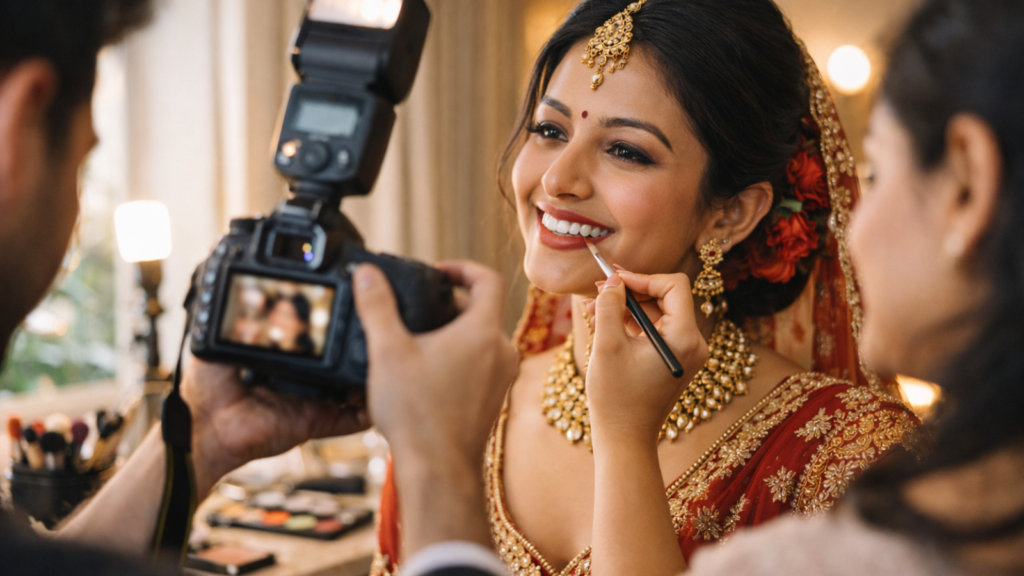
Professional wedding photography uses bright flash lighting and close-up lenses that highlight tooth color, shape, and surface texture more intensely than natural viewing conditions. Tooth shade selection requires coordination with makeup artists and wedding attire, with brides in traditional Nepali clothing often choosing brighter shades that complement vibrant red and gold colors. Dentists consider your lip movement and facial symmetry when designing treatments, using digital photography during consultations to identify exactly which teeth appear in your typical smile.
How smile makeovers appear in wedding photos
Professional wedding photography uses bright flash lighting and close-up lenses that highlight tooth color, shape, and surface texture. Even minor chips or discoloration that look acceptable in natural light become more visible in these high-definition images.
Whitened teeth photograph exceptionally well, appearing bright and healthy without looking artificial. Composite bonding appears natural in photos when properly polished and color-matched. Veneers create the most consistently photogenic results, as porcelain reflects light similarly to natural enamel.
Many couples schedule their post-engagement photo sessions 2 to 3 months before the wedding. Reviewing these images helps identify specific smile concerns that affect your appearance in professional photos, allowing targeted treatment before the ceremony.
Choosing the right tooth shade for bridal makeup
Tooth color selection requires coordination with your makeup artist and wedding dress. Dentists use standardized shade guides showing tooth colors from bright white (B1, A1) to more natural tones (A2, A3).
Brides wearing traditional Nepali wedding attire with bold red and gold colors often choose brighter shades (B1 to A1) that complement these vibrant hues. Those wearing white or ivory dresses sometimes prefer slightly warmer tones (A1 to A2) that look natural against lighter fabrics.
Extremely white teeth (Hollywood white or “toilet bowl white”) photograph poorly with most bridal makeup styles. These ultra-white shades appear artificial in photos and create harsh contrast with facial tones. Most dentists in Kathmandu recommend bright but natural shades that photograph well without appearing fake.
Will veneers or bonding look natural on camera?
High-quality veneers and bonding look completely natural in wedding photos when properly designed and placed. The key factors determining natural appearance include proper color matching, appropriate tooth proportions, and surface texture that mimics natural enamel.
Poorly designed veneers sometimes appear too uniform, too bright, or too large for the face. These characteristics create an obviously artificial appearance. Experienced cosmetic dentists avoid these pitfalls by considering your facial features, lip shape, and natural tooth proportions when designing your new smile.
Composite bonding appears more natural than veneers when used for minor corrections. The material integrates seamlessly with existing tooth structure, creating a repaired rather than replaced appearance. This subtlety appeals to patients wanting improvements without obvious dental work.
Facial symmetry, lip shape, and smile design
Dentists consider your lip movement when you smile to determine which teeth need cosmetic treatment. Some people show 8 to 10 upper teeth when smiling broadly, while others display only the front 4 to 6 teeth.
Treating only the visible teeth reduces costs and treatment time without compromising photographic results. Dentists sometimes use digital photography during consultation, asking you to smile naturally to identify exactly which teeth appear in your typical expression.
Facial symmetry affects how dental treatments integrate with your overall appearance. Slight asymmetries in lip height or facial structure influence tooth length and contour decisions. Experienced cosmetic dentists account for these factors when designing smile makeovers that look balanced and natural with your unique facial features.
Things photographers notice about smiles in close-ups
Professional photographers immediately notice tooth color consistency, particularly when front teeth appear different shades from each other or from visible side teeth. This inconsistency creates a patchy appearance in close-up images.
Surface texture matters more in high-resolution photos than in everyday viewing. Properly polished bonding or veneers reflect light evenly, creating a smooth, appealing appearance. Rough or matte surfaces appear dull and catch unflattering shadows.
Gum health affects smile aesthetics in close-up photography. Red, swollen, or receding gums distract from even beautifully whitened or restored teeth. Dentists recommend addressing gum inflammation during initial cleaning appointments before proceeding with cosmetic treatments.
Learn more about What Happens During a Professional Teeth Cleaning?
Eligibility, Safety & Who Should Avoid Last-Minute Treatments
Smile makeovers using established cosmetic techniques present minimal risk when performed by qualified dentists, with primary concerns involving temporary sensitivity rather than serious health complications. Patients with active tooth decay, gum disease, or dental infections need these conditions treated before cosmetic work proceeds. Those with extremely limited timelines under 2 weeks face heightened risks of incomplete healing or insufficient adjustment time, leading ethical dentists to decline rushed requests.
Are smile makeovers safe before weddings?
Smile makeovers using established cosmetic dental techniques present minimal risk when performed by qualified dentists. Professional whitening, composite bonding, veneers, and gum contouring all have decades of safety data supporting their use.
The primary risks involve temporary sensitivity, minor gum irritation, or dissatisfaction with aesthetic results, not serious health complications. These minor issues resolve quickly and rarely affect daily life, particularly when treatments are scheduled with appropriate buffer time before events.
Dentists conduct thorough examinations before recommending treatments, screening for underlying conditions that might increase risk or compromise results. This evaluation ensures you receive only appropriate treatments given your specific dental health status and timeline constraints.
Who should avoid last-minute cosmetic dental treatments
Patients with active tooth decay, gum disease, or dental infections need these conditions treated before cosmetic work proceeds. Placing veneers or bonding over diseased teeth compromises long-term results and risks complications during healing.
People with severe teeth grinding (bruxism) sometimes break or damage bonding and veneers shortly after placement. Dentists recommend addressing grinding habits with nightguards before investing in cosmetic treatments meant to last through your wedding and beyond.
Those with extremely limited timelines (under 2 weeks) face heightened risks of incomplete healing, persistent sensitivity, or insufficient time for necessary adjustments. Dentists ethically decline these rushed requests when compressed schedules compromise either safety or quality standards.
Smile makeovers during pregnancy: what’s safe
Professional teeth whitening receives mixed recommendations during pregnancy. Most dentists in Kathmandu avoid whitening treatments for pregnant patients due to limited safety research, despite no documented cases of whitening-related pregnancy complications.
Composite bonding and other restorative procedures remain safe during pregnancy. Dentists use pregnancy-safe local anesthetics when needed and avoid unnecessary x-rays. The second trimester (weeks 14 to 27) provides the safest window for dental work, as morning sickness has typically resolved and you remain comfortable sitting in the dental chair.
Elective cosmetic procedures like veneers or gum contouring are often postponed until after delivery. Many pregnant patients complete basic cleaning and bonding for damaged teeth while scheduling more extensive cosmetic work for after their baby arrives.
What dental conditions must be treated first
Cavities require filling before cosmetic treatments proceed. Whitening gel entering cavities causes severe sensitivity. Bonding or veneers placed over untreated decay fail prematurely and risk spreading infection.
Active gum disease (characterized by bleeding, swelling, or persistent bad breath) needs treatment before cosmetic work begins. Placing veneers or bonding on teeth with compromised gum support risks early failure and poor aesthetic outcomes.
Teeth requiring root canal treatment must complete this procedure before receiving cosmetic restorations. Root canal therapy typically takes 1 to 2 appointments spanning 2 to 3 weeks, extending your overall treatment timeline.
Age and sensitivity considerations
Most cosmetic dental treatments are approved for patients 18 years and older, after permanent teeth have fully developed. Some dentists place bonding on teenagers for emergency chip repairs but generally recommend waiting until adulthood for elective cosmetic procedures.
Patients with naturally sensitive teeth may experience heightened discomfort after whitening or bonding procedures. Dentists can pretreat sensitivity using desensitizing toothpaste for 2 weeks before cosmetic work or apply desensitizing agents during treatment.
Older patients sometimes have more complex dental histories, including multiple crowns, bridges, or root canals that affect treatment planning. Cosmetic work must coordinate with existing restorations, occasionally requiring replacement of old dental work to achieve uniform results.
Pain, Recovery & Downtime Before Your Event
Professional whitening causes mild to moderate sensitivity in approximately 60% of patients that resolves within 24 to 48 hours, while composite bonding produces minimal discomfort with possible minor sensitivity for the same duration. Dental veneers require 3 to 7 days for adjustment to new tooth contours, making placement at least 2 weeks before weddings advisable for complete comfort. Gum contouring needs 7 to 14 days for visible healing, with swelling peaking at 24 to 48 hours before gradually subsiding.
Pain levels for whitening, bonding, veneers, and gum contouring
Professional whitening causes mild to moderate sensitivity in approximately 60% of patients. This sensitivity manifests as brief, sharp discomfort when teeth encounter hot, cold, or sweet stimuli. The sensation typically resolves within 24 to 48 hours and responds well to over-the-counter pain relievers.
Composite bonding produces minimal discomfort. Dentists lightly etch tooth surfaces before bonding, a process that feels mildly uncomfortable but not painful. No pain occurs during material application and shaping. Some patients experience minor sensitivity for 24 to 48 hours after bonding, particularly when bonding repairs deep chips close to the tooth nerve.
Dental veneers require more extensive tooth preparation than bonding, involving removal of 0.5 millimeters of enamel under local anesthesia. You feel no pain during the procedure itself. Temporary veneers worn between appointments sometimes cause minor sensitivity or feel slightly bulky. Permanent veneers typically eliminate these issues once properly placed and adjusted.
Laser gum contouring produces less discomfort than traditional surgical methods. Most patients describe the sensation during treatment as pressure and mild heat rather than pain. Local anesthesia numbs the area during the procedure. Post-treatment discomfort feels similar to a mild burn and responds well to over-the-counter pain medication for 2 to 3 days.
Recovery time you should plan for before the wedding day
Professional whitening requires no recovery time. You resume normal activities immediately after treatment. Avoiding staining foods and beverages for 24 to 48 hours helps maximize results.
Composite bonding allows immediate return to normal activities. You eat and drink normally right after leaving the dental office. The material reaches full hardness immediately upon light curing.
Veneers require 3 to 7 days for adjustment to the new tooth contours and bite relationship. Most patients adapt within this timeframe. Schedule veneer placement at least 2 weeks before your wedding to ensure complete comfort.
Gum contouring needs 7 to 14 days for visible healing. Swelling typically peaks 24 to 48 hours after the procedure, then gradually subsides. Complete gum tissue remodeling takes 4 to 6 weeks internally, but aesthetic healing visible in photos occurs within 2 weeks. Plan gum contouring 3 to 4 weeks before your event minimum.
Can you eat and speak normally after treatment?
Whitening places no restrictions on eating or speaking. Dentists recommend avoiding deeply colored foods (coffee, red wine, berries, curry) for 24 to 48 hours to prevent staining while tooth pores remain slightly open.
Bonding allows normal eating and speaking immediately. The composite material reaches full strength during the curing process in the dental office. Avoid biting directly into extremely hard foods (ice, hard candy) with bonded front teeth to prevent chips.
Temporary veneers feel slightly bulky and may affect speech for 24 to 48 hours while you adjust. Eating requires caution, temporary veneers are less securely attached than permanent ones. Permanent veneers feel natural and allow completely normal eating and speaking once you adapt to the new tooth contours.
Gum contouring requires soft foods for 3 to 5 days after treatment. Speaking normally causes no issues, though some patients report minor lisping for 24 hours while adapting to altered gum contours. Normal eating resumes within 1 week.
Managing tooth sensitivity before important events
Pre-treating sensitivity using desensitizing toothpaste for 2 weeks before cosmetic procedures reduces discomfort risk. Products containing potassium nitrate (such as Sensodyne) block nerve signals that cause sensitivity.
Dentists apply professional desensitizing agents during treatment that seal microscopic tubules in tooth surfaces. These applications significantly reduce post-treatment sensitivity for most patients.
Persistent sensitivity after cosmetic work responds to avoiding temperature extremes for several days. Room-temperature beverages and foods cause less discomfort than very hot coffee or ice water. Over-the-counter pain relievers effectively manage most sensitivity within recommended dosing guidelines.
Severe or prolonged sensitivity (lasting over 1 week) requires follow-up dental evaluation. Though rare, this sometimes indicates that bonding material requires adjustment or that underlying dental issues need addressing.
How dentists minimize discomfort for event-based treatments
Dentists use topical numbing gel before injecting local anesthesia, eliminating needle-stick discomfort. The injections themselves use thin needles and slow injection techniques that reduce pain during administration.
Modern dental equipment includes built-in cooling systems that prevent overheating during tooth preparation. This temperature control significantly reduces sensitivity during and after procedures.
Dentists working with event-focused patients often schedule treatments in stages that allow healing between appointments. This approach prevents compounding sensitivity from multiple procedures performed simultaneously.
Pre-medication with anti-inflammatory drugs before appointments reduces post-treatment swelling and discomfort. Dentists provide detailed aftercare instructions including specific pain management protocols tailored to your procedure.
What Happens During a Wedding Smile Makeover Consultation?
Dentists photograph your smile from multiple angles and perform comprehensive oral examinations to identify concerns visible in photos while checking for cavities or gum disease requiring treatment first. Treatment recommendations balance your aesthetic goals, dental health status, and available timeline, with dentists working backward from your wedding date to determine feasible options. Many cosmetic dentists use digital smile design software or physical mock-ups to preview potential results before treatment begins, reducing uncertainty and allowing adjustments.
Initial smile analysis and dental examination
Dentists photograph your smile from multiple angles to document your current appearance and identify concerns visible in photos. These images help you and your dentist agree on specific treatment goals.
A comprehensive oral examination evaluates tooth health, gum condition, and bite relationship. Dentists check for cavities, gum disease, and dental damage requiring treatment before cosmetic work proceeds. This health assessment ensures your teeth can support planned cosmetic improvements.
Dentists discuss your specific concerns, what bothers you about your current smile and what you hope to achieve. Many patients bring photos showing smiles they admire or specific concerns visible in their engagement photos. These visual references help dentists understand your aesthetic preferences.
How dentists recommend treatments based on timeline
Dentists first ask about your wedding date, then work backward to determine which treatments fit your available timeframe. A wedding 4 weeks away limits options to whitening, bonding, or combination treatments. A wedding 3 months away allows consideration of veneers or more comprehensive work.
The recommendation balances 3 factors: what you need aesthetically, what your dental health allows, and what your timeline permits. Dentists sometimes suggest alternative approaches when ideal treatments exceed your available time. For example, bonding might serve as a temporary solution before your event, with veneers planned afterward for longer-lasting results.
Budget discussions happen during consultation to ensure recommended treatments align with both your timeline and financial considerations. Dentists can adjust treatment plans to prioritize improvements delivering maximum photographic impact within your budget constraints.
Digital smile previews and mock-ups
Many cosmetic dentists in Kathmandu use digital smile design software that modifies your photos to preview potential results. These digital mock-ups help you visualize how whitening, bonding, or veneers will change your appearance before treatment begins.
For veneer cases, dentists sometimes create physical mock-ups using temporary material placed on your teeth without preparation. You see and feel how your new smile will look and function, allowing adjustments before permanent veneers are crafted.
These preview options reduce uncertainty and disappointment. You make informed decisions about shade selection, tooth proportions, and overall smile design before committing to treatment.
How long it takes to finalize a treatment plan
Simple cases (whitening alone or bonding on 1 to 2 teeth) typically produce treatment plans during your initial consultation. You often leave with appointments scheduled and a clear timeline.
Complex cases requiring multiple treatments or staged procedures may need 2 consultations spanning 1 to 2 weeks. Dentists sometimes request additional diagnostic records (detailed photos, study models, or x-rays) to plan comprehensive cases thoroughly.
Emergency consultations for weddings 2 to 4 weeks away require immediate treatment planning. Dentists expedite these cases, often completing consultation and treatment planning in a single extended appointment to maximize your limited timeline.
Questions you should ask your cosmetic dentist
Ask about the longevity of recommended treatments. Bonding lasts 3 to 7 years. Veneers last 10 to 15 years. Understanding these timelines helps you make value-based decisions.
Inquire about what happens if results differ from expectations. Reputable dentists stand behind their work and explain their policies for adjustments or revisions within reasonable parameters.
Request to see before-and-after photos of previous wedding smile makeover cases. These examples demonstrate the dentist’s aesthetic judgment and technical skill with event-focused cosmetic work.
Ask about the total cost including any follow-up appointments, adjustments, or maintenance. Comprehensive cost discussions prevent surprise expenses during an already expensive wedding planning period.
Question the dentist’s contingency plan if unexpected complications arise close to your wedding date. Knowing how issues would be addressed provides peace of mind.
Cost of a Smile Makeover for Weddings in Kathmandu
Professional whitening ranges from NPR 8,000 to NPR 15,000, composite bonding costs NPR 3,000 to NPR 6,000 per tooth, and porcelain veneers range from NPR 15,000 to NPR 35,000 per tooth. Dental insurance in Nepal typically excludes cosmetic treatments as elective procedures, though some practices offer payment plans for larger cases. Focusing treatments on the upper front 6 to 8 teeth visible when smiling delivers maximum photographic impact while avoiding unnecessary expenses on less visible areas.
Learn more about porcelain veneers, crown and composite bonding
Factors that influence smile makeover cost
The number of teeth requiring treatment directly affects total cost. Treating only the front 6 to 8 teeth visible when smiling costs substantially less than full-mouth cosmetic work.
Treatment complexity influences pricing. Simple whitening costs less than bonding, which costs less than veneers. Combination treatments naturally cost more than single procedures.
Laboratory fees for custom veneers or crowns add to total costs. These fees vary based on the quality of materials selected, premium porcelain costs more than standard materials but delivers superior aesthetics and longevity.
Dentist experience and practice location affect pricing. Cosmetic dentists with extensive training and strong reputations typically charge premium rates reflecting their expertise and consistent results.
Approximate cost ranges for quick treatments in Kathmandu
Professional in-office whitening ranges from NPR 8,000 to NPR 15,000 (approximately USD 60 to USD 115) for upper and lower arches. This pricing positions Kathmandu as significantly more affordable than Western countries where equivalent treatment costs USD 400 to USD 800.
Composite bonding costs NPR 3,000 to NPR 6,000 (approximately USD 23 to USD 46) per tooth. Treating 2 to 4 front teeth typically totals NPR 12,000 to NPR 24,000 (approximately USD 92 to USD 184).
Porcelain veneers range from NPR 15,000 to NPR 35,000 (approximately USD 115 to USD 270) per tooth, depending on material quality and laboratory selection. A typical front-teeth makeover involving 6 to 8 veneers totals NPR 90,000 to NPR 280,000 (approximately USD 690 to USD 2,150).
Laser gum contouring costs NPR 8,000 to NPR 20,000 (approximately USD 60 to USD 154) per arch, depending on the extent of tissue removal required.
For a full breakdown of dental treatment costs in Kathmandu, including all major cosmetic and restorative procedures, visit our dedicated cost guide.
Cost vs longevity: what’s worth it for weddings
Professional whitening delivers excellent value for event-focused timelines. The results last 6 to 18 months, well beyond your wedding day, for relatively modest cost. Maintenance with take-home whitening extends results indefinitely.
Composite bonding provides good value for minor corrections lasting 3 to 7 years. This longevity makes bonding worthwhile even for event-focused motivations, as the improvements serve you long after your wedding concludes.
Veneers represent significant investment but deliver 10 to 15 years of results. This extended longevity justifies the cost for patients wanting permanent improvements, not just short-term fixes for photos. Those desiring only temporary event-focused improvements might prefer less expensive bonding options.
Gum contouring creates permanent results, making the procedure valuable for anyone bothered by excessive gum visibility in everyday life, not just wedding photos. Those concerned solely about one event might reconsider whether permanent surgical alteration justifies the cost.
Are wedding smile makeovers covered by insurance?
Dental insurance in Nepal typically excludes cosmetic treatments including whitening, bonding for purely aesthetic purposes, veneers, and gum contouring. These procedures are considered elective rather than medically necessary.
Insurance sometimes covers treatments when they also serve functional purposes. For example, bonding that repairs a broken tooth might receive partial coverage, while bonding that simply reshapes a healthy tooth for aesthetics would not.
Some dental practices offer payment plans for larger cosmetic cases like multiple veneers. These arrangements allow spreading treatment costs over several months rather than requiring full payment upfront.
How to avoid unnecessary cosmetic expenses
Focus treatments on teeth visible when you smile naturally. Treating only the upper front 6 to 8 teeth delivers maximum photographic impact for minimal cost compared to full-mouth work.
Consider less expensive alternatives for event-focused timelines. Bonding provides similar aesthetic improvements to veneers for minor corrections at roughly one-fifth the cost. You can always upgrade to veneers later if desired.
Prioritize treatments addressing your most prominent concerns first. Most patients benefit more from professional whitening addressing overall tooth color than from extensive bonding correcting minor imperfections barely visible in photos.
Schedule consultations with multiple dentists to compare treatment approaches and pricing. Costs vary significantly between practices. Ensure comparisons evaluate similar quality materials and dentist experience levels, not just bottom-line prices.
Preparing & Maintaining Your Smile Before the Big Day
Coffee, tea, red wine, tobacco, and deeply pigmented foods stain teeth and counteract whitening results, requiring moderation or avoidance between treatment and your wedding day. Use whitening toothpaste 2 to 3 times weekly and take-home whitening trays 1 to 2 days before your event to maintain maximum brightness. Chipped bonding or veneers require immediate dental attention, with many Kathmandu cosmetic dentists reserving emergency slots for wedding-related urgent repairs completable within 1 to 2 days.
What to avoid before your wedding to keep teeth bright
Coffee, tea, red wine, and dark sodas stain teeth through repeated exposure. You see results within 48 hours after whitening.
Tobacco products cause severe staining that counteracts whitening results quickly. Patients who continue smoking or using gutka after professional whitening experience rapid color relapse within 2 to 4 weeks.
Curry, turmeric, and deeply pigmented foods common in Nepali cuisine can stain teeth over time. Moderate consumption combined with thorough brushing after meals minimizes staining risk.
Acidic beverages (citrus juices, sports drinks) soften tooth enamel temporarily, making teeth more susceptible to staining. Drinking water after acidic drinks helps neutralize acid and rinse away staining compounds.
How to maintain whitening or bonding until the event
Use whitening toothpaste 2 to 3 times weekly to remove surface stains without re-whitening. These products maintain results between professional treatments.
Take-home whitening trays provided by your dentist allow touch-up treatments 1 to 2 days before your wedding. Brief maintenance sessions restore maximum brightness after any minor relapse during your engagement period.
Brush gently after meals, particularly after consuming staining foods. Wait 30 minutes after eating acidic foods before brushing, as immediate brushing can damage temporarily softened enamel.
Bonded teeth require no special maintenance beyond normal oral hygiene. Avoid biting directly into extremely hard foods (ice, nuts, hard candy) with bonded front teeth to prevent chips.
Diet and habits that protect your smile makeover
Crunchy vegetables like carrots and celery naturally clean teeth during chewing. These foods stimulate saliva production that neutralizes acids and rinses away food particles.
Dairy products (milk, cheese, yogurt) strengthen tooth enamel through calcium and phosphate content. Consuming dairy regularly between cosmetic treatments and your wedding supports overall dental health.
Drinking water throughout the day rinses away food particles and staining compounds. Water consumption after meals or staining beverages significantly reduces discoloration risk.
Using a straw for staining beverages reduces tooth contact with pigmented liquids. This simple habit protects whitening results without requiring beverage elimination.
Emergency dental fixes if something chips or stains
Chipped bonding or veneers require immediate dental attention. Many cosmetic dentists in Kathmandu reserve emergency appointment slots for wedding-related urgent situations. Chips can usually be repaired or smoothed within a single emergency visit 1 to 2 days before your event.
Sudden tooth staining from specific foods sometimes responds to immediate professional cleaning. Dentists can often remove fresh surface stains during emergency appointments, though results vary depending on stain depth.
Lost temporary veneers require urgent replacement to protect prepared teeth and maintain aesthetics. Dentists typically stock temporary veneer material for same-day emergency repairs.
Keep your dentist’s emergency contact information readily available during the final weeks before your wedding. Many practices provide after-hours emergency numbers for urgent situations affecting event-day appearance.
Post-wedding care to extend results
Professional cleaning every 6 months removes accumulated stains and maintains your cosmetic work. These routine visits catch minor issues before they require extensive repairs.
Whitening touch-ups once or twice yearly maintain the brightness achieved before your wedding. Brief maintenance treatments take 30 to 45 minutes and cost significantly less than initial whitening.
Bonded teeth last longer when you avoid using front teeth as tools (opening packages, biting nails, tearing tape). Direct excessive force to your back teeth during chewing instead.
Night guards protect veneers and bonding from damage caused by teeth grinding during sleep. Patients who grind their teeth should use protective appliances to maximize the longevity of cosmetic dental work.
For Smile makeover services contact BrightSmile Dental Clinic
How long before my wedding should I start planning my smile makeover?
Start planning your smile makeover 8 to 12 weeks before your wedding. This schedule allows time for treatments like whitening, veneers, and bonding, including healing or lab work. Early planning ensures more choices and prevents last-minute stress.
What is the fastest smile makeover treatment I can get before my wedding?
The fastest smile makeover treatment is professional in-office whitening, completed in 60 to 90 minutes. It produces instant results with teeth lightened by 4 to 8 shades and minor sensitivity that resolves in 24 to 48 hours.
Will teeth whitening damage my teeth?
Professional teeth whitening does not damage enamel when performed by a qualified dentist. The main side effect is temporary sensitivity, lasting 24 to 48 hours, and it causes no long-term harm.
Can I get veneers if my wedding is only 1 month away?
You can get veneers within 4 to 6 weeks, making them possible for a wedding in 1 month if scheduled immediately. The process includes 2 to 3 visits for preparation, temporaries, and final placement.
How much does a wedding smile makeover cost in Kathmandu?
In Kathmandu, whitening costs NPR 8,000–15,000, bonding costs NPR 3,000–6,000 per tooth, and veneers cost NPR 15,000–35,000 per tooth. A full smile makeover ranges from NPR 20,000 to NPR 280,000 depending on the number of teeth and treatments selected.
Will my smile makeover look natural in wedding photos?
A well-executed smile makeover looks natural in wedding photos. High-quality veneers and whitening reflect light naturally when customized by skilled dentists, ensuring photogenic results that match your skin tone and attire.
Can I eat normally after getting my smile makeover?
You can eat normally after whitening and bonding, though dentists advise avoiding colored foods for 24 to 48 hours. Veneers require minor adjustment for 3 to 7 days. Gum contouring needs soft foods for 3 to 5 days during healing.
Is it safe to get a smile makeover while pregnant?
Teeth whitening is typically avoided during pregnancy, though no harm has been documented. Composite bonding and safe restorations are allowed using pregnancy-safe anesthesia, with the second trimester being the safest time.
What if something chips or breaks right before my wedding?
If a chip or break happens, most cosmetic dentists in Kathmandu offer emergency slots. Repairs for veneers or bonding are often completed in a single visit within 1 to 2 days before the wedding.
How long will my wedding smile makeover results last?
Whitening lasts 6 to 18 months, bonding lasts 3 to 7 years, and veneers last 10 to 15 years. Gum contouring results are permanent. All results last longer with good oral hygiene and routine dental visits.