
The words “root canal” trigger immediate anxiety for most dental patients, conjuring images of unbearable pain and prolonged suffering. This fear is so deeply embedded in our culture that root canal treatment has become synonymous with torture in everyday language and popular media. Yet this reputation rests almost entirely on outdated experiences from decades ago when dental anesthesia was primitive and treatment techniques were far less refined.
The truth is counterintuitive but well-documented: the infected tooth causing your sleepless nights and radiating jaw pain hurts significantly more than the treatment designed to fix it. Root canal treatment does not create pain, it eliminates the source of your suffering by removing diseased tissue, eradicating bacterial infection, and allowing inflamed tissues surrounding your tooth to heal. This comprehensive guide examines every aspect of root canal pain, from what happens during the procedure to recovery expectations, helping you understand why the fear surrounding this procedure is both outdated and medically unfounded.
Is a Root Canal Painful, or Is That an Outdated Myth?
The fear of root canal pain has persisted for decades, largely stemming from outdated stories shared across generations. Many patients postpone necessary treatment because they believe the procedure will be unbearable. This reputation is rooted in three factors: firstly, historical dental practices from 40 to 50 years ago when anesthesia techniques were less refined; secondly, word-of-mouth stories that amplify negative experiences; thirdly, confusion between pre-treatment tooth pain and the actual procedure discomfort.
Root canal treatment (RCT) addresses infected or inflamed dental pulp, the soft tissue inside your tooth containing nerves, blood vessels, and connective tissue. The “nerve removal” terminology creates unnecessary anxiety. Dentists remove damaged pulp tissue, not functioning nerves from healthy teeth. The pulp has already become necrotic (dead) or severely inflamed in most cases requiring RCT, which means the tissue no longer functions normally.
Why Root Canals Have a Reputation for Being Painful

The fear surrounding root canal treatment stems from experiences shared by previous generations who underwent the procedure 40 to 60 years ago. Dental anesthesia techniques during the 1960s and 1970s were significantly less refined than modern methods, resulting in inadequate numbing and genuine procedural discomfort. Stories passed down through families amplified these negative experiences, creating a cultural narrative that root canals represent the pinnacle of dental suffering. What most people overlook is that dental technology, anesthetic agents, and treatment protocols have transformed dramatically over the past four decades.
Word-of-mouth testimonials disproportionately emphasize negative experiences while successful, comfortable treatments rarely become conversation topics. Patients who experience complicated cases or inadequate anesthesia share their stories more frequently than the majority who undergo routine, painless procedures. This psychological phenomenon, called negativity bias, causes people to give more weight to frightening stories than reassuring statistics. Hollywood portrayals in films and television shows perpetuate the myth by depicting root canal treatment as torture, using it as a punchline for ultimate suffering.
On a Scale of 1–10, How Painful Is a Root Canal Really?
Most patients rate modern root canal procedures between 2 to 3 out of 10 for discomfort. The sensation resembles getting a standard filling more than the intense pain people fear. Studies from the American Association of Endodontists reveal that patients who have never had a root canal are 6 times more likely to describe it as “painful” compared to those who have actually undergone the procedure.
The critical insight most people miss: tooth pain before a root canal typically measures 7 to 9 out of 10, while the procedure itself causes minimal discomfort under proper anesthesia. Patients confuse the severe throbbing, pressure-sensitive pain of an infected tooth with the treatment designed to eliminate that pain. The infection causes inflammation that presses against nerves in the confined space of your tooth structure, creating relentless discomfort that worsens when you chew, lie down, or consume hot or cold foods.
Delaying treatment allows bacteria to spread deeper into the root canal system and potentially into surrounding bone tissue, intensifying pain and complicating eventual treatment. The procedure provides relief rather than causing additional suffering in most cases. If you are unsure whether you need a root canal, learn the top 5 signs you need a root canal to recognize the warning symptoms early.
What a Root Canal Actually Treats (Infected Pulp vs “Nerve Removal” Myth)
Root canal treatment addresses diseased or damaged dental pulp, the soft tissue inside your tooth containing blood vessels, connective tissue, and nerve fibers. The pulp occupies a hollow chamber in the crown portion of your tooth and extends down through narrow channels (root canals) running the length of each tooth root. This tissue plays a crucial role during tooth development by supplying nutrients and creating dentin, but mature teeth survive without pulp because surrounding tissues continue providing support. The pulp becomes expendable once your tooth fully forms, typically by your late teens or early twenties.
Infection or inflammation requiring root canal treatment occurs when bacteria penetrate the pulp chamber through deep cavities, cracks, or trauma. The confined space inside your tooth creates a unique problem: inflamed pulp tissue swells but has nowhere to expand, creating intense pressure against nerve endings. Bacteria multiply rapidly in this enclosed environment, producing toxins that further damage tissue and trigger your immune system’s inflammatory response. The infection cannot resolve on its own because your blood supply cannot effectively reach the sealed chamber to deliver white blood cells and antibodies that normally fight infection.
Why Tooth Pain Is Often Worse Before a Root Canal Than During It
Pre-treatment infection pain typically measures 7 to 9 out of 10 on pain scales, dramatically exceeding the 2 to 3 out of 10 discomfort during or after the procedure. The infected pulp tissue undergoes necrosis (cell death) inside the sealed tooth chamber, creating an ideal environment for bacterial proliferation. Bacteria produce toxic byproducts and acidic waste that further damage tissue and trigger intense inflammatory responses. Your immune system attempts to fight the infection by increasing blood flow to the area, causing swelling within the rigid tooth structure where tissue cannot expand outward. This trapped inflammation creates relentless pressure against nerve endings with nowhere to dissipate.
The confined anatomy of your tooth root intensifies pain beyond what similar infections cause in other body parts. Inflammation in soft tissues like your throat or skin allows swelling to expand outward, reducing pressure on nerve endings. Dental pulp lacks this flexibility because it sits encased in hard dentin and enamel with only tiny openings at the root tips. Pressure builds incrementally as inflammation increases, compressing nerve fibers against unyielding walls. This mechanism explains why toothache pain often feels more severe than larger infections elsewhere in your body, despite affecting a much smaller tissue volume.
Pain During the Procedure: How Modern Anesthesia Makes It Comfortable

Modern local anesthesia has transformed root canal treatment from a dreaded ordeal into a manageable dental appointment. Dentists administer anesthetic injections near the affected tooth, blocking nerve signals to your brain. The numbing agent typically takes 5 to 10 minutes to reach full effect, and the numbness lasts 2 to 4 hours depending on the specific medication used.
Will I Feel Pain, Pressure, or Just Vibration During a Root Canal?
You should feel no sharp pain during the procedure. Patients commonly experience three sensations: firstly, pressure as the dentist works on your tooth; secondly, vibration from dental instruments; thirdly, the sound of drilling and cleaning tools. These sensations feel unusual but not painful. Think of it as feeling someone pressing on your arm, you know something is happening, but it does not hurt.
Pressure sensations occur because anesthesia blocks pain signals but does not eliminate your sense of touch or pressure entirely. Your tooth contains multiple nerve pathways, and proper anesthesia blocks the pain-transmitting fibers while leaving pressure-sensing fibers partially active.
What Happens If the Tooth Is Too Inflamed to Numb Properly?
Highly inflamed teeth present a challenge for anesthesia effectiveness. Severe infection creates an acidic environment in the tissue surrounding your tooth, which reduces the effectiveness of standard anesthetic agents by 30 to 40 percent. The acid prevents the numbing medication from reaching its optimal pH level needed to block nerve signals.
Dentists address this through supplemental anesthesia techniques. Intraligamentary injections deliver anesthetic directly into the periodontal ligament surrounding the tooth root. Intrapulpal injections place medication inside the tooth chamber itself after initial access. These methods bypass the inflamed tissue and provide effective numbing even in challenging cases.
Some dentists prescribe antibiotics 2 to 3 days before the procedure to reduce inflammation, though this approach works best for abscessed teeth rather than irreversible pulpitis (inflamed but not yet infected pulp tissue).
Root Canal With Sedation: Options for Anxious or Highly Sensitive Patients
Dental anxiety affects approximately 36 percent of patients to some degree, with 12 percent experiencing severe dental phobia. Sedation dentistry offers solutions beyond local anesthesia for patients who need additional comfort.
Nitrous oxide (laughing gas) provides mild sedation while keeping you fully conscious and responsive. You inhale the gas through a small mask during treatment, and the effects wear off within 5 minutes after the mask is removed. This option works well for mild to moderate anxiety.
Oral conscious sedation uses prescription medication taken 30 to 60 minutes before your appointment. You remain awake but deeply relaxed, often with little memory of the procedure afterward. Someone must drive you home because the medication impairs coordination for 4 to 6 hours.
Intravenous (IV) sedation delivers anti-anxiety medication directly into your bloodstream, allowing the dentist to adjust sedation levels throughout the procedure. This option suits patients with severe anxiety or those undergoing complex multi-tooth treatments. Dental in Kathmandu offering sedation services typically require advance scheduling and medical clearance to ensure patient safety.
Step-by-Step Root Canal Process (What You’ll Experience in the Chair)
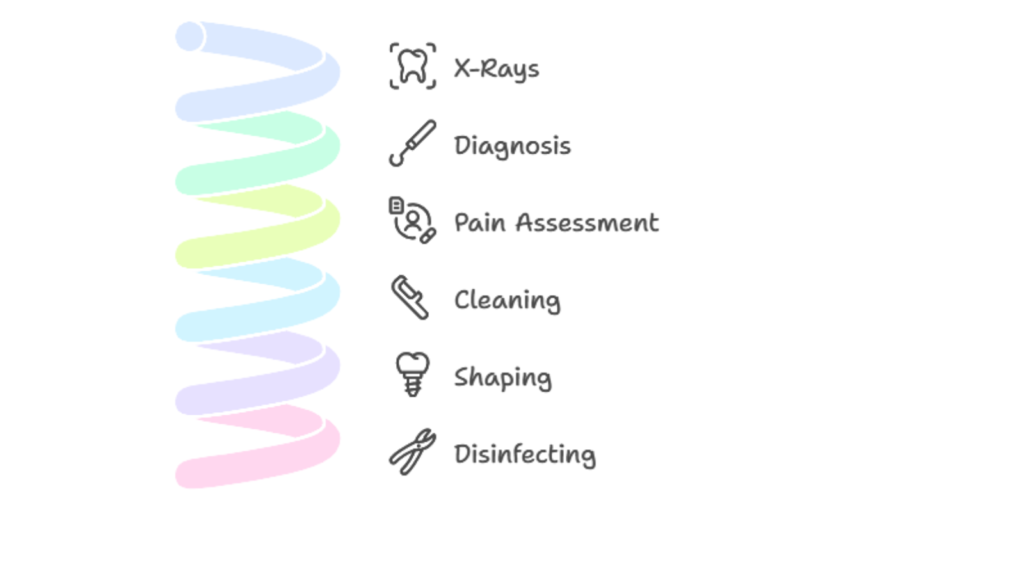
Understanding what happens during your appointment reduces anxiety and helps you prepare mentally for the experience. Root canal treatment follows a systematic approach designed to remove infection while preserving your natural tooth structure.
Before the Procedure: X-Rays, Diagnosis, and Pain Assessment
Your dentist begins by taking detailed X-rays (radiographs) to visualize the root canal anatomy, infection extent, and surrounding bone condition. These images reveal how many root canals your tooth contains, front teeth typically have 1 canal, premolars have 1 to 2 canals, and molars contain 3 to 4 canals. Complex anatomy like curved or narrow canals requires more careful treatment planning.
The dentist performs percussion testing (tapping on the tooth) and thermal testing (applying cold or heat) to confirm which tooth requires treatment and assess the severity of nerve damage. You discuss your current pain level, what triggers discomfort, and any previous dental work on the affected tooth. This assessment determines whether you need immediate treatment or if antibiotics might reduce inflammation first.
During the Procedure: Cleaning, Shaping, Disinfecting the Canal
After achieving adequate numbness, the dentist places a rubber dam, a thin latex or latex-free sheet, around your tooth to isolate it from saliva and keep it dry during treatment. This barrier prevents bacteria from your mouth from contaminating the cleaned canal system and protects you from swallowing dental materials or irrigation solutions.
The dentist creates an access opening through the top of your tooth to reach the pulp chamber. Small specialized files remove infected or inflamed pulp tissue from inside the canal system. These files come in progressively larger sizes to shape the canal walls and remove any remaining bacteria or debris.
Irrigation with sodium hypochlorite solution (similar to diluted bleach) and other antimicrobial liquids flushes out debris and kills remaining bacteria. Dentists alternate between filing and irrigation 8 to 12 times throughout the procedure. This step is critical because inadequately disinfected canals lead to treatment failure and persistent infection.
The dentist measures canal length using electronic apex locators or X-rays to ensure complete cleaning without extending beyond the tooth root tip into surrounding bone tissue. Working too short leaves infected tissue behind, while working too long can damage the bone and cause prolonged post-treatment discomfort.
Single-Visit vs Multiple-Visit Root Canals: Which Is Less Painful?

Single-visit root canal treatment completes cleaning, disinfection, and filling in one appointment lasting 60 to 90 minutes. Multiple-visit treatment spreads the procedure across 2 to 3 appointments, placing medication inside the canal between visits to further reduce bacteria.
Research shows no significant difference in post-treatment pain between single-visit and multiple-visit approaches for most cases. Single-visit treatment offers convenience and eliminates the temporary filling that sometimes leaks or falls out between appointments. Multiple-visit treatment may benefit severely infected teeth or complex anatomy cases where thorough disinfection requires additional time.
The choice depends on 3 factors: infection severity, time availability, and your dentist’s assessment of treatment complexity. Neither approach is inherently more painful than the other.
What Sensations Are Normal During Treatment (Sounds, Smells, Numbness)
You hear high-pitched drilling sounds as instruments clean the canal walls. The dental drill creates a whirring noise, while ultrasonic instruments produce a buzzing vibration. These sounds feel amplified because your tooth conducts vibrations directly to your inner ear through bone conduction.
A faint chlorine-like smell from irrigation solutions is normal and harmless. Some patients notice a metallic taste if irrigation fluid escapes around the rubber dam, though proper isolation prevents this in most cases.
Your lip, cheek, and tongue feel swollen and numb, though they maintain their normal size. This sensation lasts 2 to 4 hours after treatment and gradually fades. Numbness extending to your nose or eye area indicates the anesthetic affected nearby nerve branches. this is temporary and resolves completely as the medication wears off.
After the Root Canal: Pain, Recovery Time, and Aftercare
Post-procedure discomfort differs significantly from pre-treatment infection pain in both intensity and character. Understanding normal recovery helps you distinguish expected soreness from complications requiring professional attention.
Is Pain After a Root Canal Normal? What Most Patients Feel

Mild to moderate soreness for 2 to 7 days after treatment is normal. Patients typically describe the sensation as tenderness when biting or chewing, similar to the feeling after dental filling work. The surrounding periodontal ligament and bone tissue become irritated during instrumentation and irrigation, causing temporary inflammation.
This post-treatment discomfort measures 3 to 4 out of 10 on pain scales for most patients, significantly less than the original tooth infection pain. The soreness peaks 24 to 48 hours after your appointment and gradually decreases each day. You function normally, eat regular foods (avoiding the treated tooth initially), and return to work or school the same day or next day in most cases.
How Long Does Soreness Last After a Root Canal?
Tenderness typically resolves within 3 to 7 days for straightforward cases. Teeth with severe infections before treatment may take 10 to 14 days to settle completely. Molars with multiple canals often cause more post-treatment soreness than single-canal front teeth because treatment involves more instrumentation and tissue manipulation.
Three factors influence recovery duration: firstly, pre-treatment infection severity and duration; secondly, anatomical complexity of your root canal system; thirdly, inflammation that extended beyond the tooth root into surrounding bone before treatment. Chronic infections that developed slowly over months cause less post-treatment discomfort than acute infections with rapid-onset severe symptoms.
Best Pain Relief After a Root Canal (Safe Use of Medications)
Over-the-counter ibuprofen (400 to 600 milligrams every 6 hours) effectively manages post-root canal discomfort for most patients. Ibuprofen reduces inflammation and provides superior pain relief compared to acetaminophen alone for dental procedures. Take the medication with food to prevent stomach irritation.
Acetaminophen (paracetamol) 500 to 1000 milligrams every 6 hours offers an alternative for patients who cannot take ibuprofen due to stomach ulcers, kidney problems, or blood-thinning medication interactions. Some dentists recommend alternating ibuprofen and acetaminophen every 3 hours for severe discomfort, which provides overlapping pain relief without exceeding safe dosage limits for either medication.
Prescription pain medication is rarely necessary. Your dentist may prescribe stronger medication if you have a high pain tolerance threshold, severe pre-treatment infection, or documented sensitivity to standard pain relievers.
Apply cold packs to your cheek for 15 minutes every 2 hours during the first 24 hours to reduce swelling and numb residual discomfort. Do not use heat during the initial recovery period, as warmth increases blood flow and inflammation.
Eating, Chewing, and Returning to Work After Treatment
You resume normal eating once numbness wears off completely, typically 3 to 4 hours after your appointment. Biting your numb cheek or tongue causes painful injuries, so wait until sensation returns before consuming solid foods.
Avoid chewing directly on the treated tooth for 2 to 3 days while soreness peaks. Choose softer foods like pasta, eggs, cooked vegetables, and fish that require minimal chewing force. Avoid hard, crunchy, or sticky foods like nuts, hard bread crusts, caramel, or chewing gum that stress the temporary filling or weakened tooth structure.
Most patients return to work or regular activities the same day. Schedule afternoon appointments if you prefer having the rest of the day to relax at home, though this is not medically necessary for routine cases.
Maintain normal oral hygiene including brushing and flossing around the treated tooth. Gentle cleaning prevents plaque buildup and supports healing without disturbing the treatment site.
When Pain Isn’t Normal: Problems, Warning Signs, and Solutions
Most root canal procedures heal without complications, but certain symptoms indicate problems requiring prompt dental evaluation. Recognizing these warning signs early prevents minor issues from becoming serious infections.
Pain That Is NOT Normal After a Root Canal (Red-Flag Checklist)
Severe throbbing pain that worsens progressively after the third day signals potential complications. Normal discomfort follows a predictable pattern, worst on day 1 or 2, then steadily improving. Pain that intensifies or returns after initially improving suggests incomplete disinfection, missed canal anatomy, or developing abscess.
Swelling in your gum, cheek, or jaw area indicates infection spreading beyond the tooth root. If you develop a tooth abscess, facial swelling accompanied by fever above 38 degrees Celsius (100.4 degrees Fahrenheit), this requires immediate attention, as this combination suggests systemic infection that may need antibiotic treatment or drainage.
Persistent sensitivity when biting down after 10 to 14 days suggests the temporary filling sits too high, creating premature contact with opposing teeth. This problem causes constant trauma to the periodontal ligament surrounding your tooth root. Your dentist adjusts the filling height in minutes during a quick appointment.
Visible pus drainage from the gum near the treated tooth or a pimple-like bump on your gum tissue indicates active infection that the root canal treatment did not fully resolve. This drainage path (called a fistula) allows pus to escape rather than building pressure inside the bone, which explains why some patients feel less pain despite having ongoing infection.
Why Pain May Persist Days Later (Bite Issues, Inflammation, Missed Canals)
High temporary fillings create constant pressure every time you close your mouth or chew. The tooth receives repeated micro-trauma that prevents healing and prolongs inflammation. This mechanical irritation feels distinctly different from infection pain, it occurs specifically when teeth touch during biting or chewing and immediately reduces when you stop applying pressure.
Severe pre-treatment inflammation in the surrounding bone tissue (periapical periodontitis) requires 2 to 4 weeks to fully resolve even after successful root canal treatment. The infection is gone, but your body needs time to repair damaged bone and ligament tissue. This extended healing period is normal for teeth with large infections visible on X-rays before treatment.
Missed canal anatomy causes persistent infection despite thorough cleaning of the main canals. Some teeth contain additional small canals or branches that standard treatment does not reach. Molar teeth frequently have 4 canals, but dentists sometimes identify only 3 during initial treatment. The untreated fourth canal continues harboring bacteria, causing ongoing symptoms.
Vertical root fractures create pain that mimics infection but does not respond to root canal treatment. These cracks develop in heavily filled teeth or teeth subjected to excessive biting forces. The fracture allows bacteria to penetrate deep into the root structure where treatment cannot reach effectively.
Signs of Infection After a Root Canal You Should Never Ignore
Fever above 38 degrees Celsius (100.4 degrees Fahrenheit) combined with facial swelling indicates infection spreading into surrounding tissues. This situation requires immediate medical evaluation, especially if swelling affects your ability to swallow, breathe, or fully open your mouth.
Intense, unrelenting pain that over-the-counter medication does not touch suggests severe inflammation or abscess formation. Pain that wakes you from sleep or prevents you from concentrating on normal activities exceeds expected post-treatment discomfort.
Foul taste or odor coming from the treated tooth indicates bacterial activity inside the tooth or gum tissue surrounding it. This symptom often appears with pus drainage or gum swelling near the tooth root.
Numbness or tingling in your lip, chin, or tongue that persists beyond 8 to 12 hours after treatment suggests nerve irritation or injury. Temporary numbness from anesthesia resolves within 4 to 6 hours. Prolonged sensory changes require evaluation to determine if the inferior alveolar nerve (which provides sensation to your lower jaw) sustained trauma during treatment.
What Happens Next: Retreatment, Apicoectomy, or Extraction Explained
Root canal retreatment removes the previous filling material, re-cleans the canal system, addresses missed anatomy or persistent infection, and re-seals the tooth. Success rates for retreatment range from 70 to 80 percent, though they are lower than initial treatment (85 to 95 percent success rates). Retreatment takes longer than original treatment because removing old filling material and navigating previously shaped canals requires more technical skill.
Apicoectomy (surgical root canal treatment) involves making a small incision in your gum tissue, removing the infected root tip and surrounding tissue, and sealing the root end from the bottom. This procedure treats cases where persistent infection concentrates at the root tip despite proper nonsurgical treatment. Endodontists (root canal specialists) perform apicoectomies using microsurgical techniques and special sealing materials. Recovery involves 3 to 7 days of moderate discomfort and temporary swelling.
Tooth extraction becomes necessary when the root structure has fractured vertically, the remaining tooth structure is too weak to support a crown, or multiple treatment attempts have failed to resolve infection. While extraction immediately eliminates tooth pain, it creates long-term consequences: neighboring teeth shift position, opposing teeth drift into the extraction space, and you lose chewing function in that area. Replacing an extracted tooth with a dental implant or bridge costs significantly more than completing root canal treatment and placing a crown.
The decision between retreatment, surgery, or extraction depends on 4 factors: remaining tooth structure quality, extent of bone loss around the root, your overall health status, and cost considerations. Your dentist or endodontist evaluates these factors through clinical examination and X-rays to recommend the most predictable option for your specific situation.
Comparisons, Special Cases, Costs & Local Considerations
Understanding how root canal treatment compares to alternatives helps you make informed decisions about your dental health. Special patient populations require modified approaches to ensure safety and comfort.
Root Canal vs Tooth Extraction: Which Is More Painful Short- and Long-Term?
Extraction causes immediate pain for 3 to 7 days as the socket heals, particularly for molar teeth with multiple roots. The extraction process itself takes 10 to 30 minutes under local anesthesia with minimal discomfort, but post-extraction pain often exceeds root canal recovery discomfort. Patients rate extraction pain at 4 to 6 out of 10 during the healing period.
Long-term consequences of extraction create ongoing problems that root canal treatment avoids. Bone resorption (shrinkage) in the extraction site occurs gradually over months and years, reducing the ridge height by 40 to 60 percent in the first 3 years. This bone loss complicates future dental implant placement and affects the fit of dentures or bridges.
Adjacent teeth drift toward the extraction space over 1 to 2 years, creating gaps between teeth and bite alignment problems. These orthodontic changes may require correction with braces or clear aligners. Opposing teeth drift downward into the space, increasing mobility and periodontal disease risk.
Root canal treatment preserves your natural tooth structure, maintains proper spacing and bite alignment, and eliminates the need for tooth replacement prosthetics. The treated tooth functions normally for decades with proper restoration. Learn more about dental crown options after root canal treatment and routine dental care.
Root Canal vs Living With Tooth Infection Pain: Why Treatment Hurts Less
Untreated dental infections progress from reversible pulpitis (inflammation) to irreversible pulpitis to pulp necrosis (death) to periapical abscess formation. Each stage increases pain intensity and treatment complexity. Early-stage infections respond to simple root canal treatment completed in 60 minutes, while advanced abscesses may require multiple appointments, antibiotics, incision and drainage procedures, or surgical intervention.
Persistent infection erodes the bone surrounding your tooth root, creating cysts or granulomas that require surgical removal. These lesions rarely resolve without professional treatment because the bacteria inside your tooth’s canal system continuously reinfect the surrounding tissue.
Systemic complications from untreated dental infections include sinusitis (infection spreading to sinus cavities), cellulitis (diffuse tissue infection in your face or neck), Ludwig’s angina (life-threatening infection of the floor of the mouth), cavernous sinus thrombosis (rare but potentially fatal brain infection), and bacterial endocarditis (heart valve infection in susceptible patients). These complications require hospitalization and intravenous antibiotics.
What begins as mild sensitivity to cold evolves into constant throbbing pain that radiates along your jaw and face, disrupts sleep, and interferes with eating and concentration. Root canal treatment stops this progression and provides relief within 24 to 48 hours.
Is a Root Canal Painful for Children, Pregnant Women, or Diabetic Patients?
Children tolerate root canal treatment on permanent teeth using the same techniques as adults. Baby teeth (primary teeth) require modified pulpotomy procedures rather than full root canal treatment because their roots resorb naturally before permanent teeth emerge. Pediatric dentists use gentler anesthesia injection techniques and shorter appointment times to accommodate children’s limited patience and cooperation. For an overview of common childhood dental problems including trauma and cavities that may lead to pulp damage, it helps to understand early risk factors. Pain levels match adult experiences, minimal discomfort during treatment and mild soreness for 2 to 4 days afterward.
Pregnant women safely undergo root canal treatment during the second trimester (months 4 to 6) when anesthesia poses the lowest risk to fetal development. Dentists avoid treatment during the first trimester unless severe infection requires immediate intervention. X-rays use protective lead aprons and thyroid collars to shield the developing fetus from radiation exposure, though modern digital radiography produces 80 to 90 percent less radiation than traditional film X-rays.
Lidocaine and articaine (common dental anesthetics) are pregnancy category B medications, meaning animal studies show no fetal harm and human data are reassuring. Dentists prescribe pregnancy-safe antibiotics like amoxicillin or clindamycin if needed. Untreated dental infections during pregnancy increase risk for premature birth and low birth weight, making necessary treatment safer than delaying care.
Diabetic patients require special considerations for root canal treatment. Uncontrolled blood sugar levels (HbA1c above 8 percent) slow healing and increase infection risk. Dentists coordinate with your physician to optimize glucose control before elective procedures. Morning appointments work best because blood sugar tends to be more stable earlier in the day. Bring your glucose monitoring device and snacks to prevent hypoglycemia (low blood sugar) after treatment, especially if prolonged numbness prevents normal eating.
Diabetic patients with well-controlled blood sugar (HbA1c below 7 percent) experience similar healing outcomes and pain levels as non-diabetic patients. Prophylactic antibiotics may be prescribed for severe infections or compromised healing capacity.
What to Expect From Root Canal Treatment in Kathmandu Dental Clinics
Dental clinics in Kathmandu offer root canal treatment using modern techniques and equipment comparable to international standards. Major dental centers in areas like New Baneshwor, Durbarmarg, and Kamaladi have endodontic specialists trained in rotary instrumentation, apex locators, and digital radiography.
Treatment costs in Kathmandu range from NPR 8,000 to NPR 25,000 (approximately 60 to 190 USD) depending on tooth position, case complexity, and whether you see a general dentist or endodontist. Front teeth cost less than molars because they contain fewer canals and require simpler treatment. For a broader view of dental treatment costs in Kathmandu, including crown placement after root canal treatment which adds NPR 8,000 to NPR 30,000 depending on material selection (metal, porcelain-fused-to-metal, or all-ceramic crowns).
Check this blog to know more about crown: Veneers vs Crowns vs Composite Bonding
Leading dental clinics maintain sterilization protocols following international standards, use disposable needles and rubber dams, and provide detailed treatment explanations in both Nepali and English. Sedation options vary by facility, nitrous oxide and oral sedation are available at larger dental hospitals, though not all neighborhood clinics offer these services.
Schedule consultations at 2 to 3 different clinics to compare treatment approaches, cost estimates, and your comfort level with the dentist. Check if the clinic has in-house X-ray facilities, as this streamlines diagnosis and treatment monitoring. Ask about emergency contact availability for post-treatment concerns that arise outside regular office hours.
How painful is a root canal compared to getting a filling?
A root canal causes slightly more discomfort than a filling, rated 2 to 3 out of 10 during the procedure. Recovery lasts 3 to 7 days, longer than the 1 to 2 days after a filling. Pain before treatment is worse than either procedure.
Will I need time off work after a root canal?
Most patients return to work the same or next day after a root canal. Numbness lasts 2 to 4 hours and may affect speaking or eating. Avoid intense exercise for 24 hours to reduce swelling or bleeding.
What hurts more: the anesthetic injection or the actual root canal?
The anesthetic injection causes brief pain rated 2 to 3 out of 10, while the root canal itself is nearly painless due to anesthesia. Most patients say the injection is the most uncomfortable part of treatment.
Can I eat normally after a root canal, or will chewing be painful?
You can eat normally after the numbness wears off in 3 to 4 hours. Avoid chewing on the treated tooth for 2 to 3 days. Most patients return to normal eating within 1 week using soft foods early in recovery.
Is root canal pain worse for back teeth (molars) than front teeth?
Root canal pain is slightly worse for molars due to multiple canals and higher chewing pressure. Molars may rate 4 out of 10, while front teeth rate 2 to 3. Pain during the procedure is the same under anesthesia.
How long does the pain last after a root canal, and when should I worry?
Root canal soreness peaks in 24 to 48 hours and fades in 3 to 7 days. Severe infection may take up to 14 days. Contact your dentist if pain worsens after day 3, or if swelling, fever, or pus appear.
Does the injection hurt more when the tooth is badly infected?
Yes, infected teeth are harder to numb due to acidity, making injections more painful. Dentists use advanced techniques or prescribe antibiotics before treatment to improve anesthesia effectiveness.
Is root canal pain worse than childbirth or kidney stones?
Root canal pain under anesthesia is mild, rated 2 to 3 out of 10. Childbirth and kidney stones rate 8 to 10. The infection pain before the root canal can be severe but is less intense than kidney stones.
Can I take pain medication before my root canal appointment to make it hurt less?
Take 400 to 600 mg of ibuprofen 1 hour before your root canal to reduce inflammation and pain. Avoid aspirin before treatment, and always inform your dentist about medications to prevent interactions.
What is the most painful part of root canal recovery?
The most painful part of root canal recovery is the first 24 to 48 hours when inflammation peaks. Chewing triggers discomfort due to pressure on inflamed tissues. Pain usually decreases after day 2 or 3.