
Professional Teeth Cleaning in Kathmandu, Nepal
Fresh, healthy smiles start with gentle cleaning
A bright, healthy smile starts with clean teeth. Professional teeth cleaning removes stubborn plaque and tartar that brushing alone cannot eliminate. It protects you from cavities, gum disease, and bad breath. Our dental clinic offers comprehensive teeth cleaning services using modern ultrasonic equipment and gentle techniques to ensure your comfort and oral health.
Our experienced dental team in Kathmandu provides safe, effective care tailored to your needs. You need a routine cleaning or deep scaling. Regular professional cleaning every 6 months keeps your smile bright and your gums healthy.
FDA Approved
Award Winning
10,000+ Clients
100% Satisfaction
What are Teeth Cleaning?
Teeth cleaning, also called dental prophylaxis, is a professional procedure that removes plaque, tartar, and surface stains from your teeth. Daily brushing and flossing help maintain oral hygiene.
What are the Benefits of Teeth Cleaning?
The Benefits of Teeth Cleaning are given below:
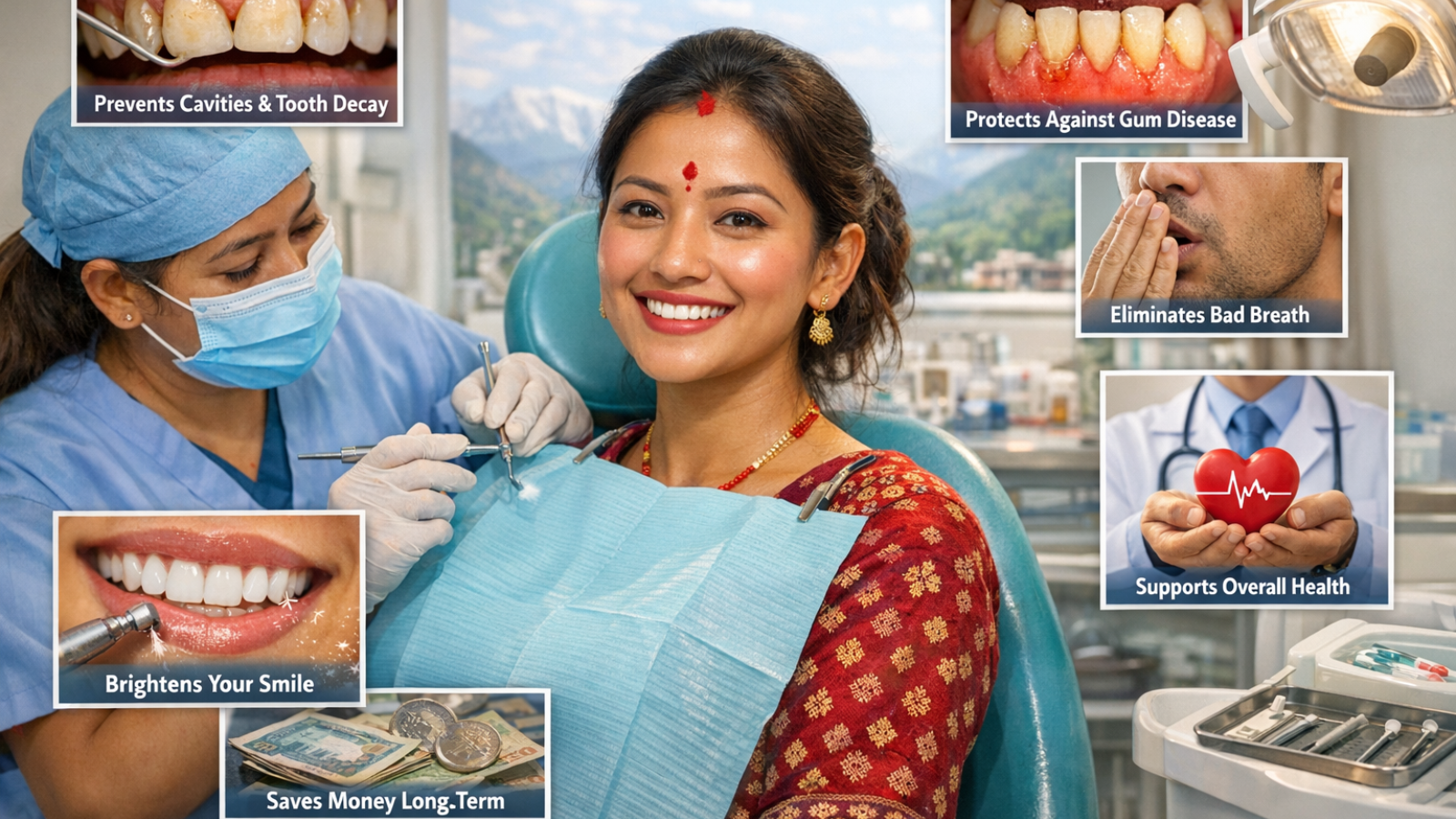
- Prevents Cavities and Tooth Decay: Professional cleaning removes the bacterial film that produces tooth-damaging acids.
- Protects Against Gum Disease: Scaling reaches deep between teeth and below the gum line where bacteria thrive.
- Eliminates Bad Breath: Bacterial buildup on teeth and gums causes most cases of halitosis.
- Brightens Your Smile: Polishing removes surface stains from coffee, tea, tobacco, and certain foods.
- Saves Money Long-Term: Preventive care costs less than treating advanced dental problems.
Teeth Cleaning Procedure: Step by Step
Here’s how we Clean your Teeth, What to Expect
1. Oral Examination and Gum Check
Your dentist or hygienist begins with a thorough examination of your teeth, gums, and mouth. They check for cavities, gum inflammation, and areas needing special attention. This assessment determines which cleaning approach suits your needs.
2. Scaling
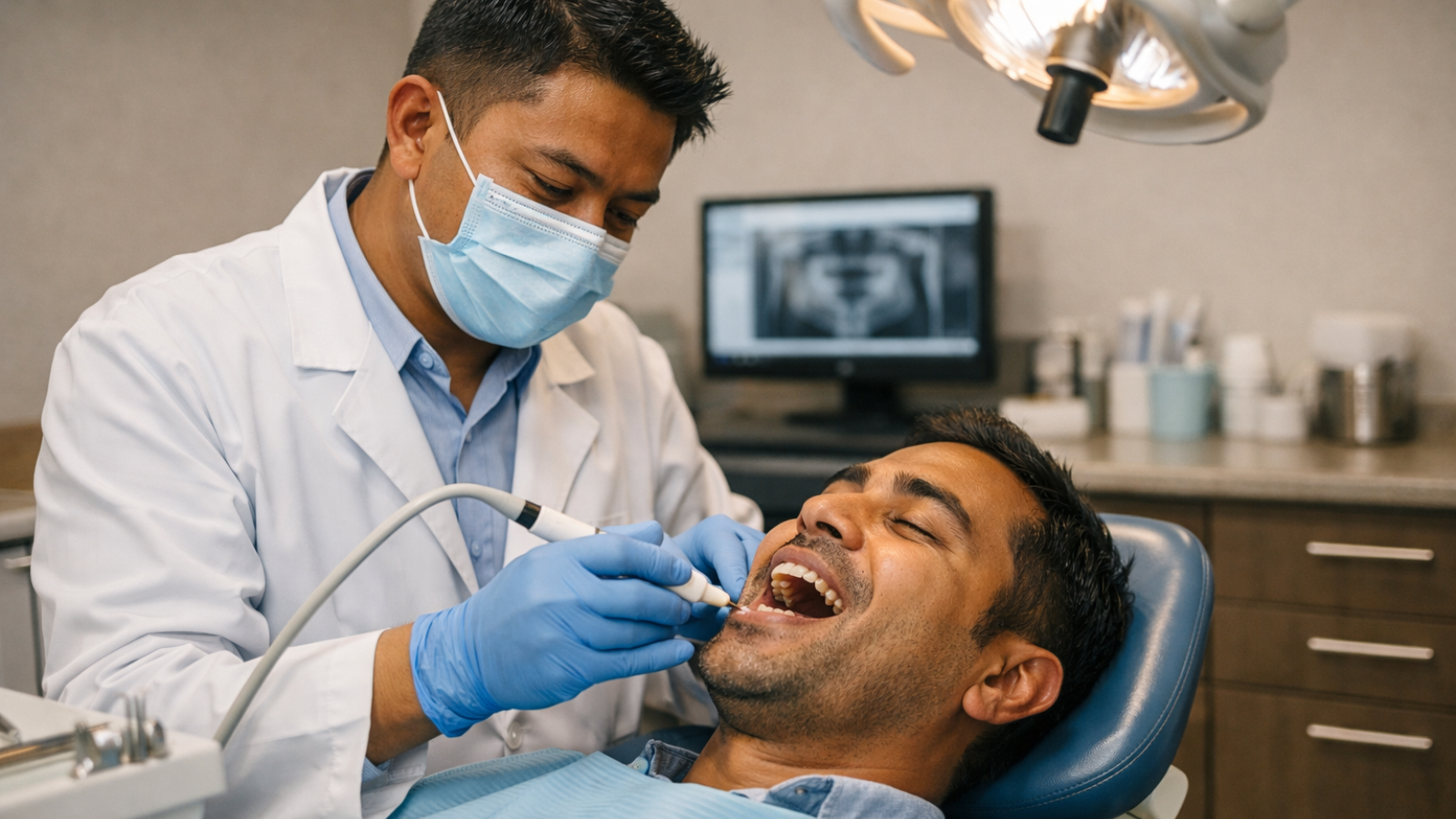
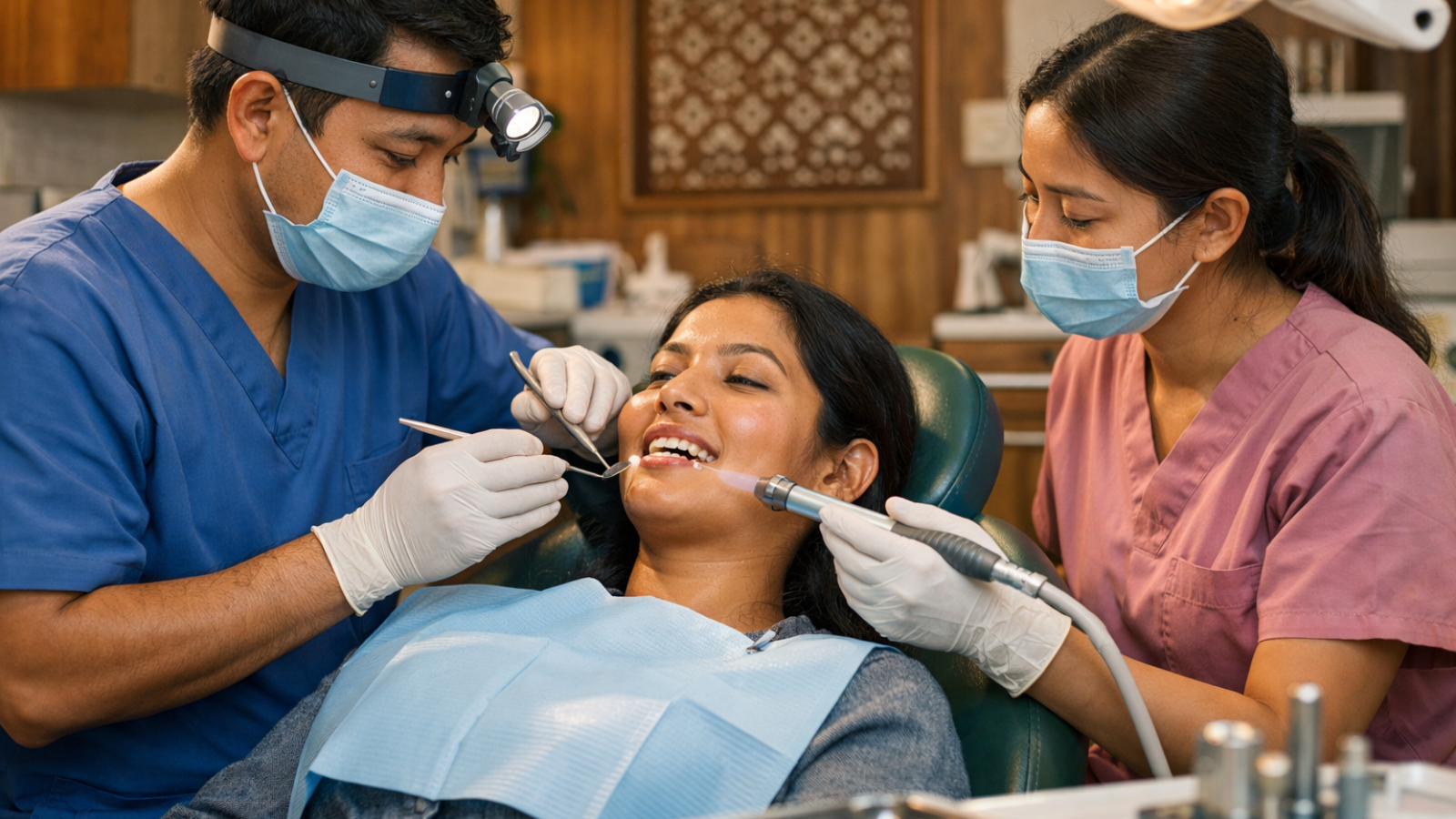
The dental professional carefully removes tartar from tooth surfaces and below the gum line. They use manual instruments or an ultrasonic scaler. You may hear scraping sounds and feel slight pressure. The process should not hurt. The ultrasonic device uses vibrations and water to break apart deposits efficiently.
3. Polishing
A gritty polishing paste and rotating brush smooth tooth surfaces and remove surface stains after scaling. This step leaves your teeth feeling clean and looking brighter. Polishing makes it harder for plaque to stick to teeth between cleanings.
4. Post-Cleaning Instructions
Your dental team explains proper brushing and flossing techniques. They may recommend products for maintaining results. They schedule your next appointment and answer any questions about aftercare.
Why Choose Us For Teeth Cleaning?
Experienced Dentists and Hygienists
Our dental team brings years of specialized training and practical experience in preventive dentistry.
Modern Equipment and Ultrasonic Tools
We invest in advanced technology. This includes ultrasonic scalers, digital imaging, and comfortable dental chairs.
Safe, Sterile Environment
Patient safety is our highest priority. We follow strict sterilization protocols. We use disposable items when appropriate.
Patient-Centered Care
We listen to your concerns, answer your questions thoroughly, and explain every procedure before we begin.
Transparent Pricing
We provide clear cost estimates before treatment begins. No hidden fees surprise you.
Proven Results
Our patients consistently report brighter smiles, fresher breath, and improved gum health after their cleaning appointments.
What Our Patients Say
Read reviews from our patients who trust us with their dental care
Real Results from Real People
See the dramatic transformation our clients experience
100%
Whiter in 1 Hour
99%
Success rate
2
Lasting Results
Frequently Asked Questions
1. Is teeth cleaning painful?
No, most patients experience little to no pain during routine cleaning. You may feel slight pressure or scraping sensations. These should not be painful. Local anesthesia ensures comfort throughout the procedure. This applies for sensitive teeth or deep cleaning.
2. How often should I get my teeth cleaned professionally?
The standard recommendation is every 6 months for patients with healthy gums. Your dentist may recommend cleanings every 3 to 4 months. This applies when you have gum disease, heavy tartar buildup, or other risk factors.
3. Will teeth cleaning damage my enamel?
No, professional cleaning performed by trained dental professionals is safe for enamel. Scaling removes tartar without harming tooth structure. Polishing uses specially formulated paste that smooths surfaces without causing damage.
4. How long does a teeth cleaning appointment take?
Routine cleaning typically takes 30 to 45 minutes. The appointment may last longer or require multiple visits to complete treatment properly. This applies when you have significant tartar buildup or need deep cleaning.
5. Can teeth cleaning remove all stains?
Professional polishing removes surface stains from coffee, tea, tobacco, and food. Deep stains within the tooth structure may require additional whitening treatments. Your dentist recommends the best approach for your specific situation.
6. What is the difference between regular cleaning and deep cleaning?
Regular cleaning addresses plaque and tartar above and slightly below the gum line in patients with healthy gums. Deep cleaning treats gum disease by removing tartar from tooth roots. It smooths root surfaces to help gums heal and reattach.
7. Is teeth cleaning covered by insurance in Nepal?
Coverage varies by insurance provider and policy. Some plans include preventive care like routine cleaning. Others may have limitations. Check with your insurance company or ask our staff about coverage before your appointment.
8. Can I eat immediately after teeth cleaning?
Yes, you eat after cleaning. It is best to wait about 30 minutes. This applies when fluoride was applied. Avoid very hot, cold, or hard foods. This applies when your teeth feel sensitive. Limit staining foods and drinks for the first 24 to 48 hours to maintain polishing results.
9. What happens when my gums bleed during or after cleaning?
Some bleeding during cleaning is normal. This applies when you have gum inflammation or have not had professional cleaning recently. Bleeding should decrease as your gums heal with improved oral hygiene. Contact your dentist. This applies when bleeding persists for several days after cleaning.
10. Are there any side effects from teeth cleaning?
Temporary tooth sensitivity to hot and cold temperatures is the most common side effect. It usually resolves within a few days. Minor gum tenderness may occur. It should improve quickly. These mild effects are normal. They indicate your teeth and gums are adjusting to their cleaner state.
Get Your Brighter Smile Today
Book your appointment or ask us anything
Location
Putalisadak, Kathmandu, Nepal
Phone
(555) 123-4567
info@brightsmile.com
Work Hours
Sun-Sat: 9AM -7PM
About BrightSmile
For over 15 years, BrightSmile has been the trusted name in professional teeth whitening. Our mission is to help people achieve the confident, radiant smile they deserve through safe, effective, and affordable treatments.
Our team of certified dental professionals uses the latest technology and FDA-approved materials to deliver exceptional results. We’ve helped over 10,000 clients transform their smiles and boost their confidence.
15+
Years Experience
10,000
Happy Clients
100%
Success Rate
Ready to Transform Your Smile?
Book your appointment today and get 20% off your first treatment!