
Stomach acid reaching your teeth causes different, and often worse, damage than the sugar and plaque we usually worry about. Acid reflux brings gastric acid (pH 1.5 to 2.0) directly onto enamel, dissolving mineral structure faster than almost any food or drink you consume. Understanding this distinction helps you protect your teeth more effectively, especially in Kathmandu where reflux cases are rising among young professionals and families dealing with dietary triggers and stress.
This guide explains the mechanisms, early warning signs, and practical steps that actually reduce erosion risk, from what to do immediately after reflux episodes to which products strengthen compromised enamel.
Acid Reflux and Enamel Erosion: The Basics You Need First
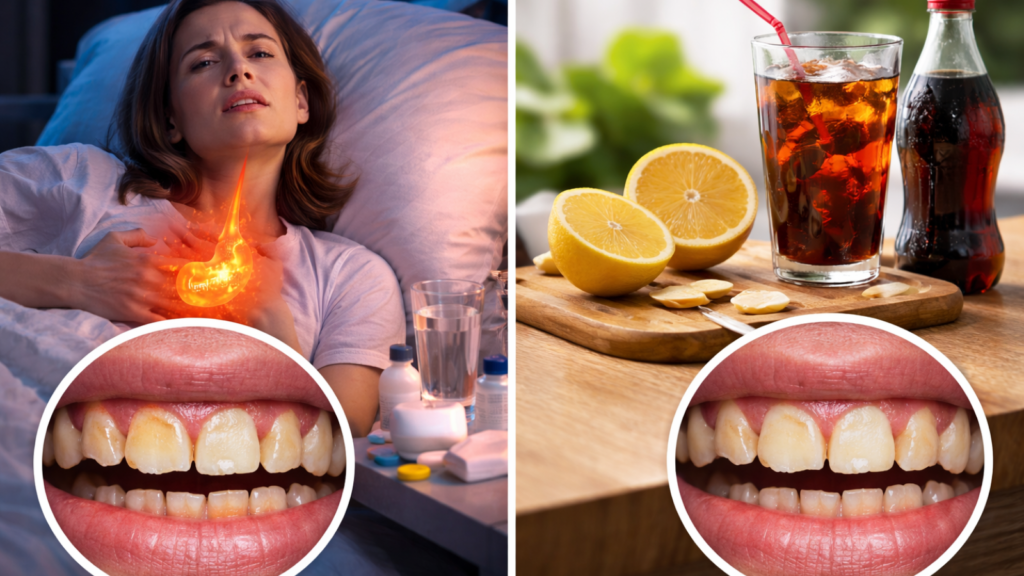
Acid reflux can repeatedly bathe your teeth in strong stomach acid, which softens enamel and starts enamel erosion over time. Unlike cavities (bacteria-driven), erosion is chemical wear, so the solutions focus on reducing acid contact and strengthening enamel. The earlier you catch it, the easier it is to stop progression and avoid major repairs.
Acid reflux vs acidic foods: why stomach acid is more damaging
Stomach acid differs fundamentally from dietary acids in concentration and exposure pattern. Gastric acid measures pH 1.5 to 2.0, strong enough to break down protein and kill bacteria. Lemon juice sits around pH 2.0 to 2.6; cola measures roughly pH 2.5. The erosive potential climbs exponentially below pH 3.0, meaning stomach acid dissolves enamel crystals substantially faster than food acids.
Reflux also strikes teeth during sleep or after meals when saliva production drops. Saliva normally buffers and dilutes acid within minutes, but reflux bypasses this protection. Repeated nighttime episodes bathe teeth in unbuffered gastric acid for extended periods, accelerating mineral loss.
Enamel erosion vs cavities: what’s different (and why treatment differs)
Enamel erosion is chemical dissolution; cavities are bacterial acid attacks localized in pits and grooves. Erosion smooths surfaces uniformly, thinning enamel across broad areas, especially on tongue-side surfaces of upper front teeth and chewing surfaces of molars. Cavities create defined holes where bacteria colonize and produce acid from fermenting sugar.
Treatment paths diverge accordingly. Cavities require drilling out infection and filling with composite or amalgam. Erosion demands stopping the acid source first, managing reflux, then rebuilding thinned enamel with bonding, veneers, or crowns depending on severity. Fluoride strengthens enamel against both threats, but erosion needs behavioral and medical intervention beyond fluoride alone.
Is enamel erosion reversible? What “irreversible” actually means
Enamel cannot regenerate once dissolved, your body does not grow new enamel cells after teeth erupt. “Irreversible” means lost enamel thickness is permanent; however, early-stage erosion (softened but not yet lost enamel) can be partially remineralized with fluoride, calcium, and phosphate ions from saliva and topical treatments.
Severe erosion exposing dentin requires restoration. Moderate erosion benefits from fluoride varnish, high-fluoride toothpaste (5,000 ppm), and controlled reflux to halt progression. The key is catching erosion early, before thinning becomes visible translucency or chipping, and stopping acid exposure immediately.
The classic reflux erosion pattern: where it shows up first on teeth
Dentists recognize a signature erosion pattern linked to reflux: smooth, shiny, thinned enamel on the tongue-side (palatal) surfaces of upper front teeth. Stomach acid pools here during sleep reflux or when lying down after meals. Chewing surfaces of upper molars also erode, developing shallow “cupped” depressions as enamel wears faster than dentin underneath.
Lower front teeth often stay protected by the tongue and saliva pooling from sublingual glands. Outer (facial) surfaces resist erosion unless you brush immediately after acid exposure, which abrades softened enamel. This distribution helps differentiate reflux erosion from dietary acid wear (which affects all surfaces more uniformly) or grinding wear (which flattens biting edges symmetrically).
Erosion vs normal wear: how dentists tell the difference
Normal aging wear flattens tips of canines and incisors gradually over decades, creating small flat spots that remain shiny and intact. Erosion thins enamel unevenly, leaving translucent edges, hollowed chewing surfaces, and visible yellowing as dentin shows through thinned enamel. Erosion also progresses rapidly, noticeable changes within months or years rather than decades.
Clinical exams combine visual inspection with history: reflux diagnosis, vomiting frequency, dietary habits, brushing timing. Dentists may photograph teeth and measure wear with scoring systems like BEWE (Basic Erosive Wear Examination) to track progression. Comparing photos every 6 to 12 months reveals whether protective measures are working or erosion continues.
Early Signs: How to Spot Reflux-Related Tooth Damage Quickly
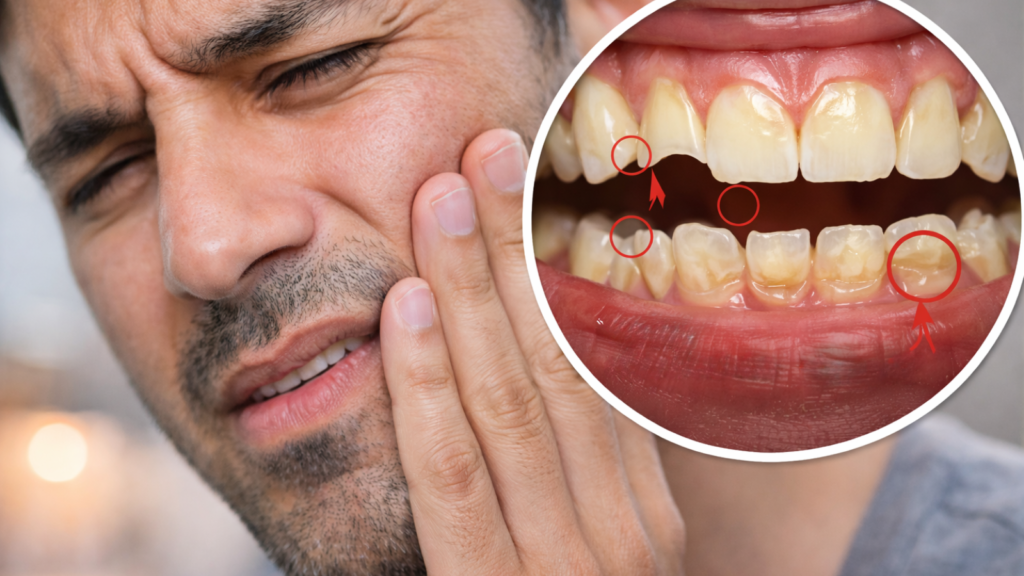
Reflux-related erosion often begins quietly, showing up as cold sensitivity, smoother “glassy” enamel, or teeth that look more yellow as enamel thins. Many people notice edges becoming slightly see-through or small “cupped” dips on chewing surfaces before pain appears. If chipping, biting pain, or sensitivity is increasing, a dental exam helps confirm whether it’s erosion and how advanced it is.
1. Sensitivity to cold/sweet/air: what it suggests and what it doesn’t
Sudden sensitivity to cold drinks, sweet foods, or air while breathing often signals enamel thinning or exposed dentin, but sensitivity alone does not confirm erosion. Cavities, gum recession, cracked teeth, and recent dental work all trigger similar discomfort, if you’re unsure of the cause, understanding the full range of reasons for sensitive teeth can help you narrow it down before your next visit.
Reflux-related sensitivity typically affects multiple upper front teeth simultaneously rather than one isolated spot. It worsens after acidic meals or morning reflux episodes. Sharp, brief pain when sipping cold water or inhaling cold air suggests exposed dentin tubules, microscopic channels connecting enamel surface to the nerve inside the tooth. Erosion thins enamel enough for temperature changes to reach these tubules.
2. Visible changes: thinning edges, translucency, yellowing, smooth “shiny” enamel
Look for these signs when examining your smile in good lighting:
- Translucent edges: Upper front teeth appear glassy or see-through at the biting edge instead of opaque white.
- Yellowing despite brushing: Dentin (naturally yellow) shows through thinned enamel, making teeth look stained even after cleaning.
- Smooth, overly shiny surfaces: Healthy enamel has subtle texture; eroded enamel looks polished and glass-like because acid has dissolved the microscopic ridges.
- Shortened teeth: Front teeth appear shorter as enamel wears, sometimes with irregular chipped edges.
3. “Cupping” and flattening on chewing surfaces: common erosion clues
Cupping describes shallow, rounded depressions forming on molar chewing surfaces. Enamel dissolves faster than the underlying dentin, creating concave areas rather than the normal peaks and valleys of healthy molars. Flattening occurs when erosion and grinding combine, wearing down cusps uniformly.
You may notice food packing into these new concavities or difficulty chewing tough foods. Cupping often develops on upper first molars, the teeth most exposed to pooled stomach acid during sleep. Dentists detect early cupping before it becomes visible to you, using angled lighting and probing.
4. Red flags that need urgent evaluation: cracks, pain on biting, frequent chipping
Seek professional evaluation immediately if you experience:
- Vertical cracks or fracture lines: Thinned enamel loses structural integrity, making teeth prone to breaking under normal chewing force.
- Sharp pain when biting: Suggests a cracked tooth or severe erosion reaching the nerve.
- Frequent chipping: Edges breaking off repeatedly indicate advanced enamel loss.
- Persistent sensitivity lasting weeks: Points to exposed dentin or pulp inflammation requiring intervention.
These symptoms often mean erosion has progressed beyond preventive care into restorative treatment territory. Delaying evaluation risks infection, tooth loss, or needing root canal therapy instead of simpler bonding or veneers.
Quick self-check: symptoms and reflux history that strongly point to erosion
Combine these observations for a high-suspicion self-assessment:
- Firstly, diagnosed GERD (Gastro-Esophageal Reflux Disease) or frequent heartburn (more than twice weekly);
- Secondly, nighttime acid taste or throat burning;
- Thirdly, visible translucency, yellowing, or smooth shiny enamel on upper front teeth.
Additional supporting signs: sensitivity to cold/sweet on multiple teeth, cupping on molars, erosion pattern matching tongue-side upper teeth. This combination warrants a dental exam within 2 to 4 weeks to establish baseline severity and start protective measures before damage accelerates.
Why It Happens: Reflux Triggers, Risk Factors, and Look-Alikes
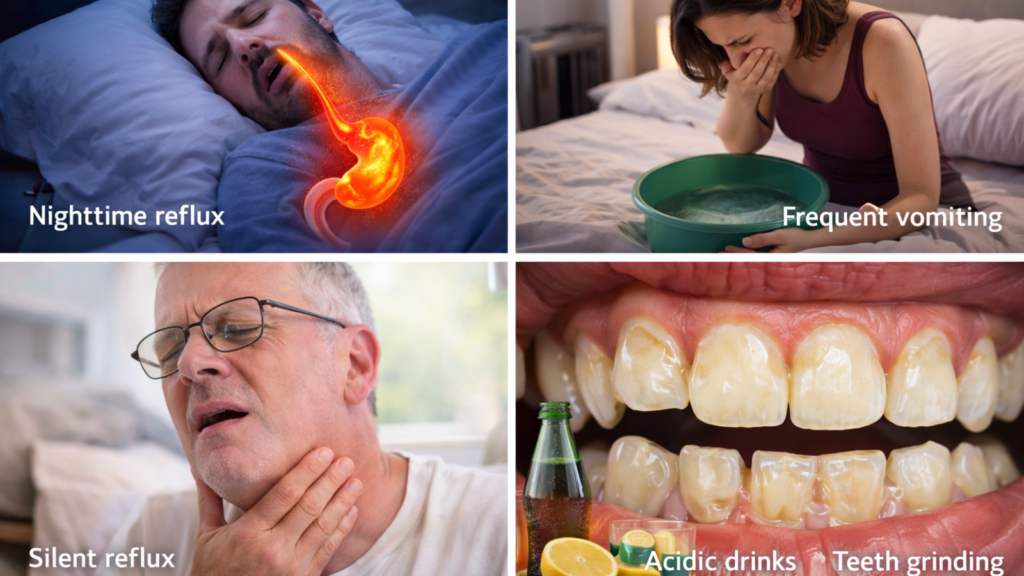
Nighttime reflux is a major risk because saliva flow drops during sleep, so acid lingers longer on teeth. Silent reflux (LPR) can damage teeth even without classic heartburn, especially if you wake with a sore throat, hoarseness, or a sour taste. Dry mouth, frequent vomiting, acidic drinks, and teeth grinding can combine with reflux to speed up enamel loss.
GERD and nighttime reflux: why sleep is the high-risk window
Nighttime reflux poses the highest erosion risk because saliva production drops by up to 90 percent during sleep, eliminating the natural buffering that protects teeth during waking hours. Lying flat allows stomach acid to flow back into the esophagus and mouth more easily than upright positions. Acid pooling on teeth for hours without dilution or neutralization dissolves enamel rapidly.
GERD affects approximately 20 percent of adults globally, with prevalence climbing in urban areas like Kathmandu due to dietary shifts toward spicy foods, late dinners, and stress-related lifestyle factors. Common triggers include fatty meals, chocolate, caffeine, alcohol, and eating within 3 hours of bedtime. Managing these triggers reduces nighttime acid exposure significantly.
Silent reflux (LPR): throat symptoms that can connect to tooth erosion
Laryngopharyngeal Reflux (LPR), commonly called silent reflux, causes throat clearing, hoarseness, chronic cough, and a sensation of a lump in the throat without classic heartburn. LPR allows gastric acid to reach the larynx, pharynx, and mouth without the person feeling typical reflux pain, making it an overlooked cause of dental erosion.
Studies show LPR patients often present with posterior tongue erosion and molar cupping before recognizing reflux symptoms. Throat symptoms combined with unexplained tooth wear should prompt evaluation for LPR through pH monitoring or laryngoscopy. Treating LPR with dietary changes, medication, and lifestyle adjustments protects both throat tissues and teeth.
Low saliva/dry mouth: why saliva is your “natural antacid”
Saliva buffers acid, provides calcium and phosphate ions for remineralization, and washes food debris and acid away from teeth. Healthy saliva maintains pH around 6.5 to 7.5; when saliva flow drops, even normal dietary acids can erode enamel because buffering capacity disappears.
Dry mouth (xerostomia) arises from medications (antihistamines, antidepressants, blood pressure drugs), dehydration, mouth breathing, diabetes, and aging. Combining dry mouth with reflux creates extreme erosion risk. Solutions include sipping water frequently, chewing sugar-free gum to stimulate saliva, using saliva substitutes, and reviewing medications with your doctor to identify alternatives with fewer dry mouth side effects.
Other intrinsic acid causes: vomiting, pregnancy nausea, eating disorders (supportive, non-judgmental)
Intrinsic acid erosion occurs when stomach acid reaches teeth from internal sources rather than diet. Beyond reflux, causes include:
Pregnancy-related nausea and vomiting: Morning sickness exposes teeth to gastric acid repeatedly during the first trimester. Hormonal changes also reduce saliva quality.
Eating disorders: Bulimia nervosa and purging behaviors cause severe, rapid erosion, often affecting inner surfaces of front teeth. Professional support addresses both health and dental damage with compassion and without judgment.
Chronic vomiting from medical conditions: Gastroparesis, cyclic vomiting syndrome, and chemotherapy-induced nausea create similar erosion patterns.
These situations require coordinated care: medical management of the underlying cause, dental monitoring every 3 to 6 months, and intensive fluoride therapy to slow erosion until vomiting resolves.
Erosion, abrasion and grinding: how brushing habits and bruxism multiply damage
Erosion softens enamel chemically; abrasion wears it mechanically through brushing; teeth grinding (bruxism) fractures and flattens it through tooth-to-tooth contact. Combining these three factors accelerates enamel loss exponentially, brushing immediately after acid exposure scrubs away softened enamel before it can reharden.
Common mistake: brushing right after vomiting or reflux to remove the acid taste. Acidic conditions demineralize enamel temporarily, lowering its hardness. Brushing during this softened state removes dissolved mineral rather than cleaning. Nighttime grinding on already-thinned enamel chips edges and deepens cupping.
Solutions: wait 30 to 60 minutes after acid exposure before brushing; rinse with water or baking soda solution immediately instead; use a soft-bristle toothbrush and low-abrasion toothpaste; wear a custom nightguard to protect teeth from grinding forces.
What Actually Helps at Home: The Action Plan (Do This, Avoid That)
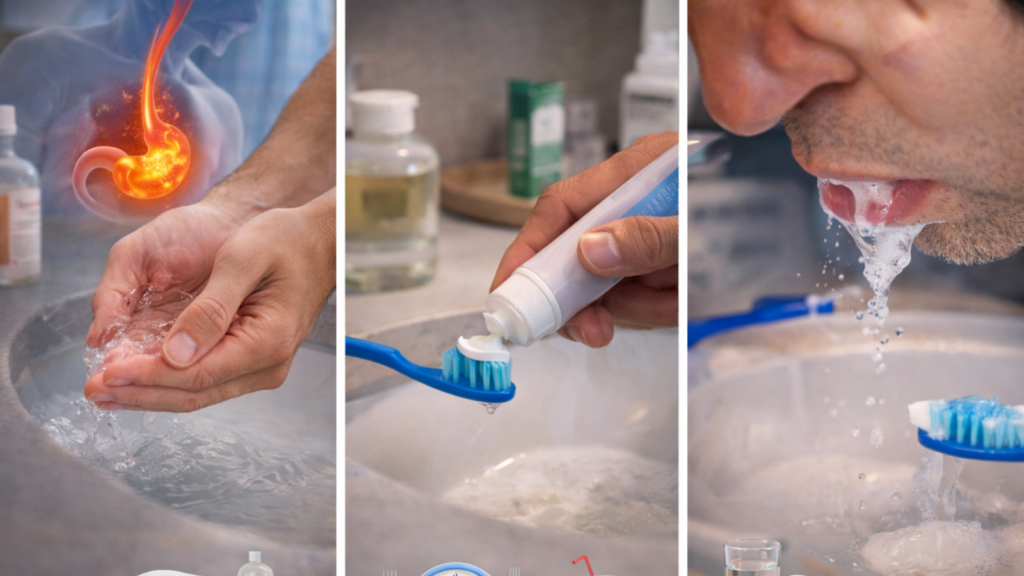
What helps most is a simple routine: rinse after reflux, avoid brushing immediately, then brush gently later with a fluoride toothpaste. Keeping fluoride on teeth (spit, don’t rinse) and choosing low-abrasion products can reduce further wear while enamel is vulnerable. Long-term improvement usually requires managing reflux triggers and timing (late meals, acidic drinks, and sleeping position).
Right after reflux/vomiting: rinse, neutralize, wait; step-by-step
Step 1 (0 to 2 minutes): Rinse vigorously with plain water to dilute and wash away stomach acid. Spit, repeat 2 to 3 times.
Step 2 (2 to 5 minutes): Rinse with a neutralizing solution, either 1 teaspoon baking soda dissolved in 250 milliliters (1 cup) of water, or alcohol-free fluoride mouthwash. Swish for 30 seconds, spit.
Step 3 (5 to 60 minutes): Wait at least 30 minutes, ideally 60 minutes, before brushing. Enamel needs time to reharden after acid softening. During this window, chew sugar-free gum to stimulate saliva or sip water.
Do not: Brush immediately (removes softened enamel), use whitening toothpaste right after (too abrasive), or consume acidic/sugary foods (prolongs acid exposure).
Brushing timing rules: how long to wait and why it matters
Enamel remineralizes partially within 30 to 60 minutes after acid exposure, regaining hardness lost during acid attack. Brushing during this softened window removes mineral crystals mechanically, deepening erosion instead of cleaning.
Best practice timing:
- Morning: brush before breakfast (especially if you drink acidic juice or coffee), or wait 30 to 60 minutes after breakfast.
- Night: brush before bed; if nighttime reflux occurs, rinse with water/baking soda solution and wait until morning to brush.
- After vomiting or reflux: rinse immediately, brush 30 to 60 minutes later minimum.
Set a phone timer after acid exposure to avoid early brushing. This single habit prevents significant preventable damage.
“Spit, don’t rinse”: keeping fluoride on enamel longer
Standard post-brushing habit, rinsing thoroughly with water, washes away fluoride before it can penetrate enamel and form protective fluoroapatite crystals. Spitting out toothpaste foam without rinsing leaves a thin fluoride film on teeth, extending contact time from 2 minutes to several hours and improving remineralization.
This technique (recommended by dental associations globally) increases fluoride uptake by approximately 25 percent compared to rinsing. It feels unusual initially but becomes routine quickly. You may taste residual toothpaste for a few minutes; this is normal and beneficial.
For children under 6 years old who might swallow toothpaste, use only a rice-grain-sized amount of fluoride toothpaste and supervise spitting. The small fluoride dose prevents dental fluorosis while still providing erosion protection.
Toothpaste choices for erosion risk: stannous fluoride, sensitivity options, low-abrasion focus
Stannous fluoride toothpaste (0.454 percent stannous fluoride, equivalent to ~1,100 ppm fluoride) forms a protective barrier on enamel and reduces sensitivity more effectively than sodium fluoride alone. Stannous ions deposit on tubule openings in exposed dentin, blocking pain signals.
Available in Kathmandu: Sensodyne Repair & Protect (stannous fluoride), Colgate Sensitive Pro-Relief (arginine technology), and Pepsodent Sensitive Expert. Avoid whitening toothpastes during active erosion, they contain higher abrasives (silica) that worsen wear on softened enamel.
High-fluoride prescription options (5,000 ppm): For severe erosion, dentists prescribe concentrated fluoride paste like Colgate PreviDent or Clinpro 5000. Use once daily at night; do not eat or drink for 30 minutes after application.
Relative Dentin Abrasivity (RDA): Choose toothpastes with RDA below 70 for erosion-prone teeth. Regular toothpastes measure 30 to 80; whitening formulas exceed 100 to 200. Check packaging or ask your dentist for low-abrasion recommendations.
Daily reflux-smart habits: meal timing, trigger foods, head elevation, hydration, sugar-free gum
Meal timing: Finish eating 3 hours before lying down. Late dinners allow partially digested food and acid to reflux when you recline. Smaller, more frequent meals reduce stomach distension that triggers reflux.
Trigger food reduction: Limit fatty foods, chocolate, caffeine, alcohol, carbonated drinks, citrus, tomatoes, and spicy dishes, common GERD triggers in Kathmandu diets. Keep a food diary to identify personal triggers.
Head elevation: Raise the head of your bed 15 to 20 centimeters (6 to 8 inches) using bed risers or a wedge pillow. Gravity reduces nighttime reflux. Do not simply stack pillows, this bends the body and can worsen reflux.
Hydration: Drink water throughout the day to maintain saliva production. Avoid large volumes immediately before bed. Room-temperature water works better than ice-cold for reflux patients.
Sugar-free gum: Chewing gum (especially after meals) stimulates saliva flow, which neutralizes acid and washes reflux residue from teeth. Choose xylitol-based gum when possible, xylitol reduces cavity-causing bacteria while stimulating saliva.
Dental Clinic in Kathmandu: Diagnosis, Monitoring, and Repair Options
In a Kathmandu dental clinic visit, your dentist can map the wear pattern, assess risk factors, and track severity over time with photos or scoring methods. Protective care may include fluoride varnish or desensitizers, plus guidance on home protection that matches your erosion level. If damage is advanced, options like bonding, veneers, or crowns may be planned, ideally after reflux is better controlled so restorations last longer. For patients looking for a trusted dental in Kathmandu that handles erosion cases alongside general care, BrightSmile Dental Clinic offers comprehensive assessments tailored to your risk level.
What to expect in an exam: photos, wear mapping, saliva risk review, reflux history checklist
A comprehensive erosion evaluation at BrightSmile Dental Clinic in Putalisadak includes standardized photographs documenting current wear patterns, detailed charting of affected surfaces, saliva flow and pH testing, and a structured reflux history questionnaire. If you’re unfamiliar with what a full dental checkup typically covers, that guide explains what to expect before your first visit. Photographs provide baseline comparison for future visits, making subtle progression visible before you notice changes.
Saliva testing measures unstimulated and stimulated flow rates (normal: 1.0 to 2.0 milliliters per minute stimulated) and resting pH. Low flow or acidic pH (below 6.5) increases erosion vulnerability even with controlled reflux. The reflux checklist covers GERD diagnosis, medication use, symptom frequency, timing (daytime vs nighttime), and dietary habits.
This data creates a personalized risk profile guiding prevention intensity, from standard fluoride toothpaste for low-risk patients to prescription-strength fluoride, frequent monitoring, and restorative planning for high-risk cases.
How erosion severity is tracked: BEWE scoring and monitoring over time
The Basic Erosive Wear Examination (BEWE) system scores erosion severity on a 0 to 3 scale per tooth:
0: No erosive wear.
1: Initial loss of surface texture (hard to detect without magnification).
2: Distinct defect; hard tissue loss less than 50 percent of surface area.
3: Hard tissue loss 50 percent or more of surface area.
Dentists sum scores across six mouth sections to calculate a cumulative BEWE score (0 to 18 maximum), which determines management level:
0 to 2 (low risk): Routine monitoring at regular check-ups; preventive advice.
3 to 8 (medium risk): Monitoring every 6 to 12 months; photographs; identify and control acid sources; fluoride varnish application.
9+ (high risk): Monitoring every 3 to 6 months; intensive prevention (high-fluoride products, diet counseling, medical referral); consider restorative protection for at-risk teeth.
Serial BEWE scoring tracks whether interventions halt progression or if erosion continues despite treatment adjustments.
Prevention in-clinic: fluoride varnish/desensitizers and who may need stronger fluoride
Fluoride varnish (22,600 ppm fluoride) applied professionally every 3 to 6 months deposits a high-concentration fluoride reservoir on enamel, slowly releasing ions over weeks. Varnish treats sensitivity immediately and strengthens enamel against future acid attacks. Application takes 5 minutes; avoid eating hard foods for 4 hours afterward.
Desensitizing agents (glutaraldehyde-based or resin sealants) block exposed dentin tubules mechanically, providing instant relief from cold and sweet sensitivity. Effectiveness lasts 3 to 12 months depending on product and acid exposure level.
Prescription-strength fluoride (5,000 ppm toothpaste or gel) benefits patients with:
- Moderate to severe erosion (BEWE 2 to 3 scores)
- Continuing acid exposure despite treatment (uncontrolled GERD, ongoing eating disorder treatment)
- Low saliva flow
- Rapid erosion progression documented over 6 to 12 months
Use high-fluoride products once daily at night; expectorate excess but do not rinse or eat/drink for 30 minutes.
Restoring eroded teeth: bonding vs veneers vs crowns (how dentists choose)
Composite bonding rebuilds lost enamel on front teeth with tooth-colored resin applied directly to the tooth surface. Bonding preserves maximum natural tooth structure, requires no or minimal drilling, and costs less than veneers or crowns. It suits mild to moderate erosion affecting biting edges and palatal surfaces. Bonding lasts 5 to 7 years on average; may stain or chip with heavy use.
Veneers (porcelain or composite) cover the entire front surface of teeth with thin shells, restoring shape, color, and strength. Veneers require removing 0.5 to 1.0 millimeters of enamel to create space; they suit moderate to severe erosion with visible yellowing or translucency. Porcelain veneers last 10 to 15 years with proper care. Cost in Kathmandu ranges from NPR 15,000 to NPR 35,000 per tooth depending on material and laboratory.
Crowns cap the entire tooth, protecting severely eroded teeth with less than 50 percent remaining enamel or teeth with cracks and fractures. Crowns restore full chewing function and prevent further breakdown. They require more tooth reduction than veneers but provide maximum protection. Lifespan exceeds 15 years; cost ranges from NPR 8,000 to NPR 25,000 per tooth in Kathmandu depending on material (metal, porcelain-fused-to-metal, all-ceramic).
Selection criteria: Dentists choose based on remaining enamel thickness, location (front vs back teeth), bite forces, aesthetic goals, and budget. Severely eroded teeth often need crowns for structural integrity; mildly affected front teeth achieve excellent results with bonding alone.
The right sequence: control reflux first, then restore, and how to maintain results long-term
Restoring eroded teeth before controlling the acid source wastes time and money, new restorations erode just as quickly as natural enamel under continued acid exposure. The correct sequence involves three phases:
Phase 1 (Stabilization, 3 to 6 months): Work with a gastroenterologist or general physician to manage GERD through medication (proton pump inhibitors or H2 blockers), dietary changes, and lifestyle modifications. Dental treatment during this phase focuses on fluoride therapy, sensitivity management, and monitoring erosion progression. Goal: halt or significantly slow enamel loss before investing in restorations.
Phase 2 (Restoration, 1 to 6 months): Once acid exposure is controlled, confirmed by BEWE scores stabilizing over 6 months and symptom reduction, proceed with bonding, veneers, or crowns as needed. Stagger treatment across multiple visits to manage cost and recovery. Restorations placed during active erosion fail prematurely.
Phase 3 (Maintenance, lifelong): Continue reflux management, use fluoride toothpaste daily, rinse after any acid exposure, avoid brushing immediately after reflux, and schedule dental monitoring every 6 months. Photograph-based tracking confirms restorations remain intact and no new erosion develops. Replace or repair restorations as needed, bonding may need touch-ups every 5 to 7 years; veneers and crowns last longer but still require eventual replacement.
Early detection and consistent protection make the difference between minor bonding repairs and extensive crown work. Reflux-related erosion progresses silently until damage becomes visible; by then, significant enamel is already lost. Regular dental exams catch erosion early, and combining medical reflux control with dental prevention stops progression effectively.
At BrightSmile Dental Clinic in Putalisadak, we provide comprehensive erosion assessments, transparent pricing (exam, baseline photos and fluoride varnish starting from NPR 3,500), and coordinated care plans linking dental protection with medical reflux management. Contact us at +977-9748343015 or brightsmileclinic33@gmail.com to schedule an evaluation and protect your smile before erosion advances.
Can acid reflux damage teeth even if I don’t feel heartburn?
Yes, acid reflux can damage teeth even without heartburn. Silent reflux (LPR) allows acid to reach the mouth without chest symptoms. Early signs may include enamel erosion, hoarseness, or a sour taste. Dentists often detect tooth wear from reflux before patients report digestive discomfort.
How long should I wait to brush after a reflux episode or vomiting?
Wait 30–60 minutes after reflux or vomiting before brushing to avoid enamel damage. Rinse with water first and let saliva neutralize acid. Your dentist can adjust timing based on erosion severity.
What should I do immediately after reflux to protect my teeth?
Rinse with water after reflux to dilute acid. Use baking soda rinse if tolerated. Avoid brushing or acidic drinks immediately. After 30–60 minutes, brush gently with fluoride toothpaste.
Can enamel grow back once it’s eroded?
Enamel does not grow back once eroded. Focus on stopping further loss and protecting exposed dentin. Use fluoride and remineralizing agents to strengthen remaining enamel. For severe erosion, restorative dentistry restores shape and function.
What toothpaste is best for enamel erosion from reflux?
Use fluoride toothpaste designed for sensitivity or enamel protection. Choose less abrasive options to reduce erosion and brushing wear. Consistency matters more than special claims. For severe erosion, ask your dentist about stronger fluoride products.
Does mouthwash help with reflux-related erosion?
Mouthwash does not fix erosion but can help with fluoride support. Avoid acidic types. Use fluoride rinses if recommended. Ask your dentist for suitable options and timing.
Should I rinse after brushing, or keep the toothpaste on?
Spit but don’t rinse after brushing to keep fluoride on teeth longer. This helps fluoride bind to enamel. Use minimal water if needed. Prioritize fluoride contact time, especially before sleep.
Is teeth whitening safe if I have enamel erosion?
Whitening may worsen sensitivity with enamel erosion. Acidic or abrasive products increase risk. Stabilize enamel first. Ask your dentist before whitening.
Can a night guard help if reflux is causing tooth wear?
A night guard protects teeth if grinding worsens reflux damage. It doesn’t stop acid but limits wear from clenching. Custom guards fit better than OTC options. Ask your dentist if a guard is needed.
When should I see a doctor (not just a dentist) for reflux-related tooth erosion?
See a doctor if reflux is frequent, disrupts sleep, or persists despite changes. Seek urgent care for swallowing issues, weight loss, or vomiting blood. Dentists protect teeth, but doctors manage reflux. Coordinated care improves long-term outcomes.