
Choosing braces in Kathmandu means balancing cost, appearance, treatment time, and your daily routine. Braces in Kathmandu typically range from NPR 40,000 to NPR 250,000 depending on the type you choose, case complexity, and what your clinic includes in the package. Metal braces sit at the lower end, ceramic and Damon braces fall in the middle, and clear aligners occupy the premium tier. The price you pay also depends on whether records, retainers, and emergency visits are included or billed separately.
This guide breaks down the real costs of each braces type in Kathmandu, explains what drives the final bill, and helps you decide which option fits your budget and lifestyle without compromising quality.
Braces Cost in Kathmandu
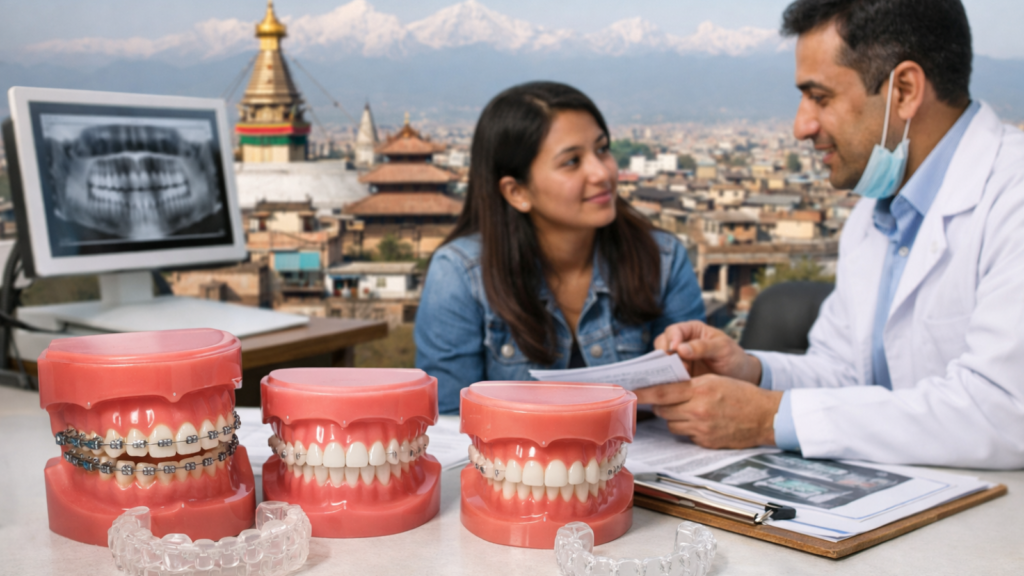
Braces in Kathmandu range from NPR 40,000 for basic metal braces to NPR 250,000 for comprehensive clear aligner treatments, with ceramic and Damon options falling in between. Your final cost depends on case complexity, treatment duration, and whether your clinic bundles essential items like diagnostic records, retainers, and emergency visits into the package. Understanding these price tiers and what drives them helps you choose an option that fits your budget without sacrificing quality or extending treatment time unnecessarily.
Typical Price Ranges in Kathmandu (Metal vs Ceramic vs Damon vs Clear Aligners)
- Metal braces in Kathmandu cost between NPR 40,000 and NPR 80,000 for most cases. They remain the most affordable option and work for nearly all bite and crowding issues.
- Ceramic braces range from NPR 60,000 to NPR 120,000. You pay more for tooth-colored brackets that blend with your smile, but they require extra care to avoid staining and breakage.
- Damon (self-ligating) braces typically cost NPR 80,000 to NPR 150,000. The price reflects specialized brackets that reduce friction and may shorten appointment times, though treatment duration often stays similar to metal braces.
- Clear aligners in Kathmandu start around NPR 120,000 and can reach NPR 250,000 or more depending on how many trays your case requires. Simple cases may use 15 to 20 aligners, while complex bite corrections can need 40 or more, plus refinement trays.
Comparison Table
| Type | Best For | Visibility | Typical Duration | Typical Range (NPR) | Common Add-On Costs |
| Metal Braces | All cases, budget-conscious patients, severe crowding | Highly visible (silver brackets) | 18 to 24 months | 40,000 – 80,000 | Records (3,000–5,000), retainers (8,000–15,000), emergency repairs |
| Ceramic Braces | Patients wanting less visible braces, mild to moderate cases | Less visible (tooth-colored brackets) | 18 to 30 months | 60,000 – 120,000 | Same as metal, plus higher breakage risk and staining maintenance |
| Damon / Self-Ligating | Patients seeking fewer adjustments, adults with time constraints | Moderately visible (smaller brackets) | 18 to 24 months | 80,000 – 150,000 | Records, retainers, refinement wires |
| Clear Aligners | Mild to moderate crowding, adults prioritizing aesthetics and flexibility | Nearly invisible (removable trays) | 12 to 24 months | 120,000 – 250,000+ | Additional trays for refinements, replacement trays for lost/damaged sets |
Why Online “Starting Prices” Vary So Much (Clinic, Case, Inclusions)
Clinics advertise “starting from” prices to attract inquiries, but your final cost depends on 3 factors: firstly, case complexity (simple spacing vs severe overbite); secondly, what the package includes (some clinics bundle records and retainers, others bill them separately); thirdly, the clinic’s overhead and expertise level (orthodontist-led practices often charge more than general dentists offering braces).
A clinic advertising metal braces “from NPR 40,000” may exclude diagnostic records (NPR 3,000 to 5,000), extractions (NPR 2,000 to 4,000 per tooth), and retainers (NPR 8,000 to 15,000). Your actual total could reach NPR 55,000 to 70,000 once you add these essentials.
Clear aligner quotes vary even more. Mild crowding may need only 15 trays, costing around NPR 120,000. Moderate bite issues might require 30 trays plus refinements, pushing the cost to NPR 180,000 or higher. Always ask for a written treatment plan with tray estimates before committing.
Which Option Fits Your Budget and Lifestyle
- Choose metal braces when you prioritize affordability and need to treat complex crowding or bite issues. They work for all cases and cost the least, but they’re visible and require careful hygiene.
- Choose ceramic braces when you want a less noticeable option and can commit to avoiding staining foods and drinks. You’ll pay NPR 20,000 to 40,000 more than metal, and breakage may increase your emergency visit costs.
- Choose Damon braces when you value shorter appointment times and have a flexible budget. Treatment duration often matches metal braces, so don’t expect dramatically faster results despite marketing claims.
- Choose clear aligners when you have mild to moderate crowding, want near-invisible treatment, and can discipline yourself to wear trays 22 hours daily. Budget for the higher upfront cost and potential refinement fees.
What’s Included in Braces Cost (and What Clinics Often Charge Extra For)
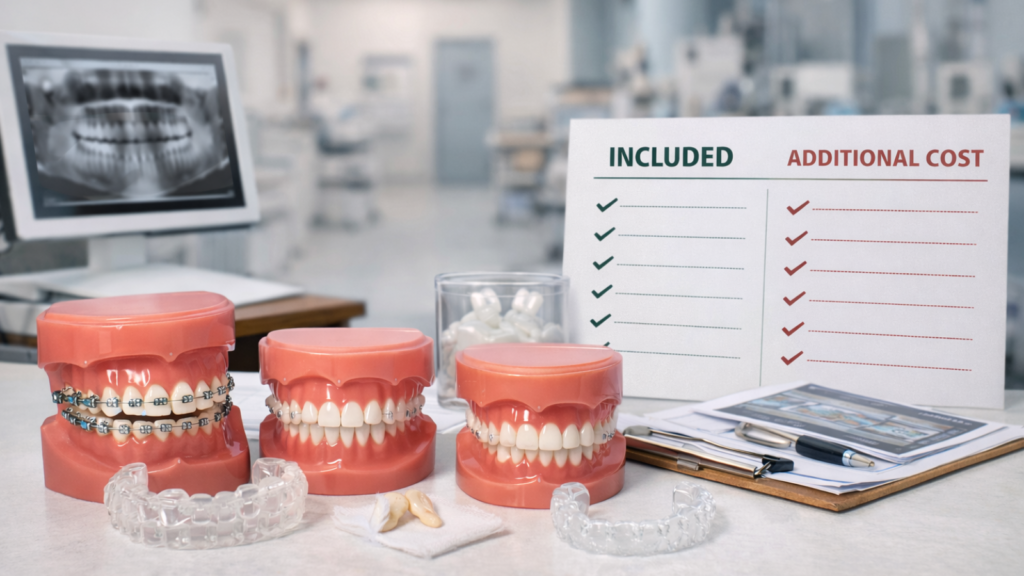
Most braces packages in Kathmandu include the brackets or aligner trays, bonding appointments, and monthly adjustment visits throughout treatment, but essential items like diagnostic records, X-rays, tooth extractions, and retainers often appear as separate charges. Clinics bundle these costs differently, some advertise low starting prices and bill nearly everything extra, while others offer transparent all-inclusive packages that prevent surprise fees mid-treatment. Understanding which items come standard and which carry additional charges (typically NPR 3,000 to 15,000 per item) helps you compare clinic quotes accurately and budget for the true total cost.
What’s Commonly Included (Brackets/Trays, Routine Adjustments, Standard Visits)
Most braces packages in Kathmandu include the brackets or aligner trays, bonding or fitting appointments, and monthly adjustment visits for the treatment duration. Ceramic and Damon packages typically include the specialized brackets in the quoted price.
Clear aligner packages usually cover the initial set of trays based on your treatment plan. Some clinics include up to 2 or 3 refinement rounds (additional trays after your main set finishes) in their base price.
Standard adjustment visits happen every 4 to 6 weeks for metal, ceramic, and Damon braces. These appointments check wire progress, replace elastics, and address discomfort. Clear aligner patients typically visit every 6 to 8 weeks for progress checks and new tray delivery.
Costs That Are Often Billed Separately (Records, X-Rays, Extractions, Appliances)
Diagnostic records include photos, X-rays (panoramic and cephalometric), and dental impressions or scans. Clinics charge NPR 3,000 to 5,000 for these records, and you need them before treatment starts. To understand what a full dental checkup costs in Kathmandu and what it typically covers, it helps to review these fees before comparing clinic quotes.
Tooth extractions cost NPR 2,000 to 4,000 per tooth. You may need extractions when your jaw lacks space for proper alignment. Some cases require removing 2 to 4 premolars, adding NPR 8,000 to 16,000 to your total.
Additional appliances such as palatal expanders, temporary anchorage devices (TADs), or elastics for bite correction can add NPR 5,000 to 20,000 depending on complexity. These devices address specific bite issues that braces alone cannot fix.
Emergency Visits & Breakages: How They Affect Total Cost
Bracket breakages happen more often with ceramic braces because the material is more brittle than metal. Replacing a broken ceramic bracket costs NPR 1,500 to 3,000 per bracket. Metal bracket replacements typically cost NPR 800 to 1,500.
Wire poking or loose bands require emergency visits. Clinics may charge NPR 500 to 1,500 per emergency appointment if it’s outside your scheduled adjustment. Avoid hard foods (nuts, ice, hard candy) and sticky items (caramel, chewing gum) to minimize breakages.
Clear aligner patients who lose or damage trays need replacements. Clinics charge NPR 3,000 to 6,000 per replacement tray, and you may wait 1 to 2 weeks for fabrication.
Retainers: The “Final Cost” Many Patients Forget (Include Types and Replacement)
Retainers are mandatory after braces or aligners finish. Without them, your teeth will shift back toward their original positions within months.
Fixed retainers (bonded wire behind your front teeth) cost NPR 8,000 to 12,000 and last 3 to 5 years before requiring rebonding. They stay in place permanently, preventing front teeth from crowding.
Removable retainers (clear plastic or Hawley-style wire) cost NPR 10,000 to 15,000 per set. You’ll wear them nightly for at least 1 year, then a few nights weekly indefinitely. Replacements cost the same if lost or warped, and most patients need at least one replacement every 2 to 3 years.
Payment Plans in Kathmandu: Deposit and Monthly Installments (Example Breakdown)
Most Kathmandu clinics offer payment plans to spread the cost over your treatment duration. A typical plan requires 30 to 40 percent upfront, with the balance split into monthly installments.
Example for metal braces (NPR 60,000 total): Pay NPR 20,000 deposit on bonding day, then NPR 2,000 to 2,500 monthly for 18 months. This matches your adjustment schedule and avoids interest if you stay current.
Example for clear aligners (NPR 180,000 total): Pay NPR 60,000 to 70,000 upfront, then NPR 6,000 to 7,000 monthly for 18 months. Some clinics adjust monthly amounts based on tray delivery milestones rather than calendar months.
Always confirm whether your plan includes emergency visits, retainers, and refinements, or if those come due as separate charges.
Metal Braces Cost in Kathmandu: Most Affordable, Most Versatile
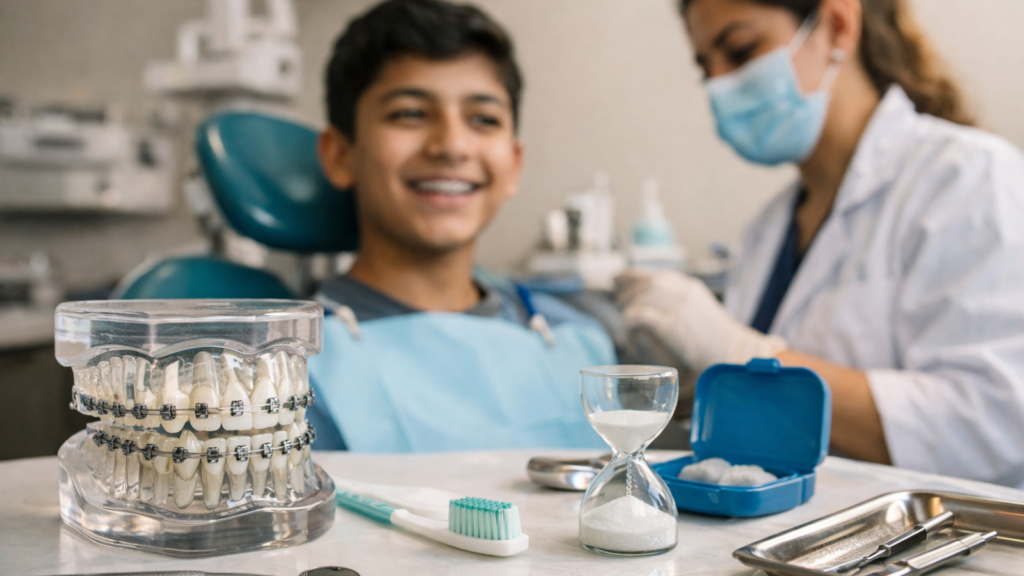
Metal braces cost NPR 40,000 to NPR 80,000 in Kathmandu and work for every orthodontic case from simple spacing to severe bite corrections, making them the most cost-effective and reliable choice for teenagers and budget-conscious adults. Treatment typically lasts 18 to 24 months, though missed appointments, poor hygiene causing cavities, or frequent bracket breakages from hard foods can extend timelines by several months. You’ll experience soreness for 3 to 5 days after each adjustment and need to invest extra time in hygiene routines, but choosing an orthodontist-supervised clinic and maintaining excellent oral care delivers proven results without compromising quality.
Metal Braces Price Range and Who They’re Best For
Metal braces in Kathmandu cost NPR 40,000 to 80,000 depending on case complexity and clinic location. Simple spacing or mild crowding falls at the lower end, while severe overbite or underbite with extractions pushes toward NPR 70,000 to 80,000.
They work for all orthodontic cases: crowding, spacing, overbite, underbite, crossbite, and open bite. Metal braces deliver the most force, making them the go-to choice for complex bite corrections that ceramic or aligners struggle to manage.
Teenagers and budget-conscious adults benefit most from metal braces. You get proven results at the lowest cost, and modern brackets are smaller and more comfortable than older designs.
Expected Treatment Duration with Metal Braces (What Makes It Longer/Shorter)
Treatment typically lasts 18 to 24 months for moderate crowding or spacing. Simple cases may finish in 12 to 15 months, while severe bite issues with extractions can extend to 30 months.
Four factors extend treatment time: firstly, missed adjustment appointments delay progress because wires lose effectiveness between scheduled changes; secondly, poor oral hygiene causing cavities forces pauses for fillings; thirdly, frequent bracket breakages from hard foods slow the process; fourthly, complex bite corrections requiring multiple wire phases and elastics.
You can shorten treatment slightly by attending every adjustment on time, avoiding foods that cause breakages, and wearing elastics exactly as prescribed. Elastics work only when worn 22 hours daily, part-time use adds months to your timeline.
Comfort and Maintenance: Pain, Sores, Breakage, and Hygiene Tips
Expect soreness for 3 to 5 days after each adjustment when the orthodontist changes wires or tightens them. Over-the-counter pain relievers and soft foods help manage discomfort. Soreness decreases over time as your teeth adapt.
Brackets and wires rub against cheeks and lips during the first 2 weeks. Orthodontic wax applied over sharp areas prevents sores until your mouth tissue toughens. Sores heal within 5 to 7 days once your mouth adjusts.
Hygiene becomes more time-consuming with metal braces. You need to brush after every meal using a soft-bristle brush and interdental brushes to clean around brackets. Floss threaders help you floss between teeth despite the wire. Poor hygiene leads to white spot lesions (permanent stains) around brackets that remain visible after braces come off.
Cost-Saving Tips That Don’t Compromise Quality (What to Do, What to Avoid)
Choose an orthodontist-supervised clinic rather than a general dentist offering braces. Orthodontists complete 2 to 3 years of specialized training beyond dental school, reducing the risk of mistakes that extend treatment or damage roots.
Ask if records, retainers, and emergency visits are included before signing. Clinics that bundle these items offer better value than “low starting price” quotes that bill everything separately.
Avoid clinics advertising metal braces for NPR 30,000 or less unless you verify credentials and read patient reviews. Extremely low prices often signal inexperienced practitioners or hidden fees that surface mid-treatment.
Maintain excellent hygiene to avoid cavities and decay mid-treatment and gum disease. Treating decay or inflammation requires removing braces temporarily, adding months and costs.
Ceramic Braces Cost in Kathmandu: More Aesthetic, Different Trade-Offs
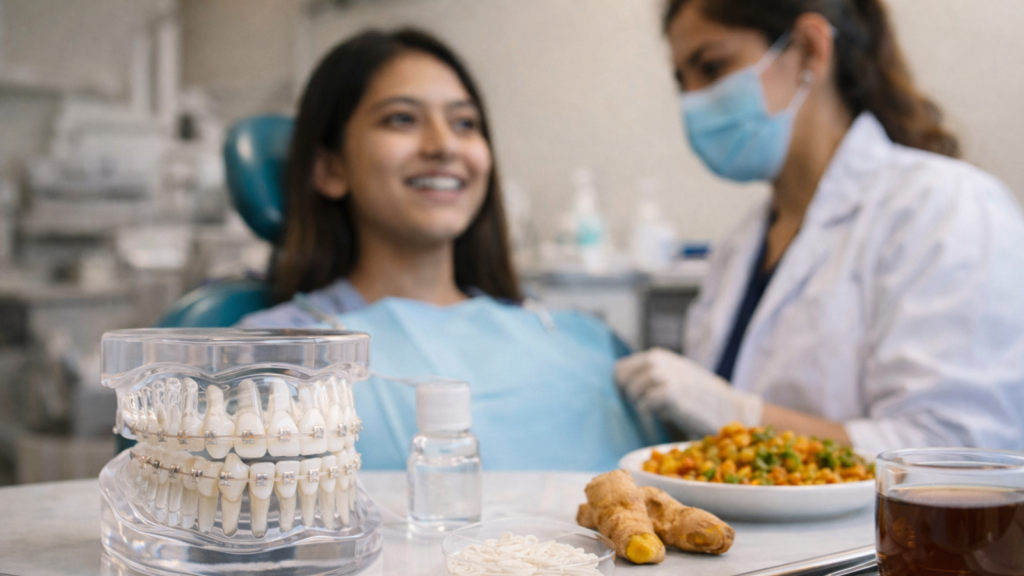
Ceramic braces range from NPR 60,000 to NPR 120,000 in Kathmandu, approximately NPR 20,000 to NPR 40,000 more than metal, because tooth-colored brackets blend with your smile but require more expensive materials and carry higher breakage risks. The elastic ties holding wires stain quickly from tea, coffee, curry, and turmeric-heavy foods, requiring replacements at each adjustment and demanding strict dietary discipline to maintain their discreet appearance. Choose ceramic braces when aesthetics matter significantly and you can commit to avoiding hard and sticky foods, but skip them when budget is tight or your case involves severe bite correction requiring forces that brittle ceramic brackets may not withstand.
Ceramic Braces Price Range and Why They Cost More Than Metal
Ceramic braces in Kathmandu range from NPR 60,000 to NPR 120,000, approximately NPR 20,000 to 40,000 more than metal braces for the same case complexity. You pay extra for tooth-colored or clear brackets that blend with your smile.
The higher cost reflects more expensive materials and increased breakage risk. Ceramic is more brittle than stainless steel, so clinics factor in replacement bracket costs. Manufacturing also costs more because ceramic brackets require precision molding.
Some clinics charge extra for ceramic brackets only on upper front teeth (NPR 15,000 to 25,000 additional) while using metal on lower teeth and back molars. This hybrid approach saves money while keeping your most visible teeth discreet.
Ceramic vs Metal: Appearance vs Durability vs Maintenance
Ceramic brackets blend with tooth enamel, making braces far less noticeable from a conversational distance. They appeal to adults and image-conscious teenagers who want orthodontic treatment without the “metal mouth” look.
Durability suffers compared to metal. Ceramic brackets chip or crack more easily when you bite hard foods or experience trauma to your mouth. Replacing broken ceramic brackets costs NPR 1,500 to 3,000 each, and frequent breakages extend treatment time.
Maintenance demands increase because ceramic brackets stain if you consume curry, tea, coffee, or foods with strong pigments. The brackets themselves resist staining, but the elastic ties (ligatures) holding wires in place absorb color. You’ll need tie replacements at each adjustment (NPR 500 to 1,000 extra per visit in some clinics).
Staining & Care: Foods, Cleaning Habits, and What Increases Visits/Cost
Tea, coffee, red wine, curry, and turmeric-heavy foods stain elastic ties within days. The ties turn yellow or brown, making your braces more visible than metal would be. Switching to clear or white ties at every adjustment helps, but you’ll still see discoloration between visits.
Brush within 30 minutes of eating pigmented foods to minimize staining. Use a whitening toothpaste (not abrasive types that scratch brackets) and rinse with water immediately after meals when brushing isn’t possible.
Avoid hard foods such as nuts, ice, hard candy, and raw carrots. Biting these items directly cracks ceramic brackets, forcing emergency visits and replacement costs. Cut hard foods into small pieces and chew with back teeth.
Sticky foods such as caramel, taffy, and chewing gum pull brackets off teeth. Reattaching a bracket costs NPR 800 to 1,500 and requires an extra appointment. Multiple breakages can add NPR 5,000 to 10,000 to your total treatment cost. Poor hygiene during ceramic treatment also increases the risk of gum disease and bleeding gums, which can further disrupt your treatment timeline.
Who Should Choose Ceramic Braces (and When They’re Not Worth the Extra Cost)
Choose ceramic braces when aesthetics matter significantly and you can commit to extra care. Adults in client-facing roles, public speakers, and teenagers concerned about appearance benefit most.
Skip ceramic braces when your case involves severe bite correction requiring heavy forces. Orthodontists often recommend metal for complex cases because ceramic brackets may not withstand the required pressure, increasing breakage rates and extending treatment.
Skip them when budget is tight. The NPR 20,000 to 40,000 premium buys appearance, not faster or better results. Metal braces deliver identical tooth movement at lower cost.
Damon (Self-Ligating) Braces vs Clear Aligners: Mid-to-Premium Options Explained
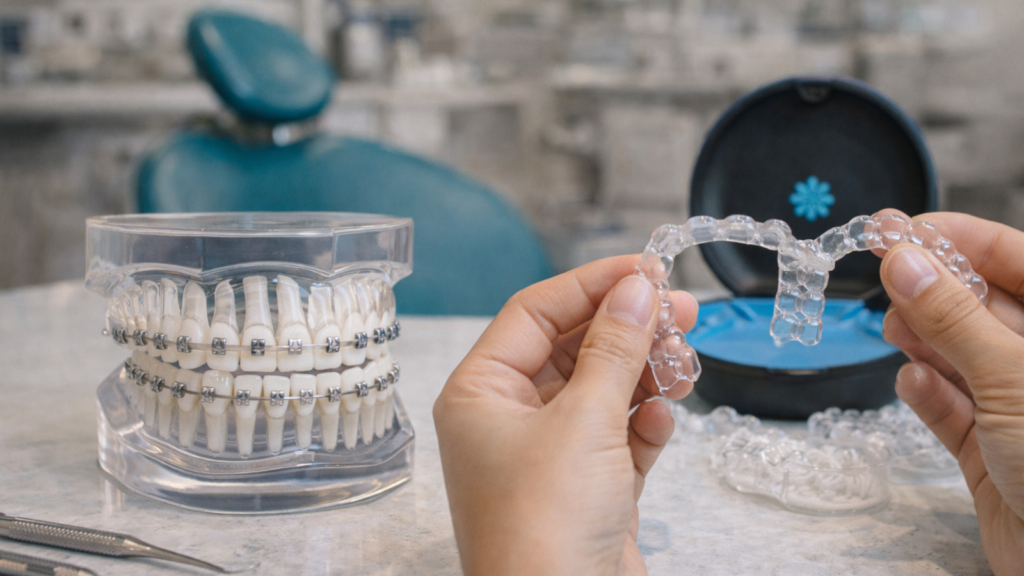
Damon braces (NPR 80,000 to NPR 150,000) use self-ligating brackets that eliminate elastic ties and may shorten appointment times, though total treatment duration typically matches traditional metal braces at 18 to 24 months for moderate cases. Clear aligners (NPR 120,000 to NPR 250,000+) offer near-invisible treatment for mild to moderate crowding in adults who can wear trays 22 hours daily, with costs varying based on tray count, simple cases need 15 to 20 trays while complex cases require 40 or more plus refinements. Damon braces handle severe crowding and complex bite issues better than aligners because they apply consistent force regardless of patient compliance, while aligners excel when aesthetics and flexibility matter more than correcting significant bite problems.
Damon vs Self-Ligating vs “Speed Braces”: Clear Terminology (No Hype)
Damon is a brand of self-ligating braces. Self-ligating means brackets have built-in clips that hold wires without elastic ties. This design reduces friction and may shorten appointment times because the orthodontist spends less time changing elastics.
“Speed braces” is a marketing term, not a distinct technology. Some clinics use it to describe self-ligating systems like Damon, while others apply it to any braces claiming faster treatment. Treatment speed depends on case complexity and patient compliance, not bracket design alone.
All self-ligating braces (Damon, In-Ovation, SmartClip) work similarly. Damon is simply the most recognized brand. The brackets cost more than traditional metal but function on the same principle of gradual tooth movement.
Damon Braces Cost in Kathmandu and What You’re Paying For
Damon braces in Kathmandu cost NPR 80,000 to NPR 150,000, roughly NPR 30,000 to 70,000 more than traditional metal braces. You pay for specialized brackets with slide mechanisms and potentially shorter adjustment appointments.
Treatment duration typically matches traditional braces (18 to 24 months for moderate cases). Some studies show 2 to 4 fewer appointments over the full treatment because self-ligating brackets reduce friction, but total time from bonding to debonding remains similar.
You benefit most from Damon braces when appointment time matters more than cost. Busy professionals who struggle to fit monthly visits into their schedules appreciate shorter chair time (15 to 20 minutes vs 30 to 40 minutes for traditional adjustments).
Clear Aligners Cost in Kathmandu: Why Tray Count and Complexity Change Pricing
Clear aligners in Kathmandu start around NPR 120,000 for simple cases requiring 15 to 20 trays. Moderate cases needing 25 to 35 trays typically cost NPR 150,000 to 180,000. Complex cases with 40 or more trays plus refinements can exceed NPR 200,000 to 250,000.
Tray count depends on how far your teeth need to move. Mild crowding or small gaps require fewer trays. Moderate crowding, rotations, or minor bite issues increase tray count. Severe crowding or bite corrections often exceed aligner capabilities, requiring braces instead.
Clinics calculate tray needs using 3D scans or impressions. Each tray moves teeth approximately 0.25 millimeters. Larger movements require more sequential trays, increasing manufacturing costs and total price.
Aligners Plan Breakdown (Lite/Moderate/Comprehensive-Style Tiers) and Refinements
- Lite plans (10 to 20 trays) cost NPR 120,000 to 140,000 and treat simple spacing or mild crowding. Treatment lasts 5 to 10 months when you wear trays 22 hours daily and change them every 1 to 2 weeks as prescribed.
- Moderate plans (20 to 35 trays) cost NPR 150,000 to 180,000 and address moderate crowding, rotations, or minor bite issues. Treatment extends to 12 to 18 months depending on compliance.
- Comprehensive plans (35+ trays) cost NPR 180,000 to 250,000 and tackle complex cases near the limits of aligner capability. Treatment can last 18 to 24 months, and you may need attachments (small tooth-colored bumps bonded to teeth) to help aligners grip.
Refinements are additional trays produced mid-treatment or at the end when teeth don’t track perfectly. Some clinics include 2 to 3 refinement rounds in their base price. Others charge NPR 15,000 to 30,000 per refinement set. Always confirm refinement policies before starting treatment.
Damon vs Aligners: Which Is Better for Crowded Teeth, Bite Issues, and Adults
Damon braces handle severe crowding and complex bite issues better than aligners. The brackets apply consistent force and work 24 hours daily, while aligners depend on patient compliance and struggle with vertical tooth movements or large rotations.
Clear aligners excel for mild to moderate crowding in adults who prioritize aesthetics and flexibility. You can remove trays for important meetings or photos, and they’re nearly invisible during wear.
Bite correction (overbite, underbite, crossbite) often requires braces. Aligners can manage minor bite adjustments, but Damon or traditional metal braces deliver more predictable results for significant bite changes.
Adults with busy schedules and mild to moderate issues fit aligners best when they can commit to 22-hour daily wear. Adults with severe crowding or complex bites benefit more from Damon or metal braces despite the visibility trade-off. For a deeper side-by-side comparison of treatment timelines and costs, see our guide on braces vs Invisalign in Kathmandu.
How to Choose the Right Option: Total Cost Checklist
Your final braces cost depends primarily on case complexity, extractions (NPR 8,000 to NPR 16,000 for 2 to 4 teeth), bite correction needs, and treatment duration, with severe cases pushing toward the upper end of each type’s price range. Before committing, ask clinics whether an orthodontist supervises treatment, what the package includes (records, retainers, emergency visits), and for aligner patients, how many refinement rounds come without extra charges beyond the base price. These questions reveal true total costs and help you avoid clinics advertising low starting prices (NPR 30,000 to 40,000) that hide essential fees, ensuring you choose based on transparent value rather than misleading initial quotes.
The Biggest Cost Drivers (Complexity, Extractions, Bite Correction, Duration)
- Case complexity is the primary cost driver. Simple spacing or mild crowding (1 to 3 millimeters of movement) costs less than severe crowding requiring 6 to 8 millimeters of movement across multiple teeth.
- Tooth extractions add NPR 8,000 to 16,000 when you need to remove 2 to 4 premolars to create space. Extraction cases extend treatment by 3 to 6 months because teeth must move into the extraction sites.
- Bite correction increases cost and duration. Overbite, underbite, and crossbite require additional appliances (elastics, springs, TADs) and longer treatment times (24 to 30 months). These cases push toward the upper end of each braces type’s price range.
- Treatment duration indirectly affects cost through monthly payments and potential emergency visits. Longer treatment means more opportunities for breakages, lost aligners, or hygiene issues that add charges.
Clinic Comparison Checklist (Questions to Ask Before You Pay)
Who supervises treatment (orthodontist vs general dentist)?
An orthodontist completes 2 to 3 years of specialized training after dental school. General dentists can offer braces but lack the same depth of training. Orthodontist-led treatment reduces risks of root damage, prolonged treatment, or poor outcomes. If you’re still exploring your options, dental in Kathmandu is a good starting point to learn about the full range of services and clinics available.
Are records/X-rays included?
Diagnostic records cost NPR 3,000 to 5,000 separately. Clinics that bundle them into the quoted price offer better transparency.
Are retainers included? Which type?
Some packages include one set of retainers in the total cost. Others charge NPR 8,000 to 15,000 separately. Confirm whether you receive fixed, removable, or both types.
What’s the emergency/breakage policy?
Ask whether broken brackets, lost aligners, or poking wires incur extra charges. Some clinics include minor repairs in the package; others charge NPR 500 to 3,000 per incident.
For aligners: are refinements included? What’s the cap?
Refinements address tracking issues when teeth don’t move as planned. Unlimited refinements sound appealing, but most cases need 1 to 2 sets maximum. Confirm whether your plan includes at least one refinement round without extra charges beyond NPR 15,000 to 30,000 per additional set.
Alternatives (Quick Mention): Lingual Braces and Other Premium Choices
Lingual braces attach to the back surfaces of teeth, making them completely invisible from the front. They cost NPR 200,000 to 350,000 in Kathmandu and require specialized training to place correctly. Treatment takes 20 to 30 percent longer than traditional braces because adjustments are more complex.
Lingual braces affect speech for the first 2 to 4 weeks and feel more uncomfortable than front-mounted brackets. Choose them only when appearance is critical and budget allows premium pricing.
How much do braces cost in Kathmandu overall?
Braces in Kathmandu typically cost between NPR 80,000 and NPR 250,000 depending on type, case complexity, and what’s included. Metal braces are the most affordable, while ceramic, Damon, and clear aligners cost more. A full quote usually requires X-rays, photos, and consultation for an accurate estimate.
Which is cheaper in Kathmandu: metal braces or ceramic braces?
Metal braces are cheaper than ceramic braces in most Kathmandu clinics. Ceramic costs more due to material and handling. Metal offers better value if budget is the priority.
Are Damon braces more expensive than normal braces?
Damon braces are more expensive than standard metal braces in Kathmandu. The added cost comes from the self-ligating system and treatment protocol. Always compare full package quotes, including visits and retainers.
Are clear aligners more expensive than braces in Kathmandu?
Clear aligners usually cost more than metal braces in Kathmandu, especially for complex cases. Price depends on tray count, corrections needed, and refinements. For minor cases, costs may match ceramic braces.
Is the braces cost quoted per arch or for both upper and lower teeth?
Braces quotes in Kathmandu may be per arch or for both arches. Clinics vary. Ask directly if the fee includes upper and lower teeth and whether it changes if one arch finishes early.
Do extractions increase the cost of braces treatment?
Extractions increase total cost because they add procedures and time. Not all patients need them. Confirm if extraction fees are included or separate, and whether extra appliances are expected.
What’s usually included in a braces package in Kathmandu?
Braces packages in Kathmandu often include appliances and adjustment visits. Some cover X-rays or records; others don’t. Retainers are sometimes excluded. Always request a full list of inclusions and exclusions before treatment.
How long do braces usually take, and does longer treatment cost more?
Braces treatment in Kathmandu usually takes 12–24 months. Complex cases take longer. Longer treatment may cost more if monthly or extended charges apply. Poor compliance can also raise costs.
Are retainers necessary, and how much do they cost?
Retainers are necessary after braces to keep teeth from shifting. Cost varies by type: clear, Hawley, or fixed. Many clinics charge extra for retainers and replacements. Ask if included in your package.
How do I choose the best clinic in Kathmandu if prices vary a lot?
Choose the best clinic in Kathmandu by comparing what’s included, orthodontist involvement, and policies. Don’t focus on price alone. Ask for written treatment plans, emergency visit policies, and retainer terms.
Ready to start your orthodontic journey in Kathmandu? BrightSmile Dental Clinic in Putalisadak offers transparent pricing on all braces types with clear breakdowns of what’s included. Schedule a consultation to discuss your case complexity, budget, and timeline. Call +977-9748343015 or message us on WhatsApp for a personalized treatment estimate and flexible payment options.