
Kathmandu has emerged as a practical destination for dental care, particularly for the Nepali diaspora visiting family and regional travelers seeking quality treatment at lower costs. The city combines modern dental technology with experienced practitioners, but success depends entirely on realistic planning, especially around treatment timelines, clinic selection, and post-procedure care.
This guide breaks down exactly how many days different procedures require, what safety standards you should verify, and how to handle follow-ups when you return home.
Is dental tourism in Kathmandu right for you?
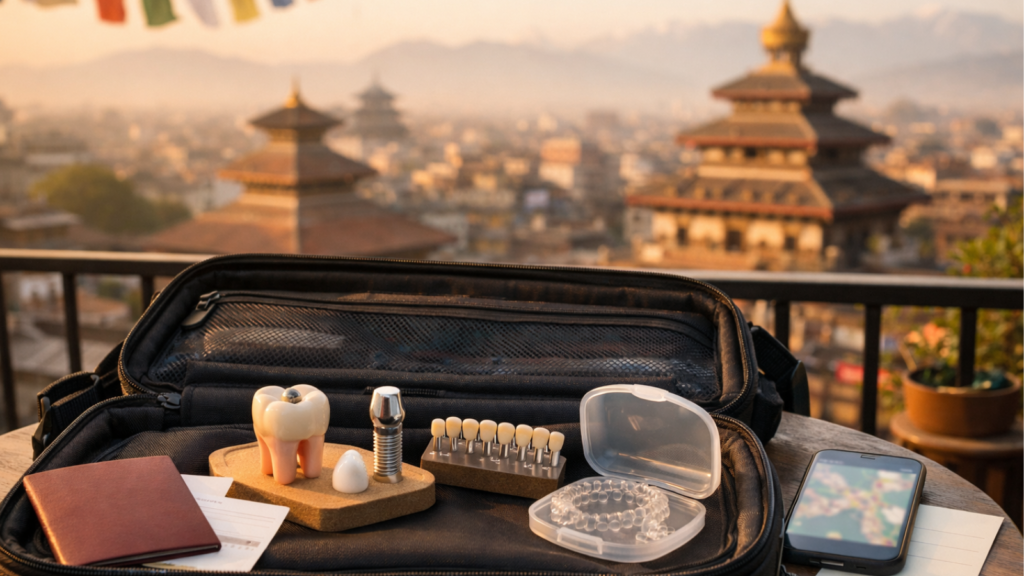
Dental tourism works best for people who can dedicate focused time to treatment without rushing back. It is not a weekend errand. You need physical presence for exams, potential adjustments, and mandatory check-ins before flying home.
Common treatments dental tourists come for (implants, crowns, veneers, root canals)
International patients typically seek 4 categories of care in Kathmandu:
- Firstly, restorative work dominates, root canal treatments (RCT) paired with crowns, multiple fillings, and tooth replacements. Many travelers bundle 3 to 5 procedures into one trip to maximize value.
- Secondly, cosmetic upgrades attract younger professionals and diaspora members preparing for weddings or career milestones. Teeth whitening, porcelain veneers, and composite bonding deliver visible results within days.
- Thirdly, implant placements draw patients willing to commit 10 to 14 days (or split visits). Single-tooth implants, implant-supported bridges, and full-arch reconstructions require surgical precision and healing time you cannot compress.
- Fourthly, Complex orthodontics (traditional braces) rarely fits dental tourism unless you plan repeated visits. Clear aligners with remote monitoring are the exception, you receive trays and instructions, then track progress from home with virtual check-ins.
Cost vs total trip cost: what you really pay (treatment, travel and contingency)
The advertised dental price is only one piece of your actual expense. Kathmandu pricing sits roughly 50 to 70 percent below Western markets, but knowing the key warning signs you might need a root canal helps you estimate costs earlier and avoid emergency premiums. A root canal with crown costs NPR 14,500 to 20,000 (approximately USD 110 to 150), compared to USD 1,200 to 1,800 in North America. Dental implants range from NPR 60,000 to 130,000 (USD 450 to 975) per tooth, versus USD 3,000 to 6,000 abroad.
Add the full trip budget:
- Flights: USD 400 to 1,200 (depending on origin, closer for India/Bangladesh, higher from Gulf or Southeast Asia).
- Accommodation: USD 15 to 50 per night for mid-range hotels near Putalisadak or Thamel; 7 nights = USD 105 to 350.
- Meals and transport: USD 10 to 20 daily; 7 days = USD 70 to 140.
- Contingency: 10 to 15 percent of dental quote for unexpected adjustments, extra visits, or material upgrades.
A single implant trip (10 days, mid-range stay) totals roughly USD 1,400 to 2,200 all-in. Compare that to the USD 3,500+ you would pay at home. Savings remain significant, but only if you avoid last-minute extensions due to poor planning.
Timeline reality check: what can be done in one trip vs two trips (especially implants)
Implants require biological healing you cannot shortcut. Immediate-load implants (crown placed the same day) work only for specific bone conditions and anterior (front) teeth. Most cases follow the traditional protocol: implant placement, 8 to 12 weeks of osseointegration (bone fusion), then crown attachment. Trying to force both stages into one week guarantees failure.
Realistic one-trip procedures (7 to 10 days):
- Root canal therapy with permanent crown (requires 2 to 3 visits for cleaning, filling, and crown cementation).
- Multiple fillings, extractions, and gum treatments.
- Teeth whitening, veneers, and bonding (prep visit, placement, final polish).
- Implant placement only, you return home and come back in 3 months for the crown, or your local dentist handles it (if they accept the Kathmandu implant system).
Two-trip scenarios (split 3 to 4 months apart):
- Traditional implants: Trip 1 = surgery and sutures; Trip 2 = abutment and crown after healing.
- Complex full-mouth rehabilitation: Trip 1 = extractions, bone grafts, temporary dentures; Trip 2 = final implants or bridges after tissue maturity.
Patients attempting to condense implant timelines into one visit often face complications, loose implants, infections, or premature loading that voids warranties.
Before you book: get a written treatment plan, inclusions, and appointment schedule
Never arrive in Kathmandu with only a verbal estimate from WhatsApp. Request a detailed, itemized treatment plan before confirming your trip. The document must include:
- Specific procedures (tooth numbers, materials, brands).
- Total cost broken into treatment fees, lab charges, and materials.
- Number of visits required and approximate duration of each.
- Inclusions (X-rays, anesthesia, temporary restorations, follow-up check-ins).
- Exclusions (medications you purchase separately, potential additional treatments if complications arise).
- Payment terms (deposit, balance schedule, accepted methods).
- Cancellation and rescheduling policy.
Reputable clinics provide this in writing, via email or patient portal, within 48 hours of receiving your dental records and photographs. Clinics that resist documentation or promise “we’ll figure it out when you arrive” create unnecessary risk.
Confirm the appointment schedule matches your available dates. A 7-day treatment plan that assumes Sunday availability fails if the clinic closes Saturdays and national holidays fall mid-week.
How many days you need in Kathmandu (by procedure)
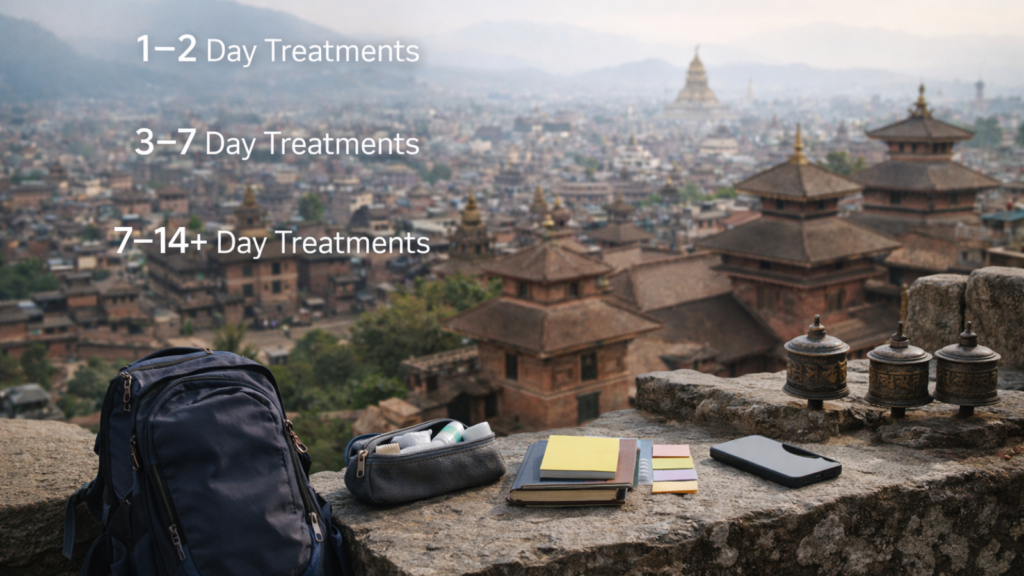
Treatment duration depends on clinical complexity, not your personal schedule. Trying to compress timelines leads to suboptimal results and wasted travel costs.
1–2 day treatments: checkup, cleaning, simple fillings, minor repairs
Single-visit procedures suit travelers with minimal dental needs or those adding care to an existing Nepal trip.
- Routine checkup and cleaning (scaling/polishing): 60 to 90 minutes. You can schedule morning appointments and explore Kathmandu the same afternoon.
- Simple fillings (1 to 3 cavities): Small composites or amalgams complete in one session. The dentist removes decay, fills, and polishes. Total chair time: 45 to 90 minutes per tooth.
- Minor repairs: Chipped tooth bonding, lost filling replacement, or temporary crown re-cementation finishes in 30 to 60 minutes.
- Teeth whitening (in-office laser or bleaching): Single 60 to 90-minute session. Some clinics provide take-home trays for touch-ups during your remaining days.
These procedures rarely require follow-up visits unless complications develop. You can fly home 24 hours after simple fillings with no restrictions.
3–7 day treatments: root canal and crown, multiple visits, bite adjustments
Mid-complexity care demands 2 to 4 appointments spread across several days to allow material setting and pain monitoring.
Root canal treatment with permanent crown follows this sequence:
- Visit 1 (Day 1): Clinical exam, X-rays, anesthesia, access opening, canal cleaning, and temporary filling. Duration: 60 to 90 minutes.
- Visit 2 (Day 3 or 4): Remove temporary material, complete canal shaping and disinfection, place root filling (gutta-percha). Take crown impressions. Duration: 45 to 75 minutes.
- Visit 3 (Day 6 or 7): Cement permanent crown (ceramic or zirconia), check bite alignment, final polish. Duration: 30 to 45 minutes.
Total span: 6 to 7 days minimum. Rushing visit intervals prevents proper disinfection and increases reinfection risk.
Multiple fillings or restorations (4+ teeth) often split into 2 sessions to avoid jaw fatigue and anesthesia overload. Schedule Day 1 and Day 3 to allow recovery between quadrants.
Veneers or cosmetic bonding requires:
- Day 1: Tooth preparation (minimal enamel removal), shade matching, temporary veneers.
- Day 5 to 7: Permanent veneer bonding after lab fabrication. Bite adjustment and polish.
Plan 5 to 7 days to accommodate lab turnaround and ensure proper fit before you leave.
7–14+ day treatments: surgery/extractions, complex restorations, staged care
Surgical procedures and multi-phase treatments require extended stays to monitor healing and address complications before you fly.
Dental implant placement (single tooth, no grafting):
- Day 1: Comprehensive exam, CBCT scan, treatment planning.
- Day 2 or 3: Implant surgery (60 to 90 minutes), sutures, post-op instructions.
- Day 7 to 10: Suture removal, healing assessment, X-ray verification.
You leave Kathmandu with the implant healing beneath your gum. The crown attachment happens 8 to 12 weeks later, either you return for Trip 2, or your home dentist completes it (confirm compatibility first).
Bone grafting plus implant extends the timeline:
- Day 1 to 3: Graft surgery.
- Day 7 to 10: Graft check-in.
- 4 to 6 months later (separate trip): Implant placement after bone maturity.
Multiple extractions with immediate dentures:
- Day 1: Extractions, impressions for denture fabrication.
- Day 5 to 7: Denture fitting, adjustments.
- Day 10 to 12: Final comfort check, reline if needed.
Plan 12 to 14 days to allow gum swelling reduction and ensure dentures fit properly before you leave. Ill-fitting dentures cause pain and require costly adjustments at home.
Full-mouth rehabilitation (combining extractions, implants, crowns, and bridges) demands 14+ days with multiple appointments. This level of complexity is not suitable for rushed dental tourism, review implants vs bridges: which replacement option fits your case and consider staged trips or local care instead.
Sample itineraries with buffer days (3 vs 7 vs 10–14 days)
3-day express trip (cleaning, whitening, simple fillings only):
- Day 1: Arrive Kathmandu, rest.
- Day 2: Morning exam, cleaning, whitening. Afternoon free.
- Day 3: Depart.
This suits diaspora members adding a quick checkup to family visits, not serious dental work.
7-day standard trip (root canal and crown, or veneers):
- Day 1: Arrive, settle in.
- Day 2: Initial exam, X-rays, treatment planning.
- Day 3: First procedure visit.
- Day 4: Rest or sightseeing.
- Day 5: Second procedure visit.
- Day 6: Final visit, X-rays, clearance.
- Day 7: Depart.
One full buffer day (Day 4) allows you to manage unexpected swelling or reschedule if the dentist needs an extra day for lab work.
10 to 14-day implant trip:
- Day 1 to 2: Arrive, consultation, imaging.
- Day 3: Implant surgery.
- Day 4 to 6: Rest, soft diet, monitor healing.
- Day 7: First post-op check.
- Day 8 to 10: Continue healing, light activity.
- Day 11: Suture removal, final X-ray.
- Day 12: Clearance for travel.
- Day 13 to 14: Depart or explore Kathmandu.
Buffer days (Day 4 to 6, Day 8 to 10) are non-negotiable. Implant complications (infection, bleeding, implant loosening) appear 3 to 7 days post-surgery. Leaving before Day 11 means you handle problems from home, expensive and risky.
What to expect at your first visit (and how to prepare)
The initial consultation sets the entire treatment trajectory. Proper preparation saves time, prevents misunderstandings, and ensures you receive accurate quotes.
Pre-arrival checklist: photos, records, meds, medical history (remote pre-check)
Send comprehensive information to the clinic 7 to 10 days before your arrival.
- Recent dental X-rays (within 6 months): panoramic (OPG) or periapical films. Digital files via email or cloud link.
- Close-up photographs: Front teeth (smiling and non-smiling), left side, right side, upper arch, lower arch. Use natural daylight and a contrasting background. These help the dentist assess cosmetic concerns and fabricate temporary restorations before you arrive.
- Medical history form: Diabetes, hypertension, bleeding disorders, allergies (especially to antibiotics, anesthetics, latex), current medications, pregnancy status.
- Medications list: Include dosage and frequency. Blood thinners (aspirin, warfarin, clopidogrel) require adjustment before surgery. Bisphosphonates (osteoporosis drugs) increase jaw necrosis risk with extractions.
- Treatment goals: “I need 2 crowns on upper molars” is clearer than “fix my smile.” Be specific.
Clinics with strong pre-check systems send preliminary treatment plans and cost estimates before you book flights, and a dental treatment cost guide for Kathmandu helps you sanity-check typical price ranges. This prevents the scenario where you arrive expecting a 5-day trip but discover you need 12 days.
Day 1 in clinic: exam, imaging, itemized quote, and documented plan
Your first in-person visit is diagnostic, not therapeutic. Do not expect procedures on Day 1 unless it’s a simple cleaning.
The dentist performs:
- Clinical examination: Visual inspection of teeth, gums, bite alignment, existing restorations. They note decay, fractures, gum disease, and jaw joint issues.
- Imaging: New X-rays or CBCT scan (3D imaging for implants). Even if you sent X-rays, the clinic needs current, calibrated images.
- Itemized quote: Tooth-by-tooth breakdown with material options (e.g., zirconia vs metal-ceramic crown; Swiss vs Korean implant system). The quote specifies what each visit includes and the total timeline.
- Documented treatment plan: Written summary with procedure sequence, approximate dates, and consent forms.
Ask questions immediately. Clarify:
- “What happens if I need an extra visit due to complications?”
- “Are follow-up X-rays included in the quoted price?”
- “Can I get copies of all imaging and procedure notes before I leave?”
Reputable clinics welcome questions and provide clear answers. Evasive responses (“Don’t worry, we’ll handle it”) are red flags.
Comfort expectations: anesthesia, pain control, and anxiety management
Modern Kathmandu clinics use the same anesthesia protocols as Western practices, primarily lidocaine with epinephrine for numbing.
- Topical anesthetic gel: Applied to gums before injection to reduce needle discomfort.
- Local infiltration or nerve block: Depending on the procedure. Takes 3 to 5 minutes to achieve full numbness.
- Pain during procedure: You should feel pressure but not sharp pain. Inform the dentist immediately if you feel discomfort, they can add anesthesia.
Post-procedure pain management:
- Simple fillings and cleanings: Minimal to no pain. Over-the-counter ibuprofen suffices.
- Root canals: Mild to moderate aching for 2 to 3 days. Prescription painkillers (ibuprofen and paracetamol combination) are standard.
- Extractions and implants: Moderate pain peaking 24 to 48 hours post-surgery. Expect swelling. Ice packs, soft diet, and prescribed anti-inflammatories control discomfort.
Anxiety management: Some clinics offer nitrous oxide (laughing gas) or oral sedation (diazepam, lorazepam) for nervous patients. Confirm availability during pre-check if you need this.
Avoid general anesthesia for routine dental work in Kathmandu. Facilities equipped for full sedation are limited, and it adds unnecessary risk for procedures manageable with local anesthesia.
What to take home: X-rays, procedure summary, materials/implant details, warranty terms
Before you leave Kathmandu, collect a complete treatment record.
- Digital X-rays: All pre-treatment and post-treatment images on a USB drive or via email. Your local dentist needs these to monitor healing or continue care.
- Procedure summary: Tooth numbers treated, materials used (brand and type), dates of each visit. Example: “Tooth 36: root canal completed 2025-01-15, gutta-percha filling, zirconia crown cemented 2025-01-20.”
- Implant details: Manufacturer, model, size, serial number (if available), abutment type. This information is critical for future crown replacements or repairs. Some systems are incompatible across brands, your home dentist cannot attach a crown to an unknown implant.
- Lab work documentation: If you received crowns, veneers, or dentures, request the lab name, material specifications, and shade codes.
- Warranty certificate: Many clinics offer 1 to 5-year warranties on crowns and implants. Get it in writing with terms: what’s covered (material failure), what’s excluded (trauma, poor hygiene), and how to claim (must return to Kathmandu, or local dentist can assess and the clinic reimburses).
Store digital copies in cloud storage and keep physical printouts in your carry-on. Lost records complicate future care and void warranties.
Safety and quality checklist (how to choose a clinic confidently)
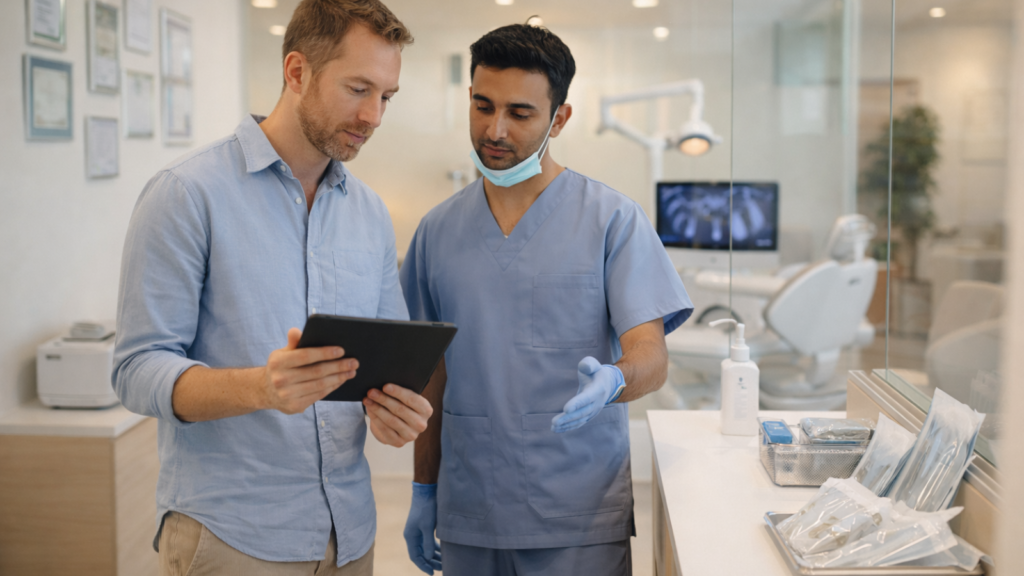
Not all Kathmandu dental clinics meet international standards. Verifying credentials, infection control, and technology before booking protects your health and investment.
Verify credentials: how to check dentist registration via Nepal Medical Council
Every practicing dentist in Nepal must hold valid registration with the Nepal Medical Council (NMC).
Search the NMC public register online: www.nmc.org.np → Registered Professionals → Search by name. Verify:
- Full name matches the clinic website.
- Registration number is active (not suspended or expired).
- Qualifications listed (BDS minimum; MDS, fellowship, or specialty certifications add expertise).
Dentists trained abroad (India, Philippines, China, Europe) must complete NMC equivalency exams before practicing in Nepal. Foreign degrees alone do not guarantee competence, check for Nepal registration.
Red flags:
- Clinic refuses to provide the dentist’s full name or registration number.
- Website shows stock photos instead of actual staff.
- “International expert” claims without verifiable credentials.
Legitimate clinics display registration certificates in the waiting area and provide copies on request.
Infection-control checklist (standard precautions and sterilization red flags)
Infection control separates safe clinics from hazardous ones. Observe these non-negotiables during your first visit:
Sterilization cycle for instruments:
- Autoclave machine (high-pressure steam sterilizer) visible in the operatory or sterilization room.
- Indicator strips or spore tests used to verify sterilization effectiveness (ask to see log records).
- Instruments stored in sealed pouches until use, not in open trays.
Single-use items:
- Disposable gloves, masks, patient bibs, suction tips, anesthetic needles.
- Opened in front of you, discarded immediately after.
Surface barriers and disinfection:
- Dental chair, light handles, and tray surfaces covered with disposable plastic barriers or wiped with hospital-grade disinfectant between patients.
- Floor and sinks clean, no visible debris.
Personal protective equipment (PPE) for staff:
- Dentist and assistants wear fresh gloves, masks, protective eyewear, and gowns for every procedure.
Red flags to walk away from:
- Instruments sitting uncovered on counters.
- Staff reusing gloves between patients.
- No autoclave visible or “we sterilize at night.”
- Unwillingness to show sterilization processes when asked.
Kathmandu’s better clinics (often those targeting international patients) proactively display sterilization SOPs on websites and in clinic videos. Use this as a pre-screening filter.
Technology that changes outcomes (CBCT, digital impressions, microscopes, CAD/CAM)
Advanced equipment improves accuracy and reduces complications, especially for implants and root canals.
Cone Beam Computed Tomography (CBCT):
- 3D imaging essential for implant planning (bone volume, nerve proximity, sinus floor anatomy).
- Reduces surgical complications by 40 to 60 percent compared to 2D X-rays.
- Standard in clinics doing implants; absence is a serious concern.
Digital impressions (intraoral scanners):
- Replace goopy traditional molds with precise digital scans.
- Improve crown and veneer fit, reduce remakes.
- Faster lab turnaround (digital files sent electronically).
Dental operating microscopes:
- Magnify root canal anatomy 10x to 20x.
- Allow detection of extra canals and microfractures missed with loupes or naked eye.
- Increase root canal success rates from 85 percent (conventional) to 95+ percent (microscope-assisted).
CAD/CAM (computer-aided design/manufacturing):
- In-house milling of crowns and veneers (same-day delivery possible).
- Consistency in fit and aesthetics.
Clinics with this technology cost slightly more but deliver measurably better outcomes. A NPR 70,000 implant placed with CBCT guidance has lower failure rates than a NPR 60,000 implant placed blind.
Ask directly:
– “Do you use CBCT for implants?”
– “Do you have a dental microscope for root canals?”
Clinics with the technology highlight it prominently; those without deflect or minimize its importance.
Reviews and red flags: how to evaluate claims, before/after photos, and “packages”
Online reviews require critical interpretation, especially in markets where fake reviews proliferate.
Trustworthy review signals:
- Google My Business reviews with detailed narratives (specific procedures mentioned, photos attached).
- Negative reviews present with clinic responses addressing issues professionally.
- International patient testimonials with verifiable social media profiles (LinkedIn, Facebook public posts).
Red flags in reviews:
- 100 percent five-star ratings with generic praise (“best clinic ever!”).
- Reviews all posted within the same week.
- No negative reviews at all (statistically implausible for any clinic over 6 months old).
Before/after photos:
- Legitimate galleries show consistent lighting, same background, tooth numbers labeled, dates visible.
- Suspicious photos: Different lighting angles, cropped faces (can’t verify same patient), watermarks from other clinics, extreme transformations without intermediate steps.
- Ask: “Can I speak with a past patient who had this procedure?” Clinics with real results facilitate contact (with patient consent).
Package deals and promotional pricing:
- Transparent packages: Itemize inclusions (exam, X-ray, procedure, materials, follow-ups). Specify exclusions (medications, complications).
- Deceptive packages: “Implant for NPR 40,000” (misses crown cost NPR 15,000 to 25,000). “Smile makeover NPR 100,000” (vague, how many teeth? what materials?).
Ethical clinics provide per-tooth pricing and package breakdowns. Those hiding details or pressuring immediate deposits without itemization are running sales tactics, not patient care.
Trip planning: visa, timing, clinic hours, and logistics
Dental tourism succeeds when clinical needs align with practical travel realities. Overlooking visa rules, seasonal factors, or clinic schedules wastes time and money.
Nepal tourist visa basics and time buffer planning
Most international visitors receive a tourist visa on arrival at Tribhuvan International Airport (Kathmandu).
- 15 days: USD 30.
- 30 days: USD 50.
- 90 days: USD 125.
Visa-exempt nationals (India, some SAARC countries) enter without fees but still need valid ID.
Apply for the duration that exceeds your planned stay by 3 to 5 days. A 7-day treatment plan needs a 15-day visa minimum to cover:
- Flight delays or cancellations.
- Unexpected extra clinic visit (bite adjustment, swelling check).
- Personal illness or fatigue requiring rest days.
Overstaying your visa incurs fines (USD 3 per day plus penalties). Dental complications that force you to stay longer create stress, better to have buffer days pre-purchased.
Visa extensions are possible (Department of Immigration, Kalikasthan, Kathmandu) but require half-day bureaucracy. Avoid this by choosing the right duration upfront.
Best time to visit Kathmandu for dental work (spring/autumn comfort)
Kathmandu’s climate directly affects post-procedure comfort.
Optimal seasons (March to May, September to November):
- Temperatures 15 to 25°C, comfortable for recovery.
- Clear skies, low humidity (easier breathing post-surgery).
- Fewer monsoon-related travel delays.
Avoid monsoon season (June to August):
- Heavy rains disrupt flights and ground transport.
- High humidity aggravates swelling and slows wound healing.
- Risk of flooding in lower Kathmandu areas affects clinic access.
Winter (December to February):
- Cold mornings and evenings (5 to 10°C).
- Indoor heating limited in mid-range hotels, uncomfortable if you’re recovering from surgery.
- Air pollution (Kathmandu winter smog) irritates sinuses and throat, complicating upper jaw procedures.
Spring and autumn also align with Nepal’s peak tourism season, better flight availability and hotel options near clinics. Book 4 to 6 weeks ahead during these months.
Clinic scheduling realities (often Sun–Fri): plan around Saturdays/holidays
Most Kathmandu dental clinics operate Sunday through Friday, 10 AM to 6 PM, with Saturday closures.
This catches foreign patients off guard. A 7-day treatment plan spanning a Saturday loses an entire day, pushing completion to Day 8.
National holidays also pause care:
- Dashain (October, 10 to 15 days).
- Tihar (October to November, 5 days).
- Holi (March, 1 day).
- Nepal New Year (mid-April, 1 to 2 days).
Check the Nepali calendar before booking. Clinics reduce hours or close entirely during major festivals. Landing in Kathmandu mid-Dashain means zero treatment progress for a week.
Solution: Build your itinerary assuming 5 active treatment days per 7-day stay. A procedure requiring 4 visits across 10 days needs 12 to 14 days of calendar time to accommodate Saturday closures and potential holiday overlap.
Confirm the clinic’s exact schedule during pre-check: “Are you open all days during my planned visit? Any holidays?”
Where to stay, transport, payments and essentials for recovery week
Accommodation:
- Near Putalisadak/Durbar Marg/Thamel: Central location, 5 to 15 minutes by taxi to major dental clinics.
- Budget: USD 15 to 25/night (Hotel Horizon, Hotel Mums Home, Hotel Blue Diamond).
- Mid-range: USD 35 to 60/night (Hotel Mulberry, Kathmandu Guest House, Hotel Marshyangdi).
- Upscale: USD 80 to 150/night (Hyatt Regency, Radisson, Yak & Yeti).
Choose hotels with:
- Elevators or ground-floor rooms (if you’re recovering from surgery and stairs are difficult).
- In-room electric kettle (for saltwater rinses and soft food prep).
- Proximity to pharmacies and supermarkets.
Transport:
- Taxis: Meter or ride-hailing apps (Pathao, InDrive). Clinic visits cost NPR 200 to 400 within central Kathmandu.
- Pre-arranged clinic transport: Some clinics offer pick-up/drop-off for NPR 500 to 1,000 per trip. Convenient post-surgery when you’re groggy.
Payments:
- Dental clinics accept cash (NPR or USD), eSewa, Khalti, and major credit cards (Visa, Mastercard). Carry mixed payment options, some smaller clinics prefer cash for discounts.
- ATMs widely available (withdrawal limit ~NPR 35,000 per transaction; foreign card fees apply).
Recovery essentials:
- Pharmacy (Meds Nepal, CG Pharmacy) for prescribed antibiotics, painkillers, antiseptic mouthwash.
- Soft foods: yogurt, daal bhat (request extra soft rice), momo soup, fruit smoothies. Avoid street food immediately post-surgery (infection risk).
- Ice packs: Buy reusable gel packs at pharmacies or use ice wrapped in cloth.
Stock these before your first procedure. Post-op fatigue and swelling make errands difficult.
Follow-ups and returning home safely (flying and aftercare)
Leaving Kathmandu before proper clearance creates risks no cost savings justify. Follow-up care and smart travel timing protect your results.
Why follow-ups matter: typical check-ins (24–48h, ~7–10 days)
Post-procedure monitoring detects complications early, when they’re still simple to fix.
24 to 48-hour check-in (common after extractions, implants, root canals):
- Assess initial healing, swelling trends, pain levels.
- Remove or adjust temporary restorations if causing bite issues.
- Confirm no infection signs (fever, pus, worsening pain).
7 to 10-day check-in (critical after surgical procedures):
- Suture removal (implants, extractions, gum surgery).
- X-ray verification (implant position, bone graft integration, root canal fill adequacy).
- Final clearance for air travel.
Skipping the 7-day follow-up to catch an earlier flight means you board with unremoved sutures and no imaging to confirm healing. Sutures left beyond 10 days trap bacteria and cause infections. Loose implants caught at Day 7 can be repositioned; discovered at Day 30 from home require replacement (and you pay twice).
Reputable clinics refuse travel clearance before the scheduled check-in. Patients who insist on early departure sign liability waivers absolving the clinic of complications.
Flying after procedures: implants vs extractions vs surgery (timing guidance)
Air travel creates cabin pressure changes (equivalent to 1,800 to 2,400 meters altitude) that affect healing tissues.
Safe flying timelines post-procedure:
- Simple fillings, cleanings, minor cosmetic work: Fly the same day or next day. No restrictions.
- Root canal therapy: 24 hours minimum. Ensure no acute pain or swelling before boarding.
- Extractions (single tooth, uncomplicated): 48 to 72 hours. Blood clot must stabilize; premature flying can dislodge it (dry socket risk).
- Multiple extractions or surgical extractions: 5 to 7 days. Wait for suture removal and swelling reduction.
- Dental implants (single tooth): 7 to 10 days minimum. Sutures must be removed, and initial osseointegration begins. Early flying increases implant micro-movement and failure risk.
- Bone grafts, sinus lifts, multiple implants: 10 to 14 days. Wait for full surgical site stabilization.
In-flight precautions (once cleared to fly):
- Avoid alcohol and caffeine (dehydrate healing tissues).
- Drink water frequently.
- Use pain medication before boarding if still experiencing mild discomfort.
- Carry a copy of your procedure summary and dentist’s contact info.
Dental emergencies mid-flight are rare but serious. Delaying your return flight by 2 to 3 days prevents them.
Remote follow-ups after you leave: sharing records with your local dentist
Continuity of care depends on seamless information transfer.
Before leaving Kathmandu:
- Email all X-rays, procedure notes, and material details to yourself and your home dentist.
- Schedule a check-in appointment with your local dentist 2 to 4 weeks post-return.
What your local dentist checks:
- Healing progression (gum tissue closure, bone remodeling around implants).
- Bite alignment (crowns or veneers not causing TMJ strain).
- Hygiene status (plaque control around new restorations).
Remote follow-up with the Kathmandu clinic:
- Most clinics offer WhatsApp or email support for 30 to 90 days post-treatment.
- Send photos or describe symptoms; they advise on normal healing vs complications.
- Serious issues (infection, implant failure) may require you to return or seek emergency local care.
Local dentist cooperation: Not all home dentists accept responsibility for work done abroad. Before traveling, ask your local dentist:
- “Will you monitor healing and handle minor adjustments on restorations placed in Nepal?”
- “Can you attach a crown to a [specific brand] implant system if needed in 3 months?”
Some dentists refuse, citing liability or unfamiliarity with foreign materials. Know this before you commit to Kathmandu treatment.
Warning signs and emergency plan (what to do if swelling, bleeding, fever, severe pain)
Normal post-procedure symptoms (manageable at home):
- Mild to moderate swelling peaking 48 to 72 hours, then subsiding.
- Dull aching pain responsive to ibuprofen or prescribed painkillers.
- Minor oozing blood (saliva tinged pink) for 12 to 24 hours post-surgery.
- Bruising around jaw or cheeks (fades in 5 to 7 days).
Emergency signs (require immediate professional assessment):
- Fever above 38.5°C (101.3°F) persisting beyond 24 hours (suggests infection). Severe, worsening pain not relieved by medication, this can indicate nerve involvement or a tooth abscess requiring urgent treatment.
- Severe, worsening pain not relieved by medication (possible nerve involvement or abscess).
- Continuous heavy bleeding (mouth full of blood every few minutes) beyond 2 hours post-procedure.
- Rapidly increasing swelling that restricts breathing or swallowing (rare but critical, airway obstruction risk).
- Implant feels loose or mobile when touched with tongue (immediate failure).
- Foul odor or pus discharge from surgical site.
Emergency action plan while still in Kathmandu:
- Contact your clinic immediately (most provide 24-hour emergency numbers).
- They will instruct you to come in or visit a partner hospital (Grande Hospital, Norvic International Hospital have dental emergency services).
- Do not delay, dental infections escalate quickly.
Emergency plan after returning home:
- Contact the Kathmandu clinic via WhatsApp/email with photos and symptom description.
- Simultaneously visit a local emergency dentist or hospital dental department.
- Share all Kathmandu treatment records with the local provider.
- If the issue stems from Kathmandu work (infection, failed implant), the Kathmandu clinic may cover local emergency treatment costs under warranty, get written confirmation first.
Carry the clinic’s emergency contact card in your wallet and save it in your phone. Dental infections can become life-threatening (Ludwig’s angina, sepsis) within days. Early intervention is non-negotiable. For travelers planning their first visit, browsing the full range of services available through dental in Kathmandu helps confirm which clinic capabilities match your treatment needs before finalising accommodation near Putalisadak, Durbar Marg, or Thamel
How many days should I plan for dental treatment in Kathmandu?
Plan 1–2 days for basic dental care in Kathmandu. Complex procedures like crowns or root canals need 3–7 days due to lab work and adjustments. Surgical treatments require longer stays with buffer days. Always add 1–2 extra days for healing, rechecks, or delays to avoid travel complications.
Can I do dental implants in one trip?
You can place dental implants in one trip, but the final crown often needs months to heal. Most patients return for a second visit or use a temporary solution. Ask for a step-by-step written plan before committing, especially if told everything can be finished in a few days.
What should I send for a pre-arrival (online/WhatsApp) consultation?
Send clear smile photos, symptom notes, and any past X-rays or reports. Include medical history, medications, allergies, and anesthesia reactions. Ask the clinic to reply with an itemized treatment plan, number of visits, and expected days needed. This helps reduce surprises when you arrive.
How do I know if a clinic’s quote is complete (and not missing hidden add-ons)?
Check if the quote includes consultation, X-rays, anesthesia, lab fees, and follow-ups. Ask for an itemized breakdown per procedure. Confirm they’ll re-quote if the plan changes. Transparent clinics explain what’s included and list possible extra costs upfront.
What are the biggest safety red flags I should watch for?
Major red flags include rushed treatment without proper imaging, unclear sterilization, and reused tools. Be cautious if staff avoid infection-control questions or pressure you to start immediately. Safe clinics explain risks, alternatives, and welcome questions.
What documents should I take home after treatment?
Take home your X-rays, procedure summary, and list of materials used. For implants, request system brand and component details. Also get aftercare instructions and emergency contact info to support follow-up care at home.
Is English commonly spoken at dental clinics in Kathmandu?
English is commonly spoken at clinics serving international patients, especially during consultations. Confirm in advance who will explain the treatment chairside. Request slow, step-by-step explanations and written plans if you have anxiety.
How soon can I fly after dental treatment?
You can fly the same or next day after simple procedures. For surgery or implants, delay travel to manage pain, swelling, and infection risk. Your dentist should give specific timing based on healing. Always build in buffer days.
What follow-up visits should I plan before leaving Kathmandu?
Plan at least one follow-up to check healing and adjust the bite. Stitches may require review or removal. Crowns and root canals often need bite checks after chewing. Book these visits before your flight.
What if something feels wrong after I return home?
Agree on a remote follow-up process before leaving. If symptoms worsen, get urgent care locally. For bite issues or crown pain, visit a local dentist and share your records. Don’t wait for messages if serious signs appear.
Should I buy travel insurance for a dental trip?
Buy travel insurance to cover delays and emergencies, but check if dental complications are included. Some policies exclude dental work. Always read the fine print and keep a budget for unexpected meds or lab remakes.
Can I combine dental treatment with trekking or intense sightseeing?
Avoid intense activity after surgical dental work due to bleeding and swelling risks. Do sightseeing before surgery, and leave last days for recovery and follow-up. Light tourism is usually fine after non-invasive care.