
Visiting a dentist for the first time can feel overwhelming, particularly when you are unsure what will happen during your appointment. Professional teeth cleaning is one of the most common procedures performed at dental clinics, yet many patients in Kathmandu have questions about the process before they arrive. What tools will the dentist use? Will it hurt? How long will it take? These concerns are completely normal, and understanding what happens during each step can transform anxiety into confidence. With dental caries affecting more than 57% of Nepali adults aged 35 to 49, regular professional cleanings have become essential for preventing serious oral health problems and maintaining a healthy smile throughout your life.
This comprehensive guide walks you through every stage of a professional teeth cleaning appointment, from the moment you sit in the dental chair to the final recommendations your dentist provides. We explain the purpose behind each step, examination, scaling, polishing, flossing, and fluoride treatment, using simple language that anyone can understand. Whether you are preparing for your first cleaning or simply want to know more about this important preventive treatment, this step-by-step guide will help you feel prepared and empowered to take control of your oral health.
Understanding Professional Teeth Cleaning (Dental Prophylaxis)
Professional teeth cleaning, also called dental prophylaxis, is a preventive treatment performed at a dental clinic to remove plaque and tartar from teeth surfaces. Regular cleanings protect against cavities, gum disease, and other oral health problems that home brushing alone cannot prevent. Dental surveys in Nepal show that over 57% of adults aged 35 to 49 have dental caries, making preventive care especially important for maintaining healthy teeth and gums.
What Is a Professional Teeth Cleaning and Why It’s Important

A professional teeth cleaning is a procedure where trained dental staff remove built-up plaque, tartar, and stains from teeth surfaces and along gum lines. Home brushing and flossing help, but they cannot reach all areas or remove hardened tartar once it forms. Professional cleaning prevents tooth decay, gum disease, bad breath, and serious health complications linked to poor oral hygiene.
Regular cleanings catch dental problems early, before they become painful or expensive to treat. Removing bacterial buildup reduces inflammation in gums and lowers risks of heart disease, diabetes complications, and other systemic conditions associated with gum disease. Fresh, clean teeth also boost confidence, making you feel better about smiling, talking, and eating during family gatherings and festivals.
Who Performs Teeth Cleaning: Dentist vs Dental Hygienist
Teeth cleaning can be performed by either a dentist or a dental hygienist, depending on clinic staffing and patient needs. Dental hygienists specialise in preventive care and perform most routine cleanings, using special tools to scale, polish, and floss teeth. Dentists typically conduct oral examinations before and after cleaning, checking for cavities, gum disease, and other concerns that require treatment.
Both professionals receive training in safe, effective cleaning techniques. Hygienists work under dentist supervision and alert dentists to any problems discovered during cleaning. Your dental team will explain who will handle each part of your appointment and answer questions about their qualifications.
How Professional Cleaning Is Different From Brushing at Home
Brushing twice daily with fluoride toothpaste and flossing daily are essential for oral health, but home care has limitations. Toothbrushes cannot remove hardened tartar (calculus), which forms when plaque mineralises on teeth surfaces and below gum lines. Only professional scaling tools can safely remove this buildup without damaging enamel or gum tissue.
Professional cleaning also reaches areas you may miss at home, such as back molars, tight spaces between teeth, and pockets along gum lines. Dental staff use magnification, special lighting, and precision instruments to clean every surface thoroughly. Polishing removes surface stains from tea, coffee, or betel nut chewing that regular brushing cannot eliminate.
How Often Should You Get Your Teeth Cleaned?
Your dentist may suggest more frequent cleanings, every three to four months, if you have risk factors such as gum disease, diabetes, heavy smoking, or a history of cavities.
Some patients with excellent oral health may only need annual cleanings. Follow your dentist’s personalised advice, as everyone’s needs differ. Consistent professional care combined with good home hygiene will keep your smile healthy for years to come.
Step-by-Step Process of a Professional Teeth Cleaning
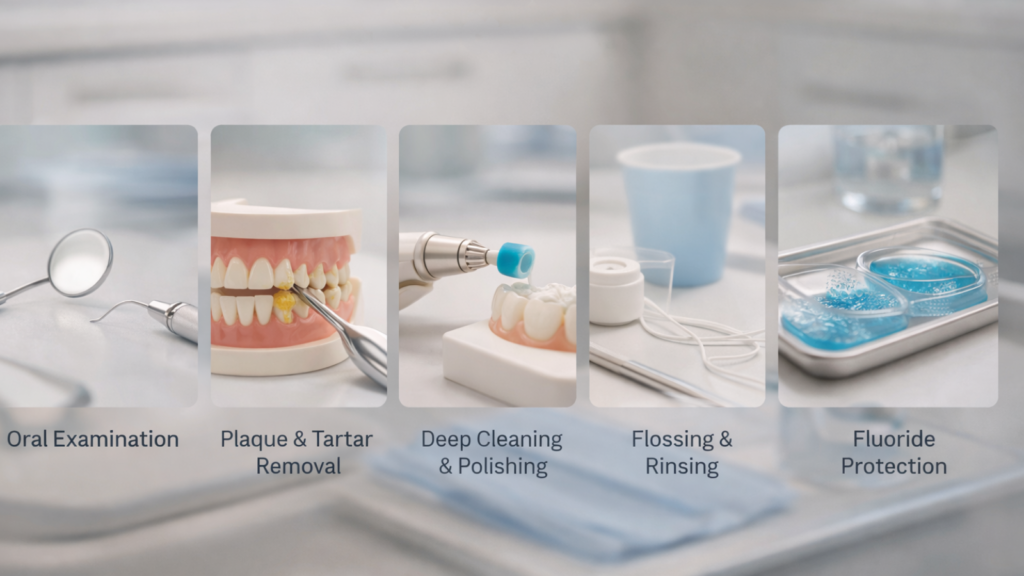
Professional teeth cleaning follows a structured process designed to thoroughly clean teeth, examine oral health, and provide preventive care. Each step serves a specific purpose in protecting your smile. Understanding what happens during each stage helps you feel more comfortable and prepared for your appointment.
1. Oral Examination Before the Cleaning Begins
Your appointment starts with a thorough oral examination. Dental staff will review your medical and dental history, asking about any concerns, symptoms, or changes since your last visit. They may take X-rays, especially for first visits or if considerable time has passed, to see beneath tooth surfaces and check bone health.
Using a small mirror and explorer probe, the dentist inspects each tooth and surrounding gum tissue. They look for signs of cavities, tartar accumulation, gum inflammation (gingivitis), loose or chipped teeth, and unusual spots or sores on lips, cheeks, tongue, and throat. This comprehensive checkup ensures problems are caught early when treatment is simpler and less costly.
Mention any anxiety or concerns during this examination. Many dental clinics in Kathmandu offer comfort measures such as nitrous oxide (laughing gas), calming music through headphones, or breaks during treatment. Your dental team wants you to feel safe and relaxed throughout your visit.
2. Removal of Plaque and Tartar Using Scaling Tools
After examination, dental staff begin scaling to remove plaque and hardened tartar from tooth surfaces and along gum lines. Special instruments, often an ultrasonic scaler that vibrates at high frequency, gently break apart tartar deposits. Some stubborn buildup may require manual scraping with metal scalers.
Scaling produces vibrating or scraping sounds, but should not cause pain. You may feel pressure on teeth and gums, along with a gritty sensation as tartar fragments are removed. Understanding how cavities form from plaque and diet can help explain why removing this buildup is so critical. Your hygienist works carefully to minimise discomfort while ensuring complete tartar removal. This step takes longer for patients with heavy buildup or those who haven’t had cleaning in several years.
Some gum sensitivity or tenderness after scaling is normal and usually mild. Gums may bleed slightly during scaling, especially where inflammation exists. This bleeding typically improves once gums heal following tartar removal.
3. Deep Cleaning With Gritty Toothpaste (Polishing)
Once teeth are free of plaque and tartar, dental staff polish them using a gritty fluoride toothpaste and a rotating rubber cup or brush. Polishing removes surface stains caused by tea, coffee, tobacco, or betel nut chewing, leaving tooth surfaces smooth and shiny. This step is not teeth whitening, it simply buffs away minor discolourations so teeth appear brighter and cleaner.
The polishing paste may taste minty or slightly gritty. You will feel teeth becoming very smooth as the paste works. Polishing also creates a slick surface that makes it harder for new plaque to stick to teeth between appointments.
Some patients notice their smile looks noticeably whiter immediately after polishing. This brightness comes from stain removal, revealing your natural tooth colour beneath surface buildup.
4. Professional Flossing and Rinsing Process
Next, your hygienist will floss between all teeth thoroughly. Professional flossing is more comprehensive than home flossing, reaching debris you might miss. Dental floss, which is very thin and strong, removes any tiny particles of paste, plaque, or tartar trapped between teeth.
Flossing also allows your hygienist to check for gum bleeding or disease in tight spaces. This step is especially beneficial for patients who brush regularly but skip daily flossing, surveys in Nepal show that daily flossing remains rare among adults. Professional flossing demonstrates proper technique and highlights areas needing more attention at home.
After flossing, you will rinse your mouth with water or a fluoride rinse to wash away remaining debris. Rinsing leaves your mouth feeling fresh and clean.
5. Fluoride Treatment: Is It Always Included?
Many clinics apply fluoride treatment as a final preventive measure, though this step is optional depending on individual needs. Fluoride treatment usually involves painting a concentrated fluoride gel or varnish onto teeth and gums. Fluoride hardens tooth enamel and makes teeth more resistant to cavities.
In Kathmandu and Nepal generally, fluoride treatment is particularly helpful because public water supplies often have very low fluoride levels. Children and patients at higher risk of tooth decay, such as those with high sugar consumption or frequent cavities, benefit most from fluoride application.
Your dentist will recommend whether fluoride treatment suits your situation. You may be asked to avoid eating or drinking for 30 to 60 minutes after fluoride application, allowing it to absorb properly into enamel. This waiting period maximises fluoride benefits.
What You May Feel During and After Teeth Cleaning

Understanding what to expect during and after professional teeth cleaning helps reduce anxiety and prepares you for normal sensations. Most patients find cleaning comfortable, though some experience minor sensitivity. Knowing what is typical versus when to seek help ensures peace of mind.
Does Teeth Cleaning Hurt? Pain, Sensitivity, and Comfort Levels
Professional teeth cleaning should not hurt, though you may feel pressure, vibration, and scraping sensations during scaling. Patients with heavy tartar buildup, gum disease, or sensitive teeth may experience more discomfort. Your hygienist adjusts pressure and technique to keep you comfortable.
Some gum tenderness during and after cleaning is normal, especially where inflammation exists. Gums may feel slightly sore for a day or two as they heal following tartar removal. Over-the-counter pain relievers rarely prove necessary, but consult your dentist if discomfort persists beyond a few days.
Deep cleaning (scaling and root planing) for gum disease causes more sensation than routine cleaning and may require local anaesthesia. Routine preventive cleaning, however, is generally well-tolerated without numbing agents. Communicate with your hygienist during treatment, they can pause, adjust their approach, or provide comfort measures as needed.
How Long Does a Professional Teeth Cleaning Take?
A standard professional teeth cleaning appointment usually takes 30 to 60 minutes. Actual duration depends on several factors: tartar accumulation, number of X-rays needed, whether fluoride treatment is included, and time spent on examination and patient education. First visits often take longer due to comprehensive examination and history-taking.
Patients with minimal tartar buildup and good home hygiene may finish in 30 minutes. Those with heavy deposits, gum disease, or who haven’t visited a dentist recently may need 60 minutes or more. Your dental team will estimate appointment length when you schedule.
Plan to arrive a bit early to complete paperwork, update health history, and list medications. Bringing dental insurance information helps streamline administrative tasks.
Common After-Effects: Bleeding Gums, Sensitivity, Fresh Breath
After professional cleaning, you may notice several temporary effects. Gums might bleed slightly when brushing or flossing for a day or two, especially where inflammation existed. This bleeding should decrease as gums heal and become healthier.
Tooth sensitivity to hot, cold, or sweet foods and drinks is common after scaling, particularly for patients with gum recession or exposed root surfaces. Sensitivity usually resolves within a few days as teeth adjust. Using toothpaste designed for sensitive teeth can provide relief.
Most patients immediately notice fresh breath and a clean feeling throughout their mouth. Teeth feel smooth when running your tongue over them, and many people say their smile looks brighter. These positive effects motivate continued good oral hygiene habits.
When to Contact the Dentist After a Cleaning
Contact your dental clinic if you experience any concerning symptoms after cleaning. Persistent pain lasting more than three days, severe sensitivity that interferes with eating or drinking, or excessive bleeding that doesn’t stop with gentle pressure warrants a phone call. Swelling, fever, or signs of infection also require prompt attention.
Minor sensitivity and gum tenderness are expected and resolve on their own. Your dental team should provide post-cleaning instructions and emergency contact information. Don’t hesitate to call with questions or concerns, clinics want to ensure your comfort and address any problems promptly.
Most patients experience no complications and enjoy the benefits of clean, healthy teeth immediately following their appointment.
Benefits, Risks, and Common Questions Patients Ask
Professional teeth cleaning offers numerous benefits for oral and overall health while carrying minimal risks when performed correctly. Patients often have questions about safety, effectiveness, and how routine cleaning differs from deeper treatments. Understanding these topics helps you make informed decisions about dental care.
Benefits of Professional Teeth Cleaning for Oral Health
Regular professional cleanings bring many rewards for your oral health and beyond.
- Firstly, they prevent cavities and gum disease by eliminating bacterial buildup that causes tooth decay and gingivitis. Catching problems early often means avoiding fillings, gum infections, and major treatments.
- Secondly, cleanings freshen breath by removing trapped food particles and bacteria that produce odours.
- Thirdly, polishing removes stains, making teeth look smoother and brighter, many patients notice immediately how much whiter their smile appears.
- Fourthly, professional cleaning protects overall health, as oral health links to systemic conditions; regular cleanings reduce inflammation and lower risks of heart disease and diabetes complications.
- Finally, preventive care saves money in the long run. Cleanings cost far less than emergency treatments, crowns, or root canals needed when problems go untreated. In Kathmandu’s context, clean and healthy teeth also boost confidence and quality of life, helping you feel better about smiling during family events and festivals.
Can Teeth Cleaning Damage Enamel or Gums?

When performed by trained professionals using proper technique, teeth cleaning does not damage enamel or gums. Scaling tools are designed to remove tartar without harming tooth surfaces. Polishing with gritty toothpaste removes only surface stains and microscopic irregularities, not healthy enamel.
Some patients worry that scaling weakens teeth or creates gaps between them. What actually happens is that removing thick tartar deposits reveals natural spaces that were hidden by buildup. Teeth may feel different initially, but this sensation reflects their true, healthy state.
Gum bleeding during cleaning occurs because inflamed tissue is fragile, not because cleaning causes damage. As gums heal and inflammation reduces, bleeding decreases. Professional cleaning performed every six months actually strengthens gums by removing irritants that cause disease.
Teeth Cleaning vs Deep Cleaning (Scaling and Root Planing)
Routine teeth cleaning and deep cleaning (scaling and root planing) serve different purposes. Routine cleaning is preventive maintenance for healthy mouths, removing plaque and tartar from visible tooth surfaces and just below gum lines. Deep cleaning treats gum disease by removing deposits from deep periodontal pockets and smoothing root surfaces to help gums reattach to teeth.
Deep cleaning typically requires local anaesthesia and may be divided into multiple appointments. Patients with gum disease, significant tartar below gum lines, or periodontal pockets deeper than 4 millimetres (4 mm) often need deep cleaning. Your dentist will explain which treatment suits your situation based on examination and pocket depth measurements.
Routine cleaning maintains health after gum disease is controlled or prevents disease from developing. Deep cleaning is therapeutic treatment for existing disease. Both are important, but they address different stages of oral health.
Is Teeth Cleaning Safe for Pregnant Women and Children?
Yes, professional teeth cleaning is safe for pregnant women and children when performed by qualified dental professionals. Pregnancy increases risk of gum inflammation (pregnancy gingivitis) due to hormonal changes, making regular cleanings especially important. Maintaining oral health during pregnancy protects both mother and baby, as gum disease has been linked to preterm birth and low birth weight.
Dental clinics in Kathmandu can safely clean teeth during pregnancy, typically avoiding X-rays unless absolutely necessary and using protective lead aprons when imaging is required. Inform your dentist about pregnancy so they can adjust treatment accordingly. The second trimester is often most comfortable for dental appointments, though cleanings can occur at any stage.
Children benefit from professional cleanings once teeth appear, usually starting around age one. Early cleanings establish good habits, remove plaque children cannot manage alone, and allow dentists to monitor development. Fluoride treatments are particularly valuable for children in Nepal, where public water supplies lack adequate fluoride. Paediatric dental professionals make cleaning fun and comfortable for young patients.
Teeth Cleaning in Kathmandu: Practical Patient Guide
Visiting a dental clinic in Kathmandu for professional teeth cleaning requires some preparation and understanding of local practices. Knowing what to expect regarding cost, preparation, post-cleaning care, and clinic selection helps ensure a smooth, positive experience. This practical guide addresses common concerns for patients in Nepal.
Average Cost of Professional Teeth Cleaning in Kathmandu
Professional teeth cleaning costs in Kathmandu vary depending on clinic location, dentist qualifications, and services included. Basic cleaning typically ranges from NPR 1,000 to NPR 3,000 (1,000 to 3,000 Nepali rupees), while comprehensive cleaning with X-rays and fluoride treatment may cost NPR 2,500 to NPR 5,000 (2,500 to 5,000 Nepali rupees) or more.
Established dental clinics in central areas like Maharajgunj, Kamalpokhari, or Durbarmarg may charge higher fees but often offer modern equipment and experienced staff. Clinics in outer areas may provide more affordable options while maintaining quality care. Deep cleaning for gum disease costs considerably more than routine preventive cleaning.
Some clinics offer package deals for families or discounts for regular patients. Dental insurance, though not widespread in Nepal, may cover preventive cleaning, check your policy details. Ask about costs when scheduling your appointment to avoid surprises.
How to Prepare for Your First Dental Cleaning Appointment
Preparing for your first teeth cleaning appointment is simple. Brush and floss teeth thoroughly before your visit, though avoid aggressive flossing immediately beforehand as this can make gums bleed more during examination. Try not to consume heavily staining foods or drinks like strong tea, coffee, red wine, or beetroot right before your appointment, making it easier for dental staff to assess natural tooth colour.
Arrive 10 to 15 minutes early to complete registration forms and provide health history, including medical conditions, medications, allergies, and previous dental treatments. Bring any dental insurance information or previous dental records. Make a list of questions or concerns to discuss with your dentist.
Eat a light meal before your appointment so you’re comfortable during cleaning. Wear comfortable clothing and avoid heavy perfumes, as dental staff work close to your face. Most importantly, relax, dental professionals understand anxiety and will work to make your experience positive.
What to Eat and Avoid After Teeth Cleaning
After professional teeth cleaning, especially with fluoride treatment, follow dietary guidelines to protect teeth and maximise benefits. Avoid eating or drinking for 30 to 60 minutes after fluoride application, allowing it to absorb into enamel. Once this period passes, choose soft, non-irritating foods for the first few hours.
Good food choices after cleaning include yogurt, soft rice, dal (lentil soup), mashed vegetables, bananas, and lukewarm soups. Avoid extremely hot, cold, acidic, or spicy foods for 24 hours, as teeth may be temporarily sensitive. Skip crunchy or hard foods like nuts, chips, or raw vegetables immediately after cleaning to avoid irritating tender gums.
Avoid tobacco products, betel nut, paan, and staining beverages like strong tea or coffee for at least 24 hours after polishing. This abstention helps maintain the bright, clean appearance achieved during cleaning. Resume normal diet and oral hygiene routine the next day unless your dentist provides different instructions.
Choosing the Right Dental Clinic in Kathmandu for Cleaning
Selecting a dental clinic in Kathmandu for professional teeth cleaning requires consideration of several factors. Look for clinics with qualified, licensed dentists and experienced hygienists who use modern sterilisation techniques and maintain clean facilities. Check online reviews, ask for recommendations from family and friends, and visit clinics to assess cleanliness and professionalism.
Consider clinic location and accessibility, choose somewhere convenient for regular six-month visits. Evaluate communication: do staff explain procedures clearly, answer questions patiently, and make you feel comfortable? Transparent pricing, flexible appointment scheduling, and emergency availability are also important factors.
Many reputable clinics offering quality preventive care are available through dental in Kathmandu. Trust your instincts, if you feel respected, comfortable, and well-informed during your first visit, you’ve likely found a good fit.
Conclusion
Professional teeth cleaning is a simple but important part of maintaining good oral health. Regular cleanings help keep teeth clean, gums healthy, and breath fresh while preventing serious problems like cavities and gum disease. Understanding what happens during each step, from examination through scaling, polishing, flossing, and fluoride treatment, helps you feel confident and prepared for your appointment.
For patients in Kathmandu, professional teeth cleaning is accessible, affordable, and essential given high rates of dental caries in Nepal. Visiting a dental clinic every six months, combined with good home hygiene habits, protects your smile for years to come. Don’t let anxiety prevent you from getting preventive care, dental professionals work to make your experience comfortable and positive.
Take control of your oral health today. Schedule a professional teeth cleaning appointment at BrightSmile dental clinic in Kathmandu and experience the benefits of a cleaner, healthier, brighter smile.
What happens during a professional teeth cleaning step-by-step?
Professional teeth cleaning follows a structured process that protects oral health. Dentists first examine the mouth and take X-rays if needed. Hygienists then scale teeth to remove plaque and tartar, polish teeth to smooth surfaces, floss thoroughly, and often apply fluoride to strengthen enamel and prevent cavities.
How long does a professional teeth cleaning appointment take?
A professional teeth cleaning appointment typically takes 30 to 60 minutes. Cleanings take longer for patients with heavy tartar buildup, gum disease, or required X-rays. First dental visits often last longer due to comprehensive exams and detailed medical history reviews.
Does professional teeth cleaning hurt?
Professional teeth cleaning does not hurt for most patients. You may feel pressure or vibration during scaling. Patients with gum disease or sensitive teeth may experience mild discomfort, which hygienists manage by adjusting technique to maintain comfort throughout the procedure.
How often should I get my teeth professionally cleaned?
Most people should get professional teeth cleaning every six months. Patients with gum disease, diabetes, or high cavity risk may need cleanings every three to four months. Dentists determine the ideal schedule based on individual oral health conditions.
What is the difference between regular cleaning and deep cleaning?
The main difference between regular cleaning and deep cleaning is treatment depth. Regular cleaning prevents disease by removing plaque above and slightly below the gum line. Deep cleaning treats gum disease by removing bacteria from deep pockets and smoothing tooth roots, often using anesthesia.
Can teeth cleaning remove stains and whiten teeth?
Professional teeth cleaning removes surface stains caused by coffee, tea, and tobacco. Cleaning makes teeth appear brighter by revealing natural enamel color. Teeth cleaning does not whiten teeth; whitening requires dedicated bleaching treatments for shade change, and teeth whitening cost and packages can help you compare options.
Is teeth cleaning safe during pregnancy?
Professional teeth cleaning is safe during pregnancy and supports gum health. Hormonal changes increase gum inflammation risk, making regular cleanings essential. Dentists adjust care for pregnant patients and usually avoid X-rays unless medically necessary.
What should I avoid eating after teeth cleaning?
Avoid eating for 30 to 60 minutes after fluoride treatment. Choose soft foods for several hours. Avoid extremely hot, cold, spicy, or acidic foods for 24 hours because teeth and gums may remain temporarily sensitive.
How much does teeth cleaning cost in Kathmandu?
Professional teeth cleaning in Kathmandu costs NPR 1,000 to NPR 3,000 for basic cleaning. Comprehensive cleaning with X-rays and fluoride costs NPR 2,500 to NPR 5,000. Prices vary based on clinic location, equipment, and services included.
Why do gums bleed after teeth cleaning?
Gums bleed after teeth cleaning because inflamed tissue is fragile, not because cleaning causes damage. Bleeding usually stops within one to two days as gums heal. Regular cleanings reduce inflammation and strengthen gum tissue over time.